Linguine with Crab Sauce

Linguine with crab sauce brings me back to the days when I spent my summers at the Jersey shore. My Aunt Phyllis and Uncle Sal had a summer house in Brick, New Jersey right off of Mantoloking Road. Just down the road from their house was the bay that we used to walk to each day for swimming and beach fun.

The highlight of my week was when my father would take me crabbing under the Mantoloking Bridge. We would get up early in the morning, after all, that is when fishermen went fishing, and pack the car with a large cooler, fish net, and crab cage. We also had crabbing lines that simply consisted of a length of string with a weight attached to one end and a safety pin type hook that you attached the bait to. The idea was to lower the bait to where the crabs were and wait a minute or two. You then slowly brought up the line and as you got closer to the surface you would see the crab feeding on the bait and scoop them up with the fish net. It worked like a charm. The crab cage was another method of catching those blue claws. It was a box like cage that you secured the bait to. When you lowered the cage to the bottom of the bay the doors would fall open. After a while you yanked the line to close the cage and hopefully pulled up a cage full of crabs, Alla “Deadliest Catch”…but not quite as deadly.

When we got to the Mantoloking Bridge my father would park his car and we walked over to the boat rental store just off to the side of the bridge. I didn’t know if I was more excited to get on a boat or to go fishing and crabbing with my father. My father paid the man the fee and bought some bunker bait along with bait squid we would use for the fishing lines. Between the two of use we had it all taken care of. Fishing, crabbing, we would go after the sea gulls if we thought they were good eats. We put the bait in the buckets and coolers we brought along to haul our catch back with and walked out to the docks to get into our row boat. My father would row to get us out of the docking area and I would pitch in from time to time once we were free from the piers.

Once we found our spot I would throw out the anchor and we began to bait our lines. I can’t tell you how excited my father and I got when we began pulling up the first load of blue claw crabs. I think my father saw those crabs as payback for the money he had to spend in order to catch them.

Within hours the buckets and coolers were filling up with crabs. And back then, when you threw in your fishing line it never took long for the blow fish to bite. We must have caught a dozen blow fish that day. My father called them “chicken of the sea” because after you cleaned them and fried them up they looked like chicken legs, and were just as tasty!

By the time it was noon we were loaded with crabs and blow fish and were ready to call it a day. The heat of the sun hitting us out on the water just made me want to jump in and cool off. But I knew once we got back to the house we would head for the beach.

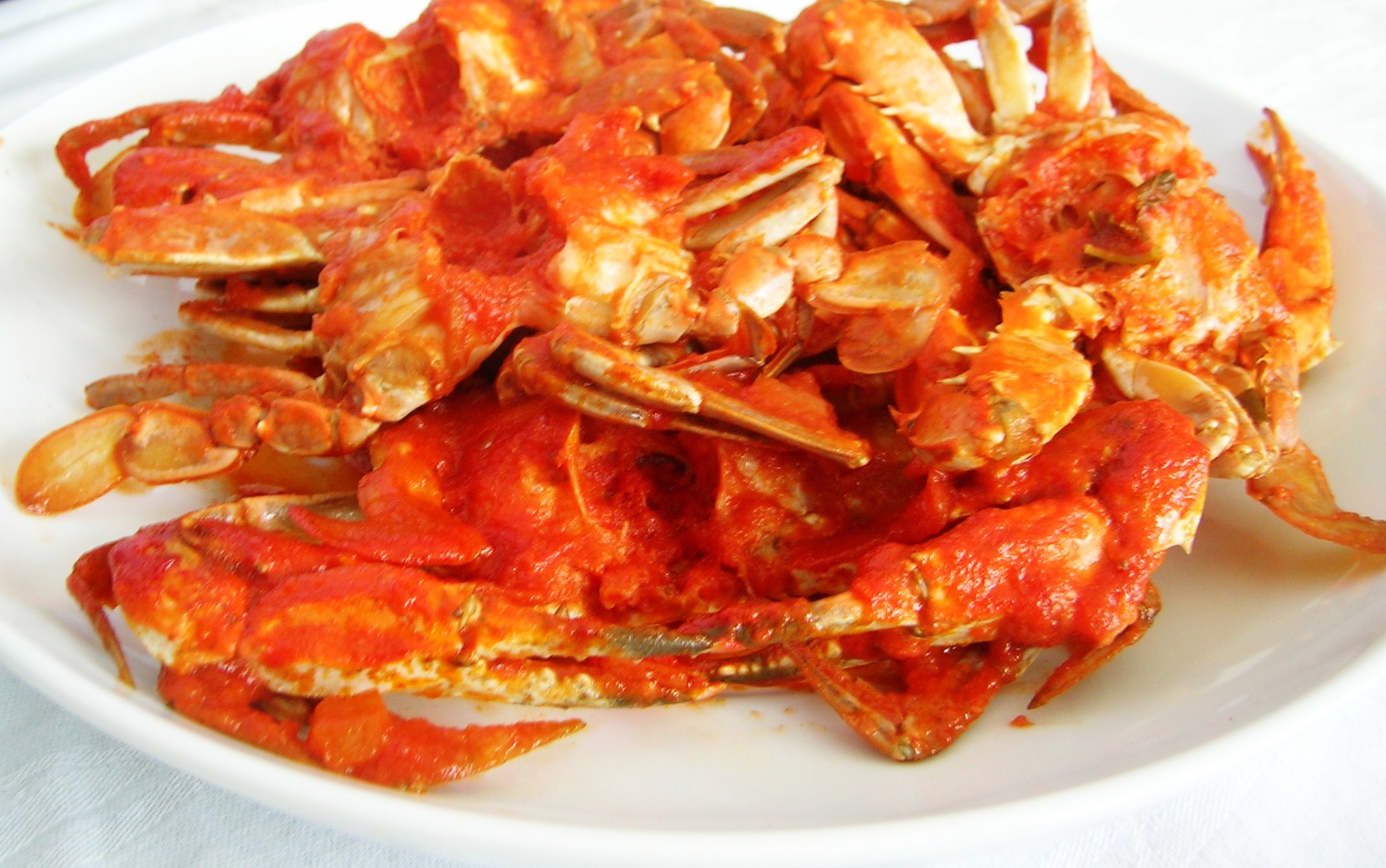
That night my mother and aunt prepared the crabs and made a delicious crab sauce with linguine. I almost recognized each crab that we caught as they pulled them from the sauce and placed them on a platter. Especially the giant one I caught that almost took off a finger when I tried to get him in the bucket. That one I wanted to eat myself.

The tradition of crabbing under the Mantoloking bridge continued when I had my children. I would bring both my boys Michael and Joseph to the same spot my father brought me. The same shack was there with the large wooden sign painted in red,  “Boat Rentals”. We had our cooler and buckets and crab cages and lines. Only thing that was missing was the fishing poles. The blow fish disappeared. I could only tell my sons about the dozens of blow fish I used to catch with their grandfather as soon as we put our lines in. And when we got them in the boat they would blow up like a balloon and make weird squeaking sounds.

But the crabs were still there. And my sons experienced the same thrill of pulling the crabs to the surface and netting them. Only this time, they didn’t want to go near them as the blue claws scurried sideways around the boat with their claws open and waiting to catch a toe or finger. I had to get them into the buckets.

When we got the crabs back to the house all I could think about was that delicious sauce my mother made. Unfortunately, because of that I wasn’t thinking very clearly and an “Annie Hall” moment was about to unfold.

We must have had over two dozen angry blue claw crabs in the cooler. In an attempt to empty the cooler into the sink and rinse off the crabs before I placed them into the boiling water, the crabs had another idea and were not going to go peacefully. When I was a child I had a game called Barrel of Monkeys. The object of the game was to lift one monkey out of the barrel and see how many monkeys would cling to each other as you lifted them up in a long chain. Well, these crabs must have been briefed on that game, because as I dumbed the cooler over the sink the crabs clung to each other and formed a “crab chain of monkeys” as they climbed up and over the kitchen sink and scattered everywhere over  and down to the kitchen floor. When I was done with that maneuver there was not one crab in the sink! They scurried and ran under every nook and cranny that was in the kitchen….along with my children that ran out of the way and stood on top of the kitchen table and chairs screaming.

All I could think of was, how on earth am I going to get all these crabs caught….again! I told everyone to calm down as I ran around the kitchen with ice tongs trying to catch the scampering  crustations. My son Michael would yell out, “there’s another one! Over there!!!”, as I raced to get these crabs back in the cooler.

One has to admire the survival skills of crabs.

I eventually rounded up all of them and took them out into the yard and rinsed them off with the hose, which is what I should have done in the first place.

At the end of that ordeal I prepared the crabs for the sauce. My sons looked on as I showed them the proper way of cleaning them. My son Michael asked how was I going to kill them. I’m guessing he didn’t want to see them escape again. Neither did I.

If you don’t have a supply of fresh crabs, many supermarkets and fish mongers carry frozen blue claw crabs. You can use any type of crab for this sauce including dungeness, even snow crab and king crab.

If you have fresh caught crab, boil a large pot of water to fit the crabs and plunge the crabs into the boiling water for 5 minutes or until they turn a bright red. Drain the crabs and run cool water over them so they will be easier to handle.

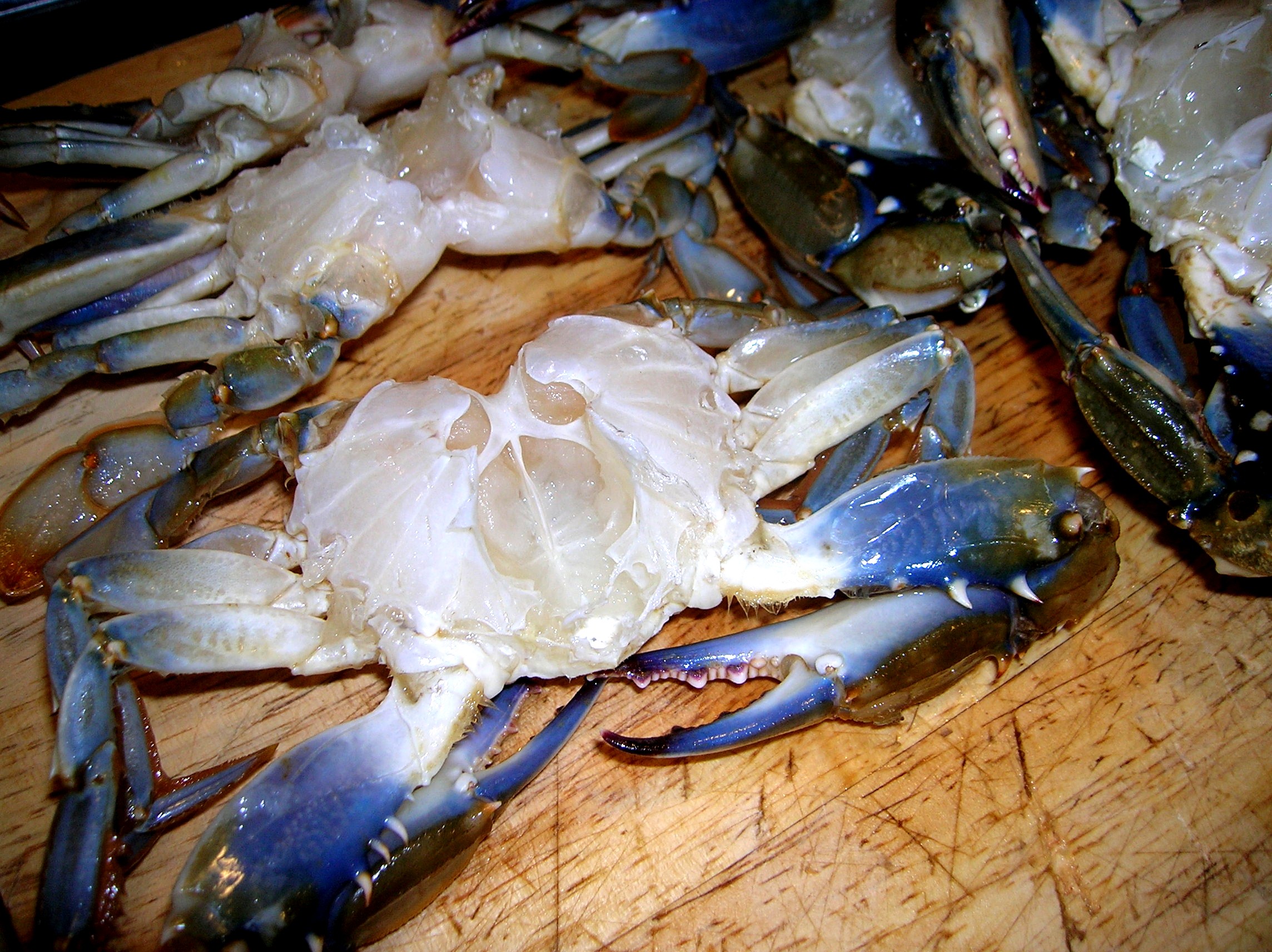
To clean the crabs turn them over and you will notice on the bottom there is either a pyramid shape (female) or a long narrow shape (male) on the crabs underside. If you get a knife or your nail under this shape and pull it towards the back of the crab ( like a pop top can)  you can pry off the top of the crab shell. Discard the top of the shell along with the mouth portions and the gills of the crab that are right under the top shell. Rinse the crab under cool water and you’re good to go.

This is what a cleaned crab should look like.


Linguine with Crab Sauce

  • 1-2 pounds of blue claw crabs, cleaned
  • 3 cloves garlic, chopped
  • 1 small onion, chopped
  • 3 tablespoons olive oil
  • 1/2 cup dry white wine
  • 2 cans of San Marzano peeled tomatoes, pureed
  • 5 leaves of fresh basil or 1 teaspoon of dried
  • salt and pepper to taste
  • 1 pound linguine

 In a large sauce pot over medium heat add the olive oil. Saute the onions until translucent. Add the garlic and cook 1 minute or until they just start to turn golden. Add the white wine and cook down 2 minutes.

Add the pureed tomatoes, basil, salt and pepper and bring the sauce to a simmer over medium low heat.

Add the cleaned crabs to the sauce and cook over medium low heat for about 1/2 hour, stirring occasionally.

In the meantime bring a large pot of water to a boil, add 1 tablespoon of salt. Cook the linguine al dente, about 9 minutes.

Remove the crabs from the sauce and place on a platter to eat later.

Drain the pasta and serve with the crab sauce. Sprinkle with Parmesan or Romano cheese.

Once the pasta is consumed you can spend the rest of the evening with an ice cold beer or glass of wine picking through the crabs. My favorite part!

Posted in Pasta, Seafood | Tagged , , | 12 Comments

Mama’s Chicken Cacciatore

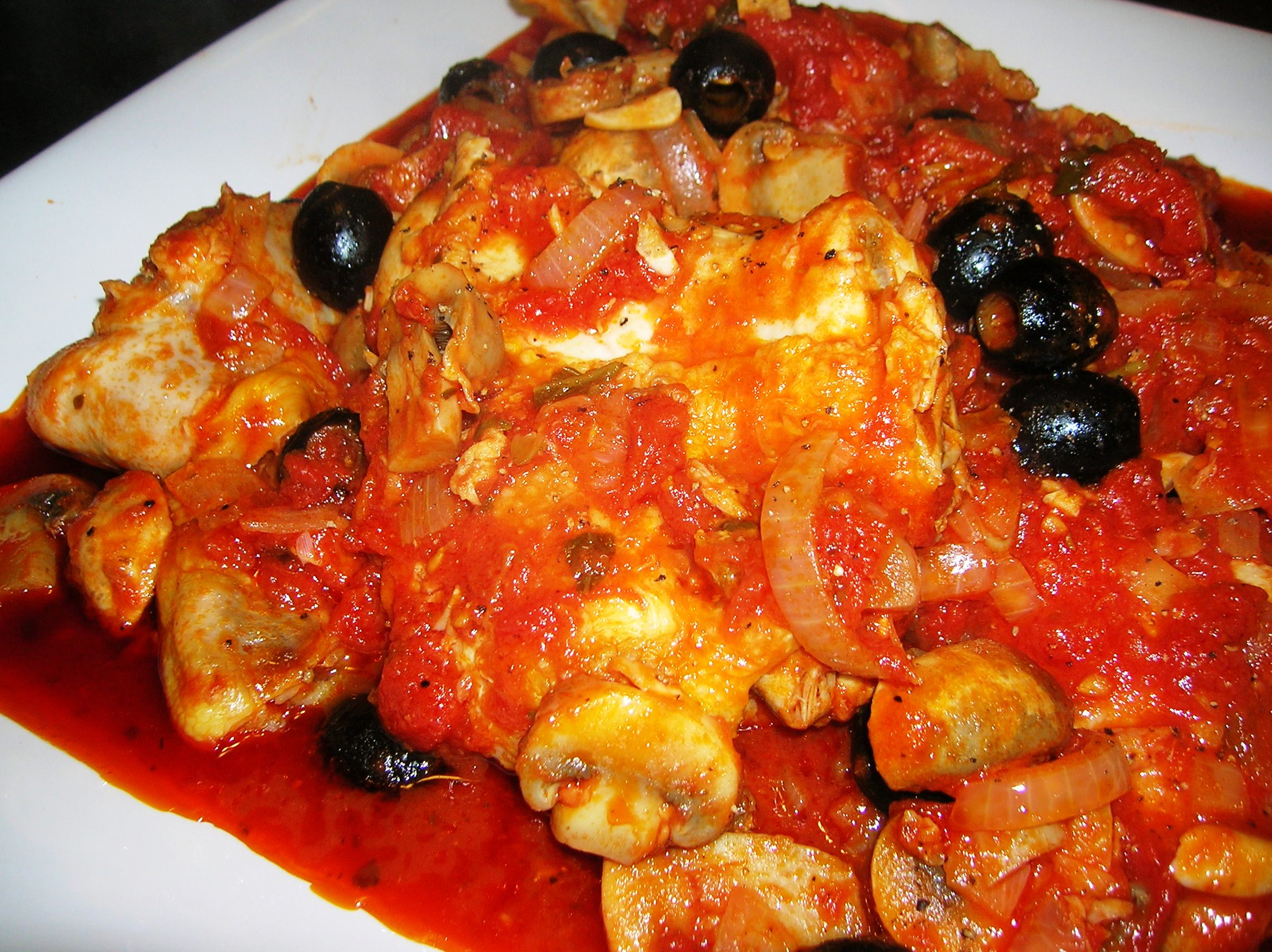
 Mama’s chicken cacciatore is right up there as one of my all time favorite comfort foods. There was nothing better than breaking off a piece of Italian bread and mopping up that delicious sauce. Out in Long Island, my grandmother’s cousin, Zia Eva, or as we used to call her Zeveve (Tse-veve), made a great chicken cacciatore that I remember till this day. She put all sorts of good things in the pot, including olives, mushrooms and peppers.

It was a beautiful spring day and I could remember being at my Aunt’s house in Massapequa sitting outside and enjoying that chicken cacciatore. It’s just amazing how certain things keep in your memory and that day I fondly remember eating her chicken cacciatore. The entire family was sitting around the outdoor table, covered in a linen table cloth, enjoying the food and idle conversation. Everyone around me was speaking Italian, and although I never learned to speak it myself, I knew exactly what everyone was talking about….for the most part. A large bowl of salad, which was saved for the end of the meal, along with cooked greens, plenty of bread, ginger ale and red wine was passed around the table as we filled our plates with the chicken that was almost falling off the bone. I think it was that meal that imprinted chicken cacciatore for me as comfort food.

Zia Eva was a master at cleaning the last bit of food out of a pot. One day she made chocolate pudding for us kids and she allowed us to fill the dessert cups with the pudding. When we thought we had the last bit of pudding out of the pot, Zia Eve took her wooden spoon and scraped the pot enough to get another whole cup of pudding out of it. You don’t waste a drop!


Mama’s Chicken Cacciatore

  • 1 whole fryer cut up
  • 3 cloves of garlic, chopped
  • 3 tablespoons of olive oil
  • one 28oz can of whole peeled tomatoes, crushed
  • 1 onion diced
  • 1/2 cup dry white wine
  • 1 pound button mushrooms, sliced
  • 1 cup canned black ripe pitted olives, whole
  • 8 leaves fresh basil, julienned
  • 1/2 teaspoon sugar
  • 1  teaspoon oregano
  • salt and pepper to taste
  • plain bread crumbs

My mother always soaked the chicken in a large pot of salted cold water for about a half an hour. In a large pot place the chicken and fill just to cover with cold water. Sprinkle about 1/4 cup of Kosher salt over the chicken and let soak for 1/2 hour. Rinse under cold running water and dry.

In a large saute pan heat 3 tablespoons of olive oil on medium high heat and brown the chicken about 6 minutes each side. Don’t move the chicken until after the 6 minutes. Once the skin browns it will be easier to turn when you loosen it with a spatula.  Remove the chicken from the pan and set aside.

In the same pan cook onions over medium heat till translucent, about 3 minutes. Add garlic and cook 1 minute.

De-glaze the pan with the white wine as you loosen up the bits at the bottom of the pan with your wooden spoon,  and cook about two minutes. Add can of crushed tomatoes,  sugar, oregano, basil, mushrooms, and salt and pepper to taste. Bring sauce to a simmer.

Add chicken pieces and stir to combine. Partially cover and cook 45 minutes, turning the chicken once halfway through the cooking time.  Stir occasionally. Add the olives during the last 15 minutes of cooking.

Check sauce and if too thin add a sprinkle of bread crumbs to thicken. Serve the chicken with plenty of crisp Italian bread to mop up the delicious sauce.

Posted in Chicken | Tagged | 7 Comments

Braised Pork Shoulder Steak

The aroma that whiffs through your house when you’re making this dish will have them at the dinner table early. This is a very easy meal to make that’s prepared in one pot. All you have to do extra is add a salad.

About two months ago I purchased half of a whole pig with a friend of mine. The pig was raised organically on a farm in Pennsylvania.  I had to put the order in a year ahead of time for them to raise the animal. My freezer has been full since then and I’m just starting to make a dent in it. My son Michael said he will take half of my half on the next one. The meat is truly amazing, like nothing you get from commercially raised pork. The meat is darker with a bit more fat in it. Really adds to the flavor. This is the way pork used to be before it became the “other white meat”. Today’s pork is commonly  dry and tasteless. After you experience one of these local farm raised animals you can never go back.

 A half a pig is a lot of meat. In addition to chops and roasts they even smoked the hams and bacon and made breakfast sausage for me. The bacon is nothing like you get in the supermarkets. The  real hickory smoked flavor is wonderful, and the hickory smoked hams are something special. Nothing like the watered down versions you get commercially.

I even had them give me the pork jowls so I can make guanciale. In essence, guanciale is pancetta on steroids.  It’s much more flavorful than pancetta and has an intense pork flavor. It’s truly a neglected part of the pig that is very difficult to get outside of Italy. I understand that some specialty stores are starting to  carry it. When I cure the guanciale I’ll post it here with some recipes. Even a small amount of this cured meat adds a ton of flavor to your recipe.

From the pork shoulder they cut these steaks. I never had pork shoulder steaks before so I decided to braise them with potatoes and onions and came up with this dish. I hope you enjoy it.

Braised Pork Shoulder Steak

  • 1 pork shoulder steak 1  1/2″ thick, about 2  1/4 pounds
  • 4 cloves garlic
  • 1/2 teaspoon oregano
  • 1/2 teaspoon thyme
  • 1 teaspoon salt
  • 1/2 teaspoon black pepper
  • 2 tablespoons olive oil plus more for searing
  • 2 tablespoons wine vinegar
  • 3/4 cup chicken stock
  • 1 bay leaf
  • 1 onion, quartered
  • 1 medium russet potato, peeled and quartered
  • 1 sweet potato, peeled and quartered


On your cutting board combine the garlic, oregano, thyme, salt and black pepper and rub down and mash the mixture with the side of your chef knife until you form a paste.

Put the paste in a small bowl and add the olive oil and vinegar. Mix well.

Rub half the mixture on both sides of the pork steak.

In a dutch oven place about a tablespoon of olive and turn the heat to high.  Sear the pork shoulder steak about 3 minutes on each side to give it a nice brown color.  Take out the pork steak and turn off the heat.

Brush or rub the remainder of the seasoning onto both sides of the seared pork shoulder steak.

In the same dutch oven place the onions, potatoes, bay leaf and chicken stock. Place the seared pork steak on top of the vegetables and cover the pot.

Place in a 350 degree oven and braise for 1  1/2 hours. Check after 1 hour and add more liquid if necessary. The meat should be fork tender when it’s ready.

Posted in Pork | Tagged , , | Leave a comment

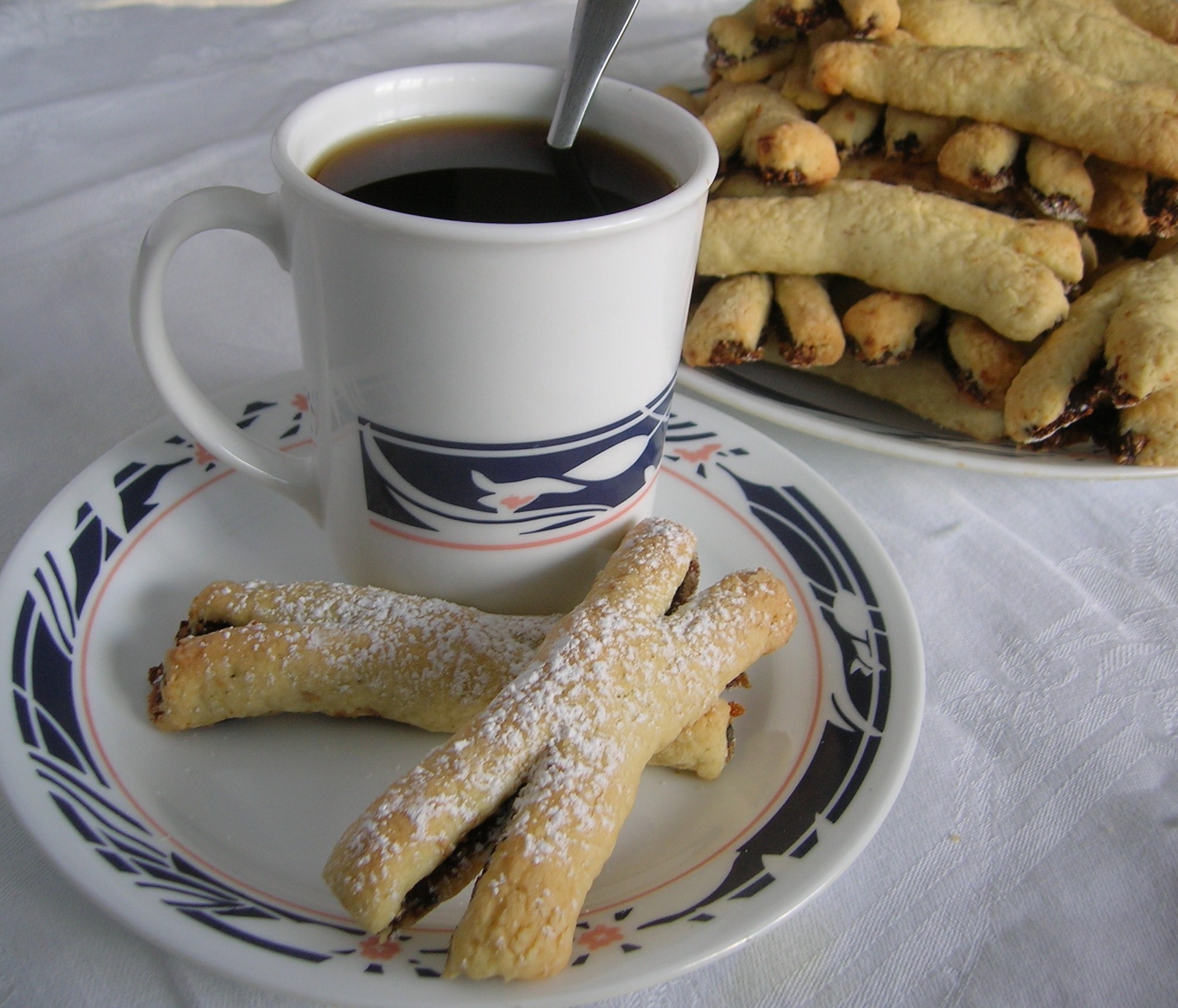
Sicilian Fig Cookies

I was never a picky eater. But there were some things I just didn’t like as a child. As an adult my taste has changed for certain foods and I have really grown to love fig cookies. As a child,  store bought fig cookies were not one of my favorite. Maybe because it was the richness of the fig filling or maybe I just didn’t like how they were made in the bakeries. When my aunts made these cookies, that was another story. I used to love these cookies.  I grew up eating fresh figs.  Not always my own. My neighborhood was full of home gardens with fig trees. And we knew where they all were. We would conduct raids on a regular basis, risking life and limb to get at those lovely sweet fruits. There were plenty of grape vines in our neighborhood as well, but figs were always the primary target.

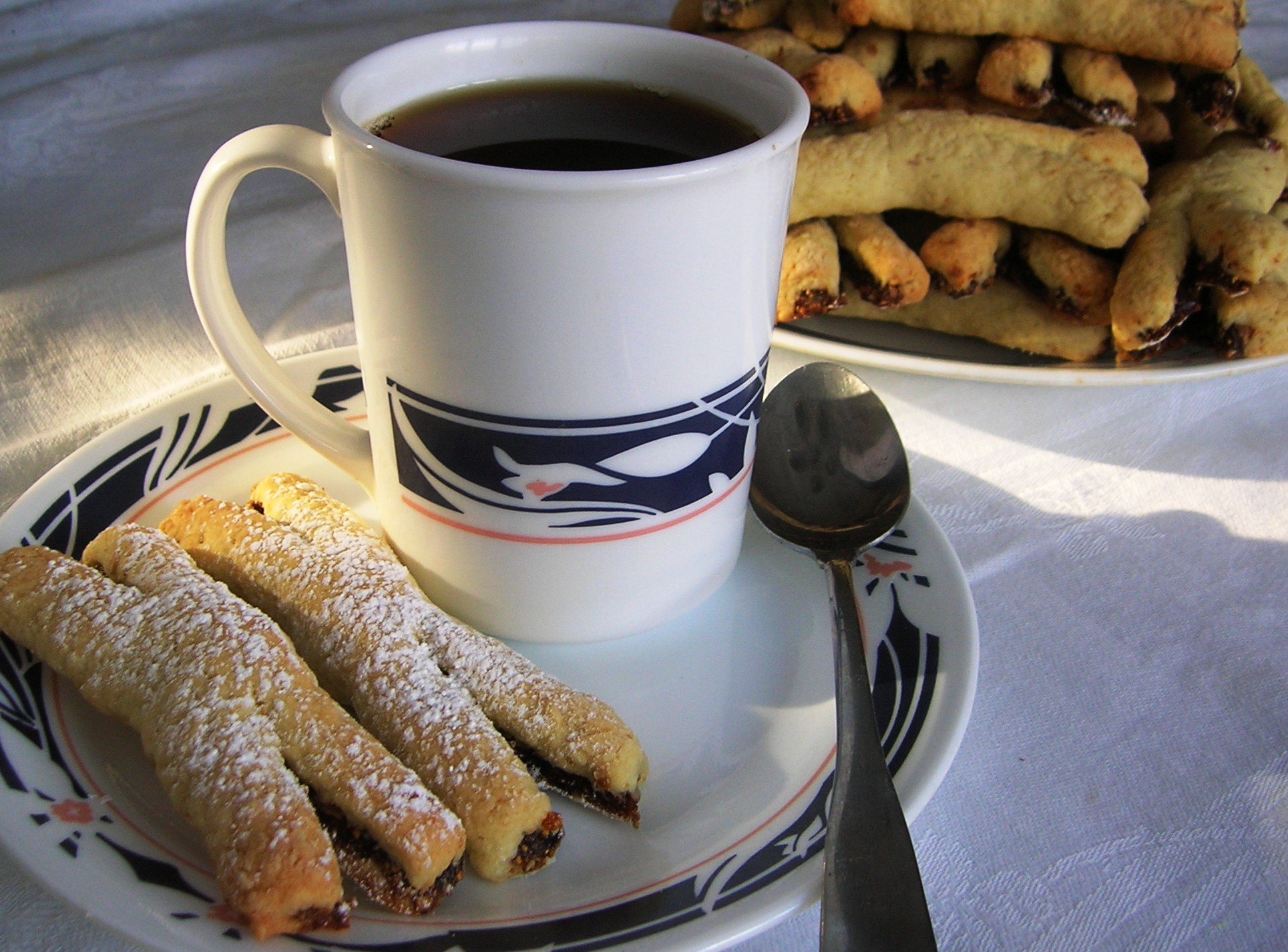
As an adult I’m still not crazy about store bought fig cookies. But these cookies  are delicious. And what’s not to love? They are filled with figs and chocolate and nuts and all sorts of good things.  I can’t get enough of them. As with many Italian cookies, these are not overly sweet, even with the fig filling. They go great with a cup of coffee, Italian or American, or a glass of milk.


Sicilian Fig Cookies

For the Dough:

  • 4 cups all purpose flour
  • 2/3 cups sugar
  • 1 teaspoon salt
  • 1 teaspoon baking powder
  • 2 sticks (8 ounces) unsalted butter, room temperature
  • 4 large eggs
  • 1 teaspoon vanilla

Fig Filling:

  • 2 cups dried Mission figs, soaked in boiling water till soft and drained, stems removed
  • 1/4 cup golden raisins
  • 1/4 cup candied orange peel
  • 1/2 cup toasted almonds or hazel nuts
  • 2 ounces semi sweet chocolate
  • 1/3 cup apricot jam
  • 1/2 teaspoon cinnamon
  • 1/4 cup dark rum

Yields about 48 cookies.

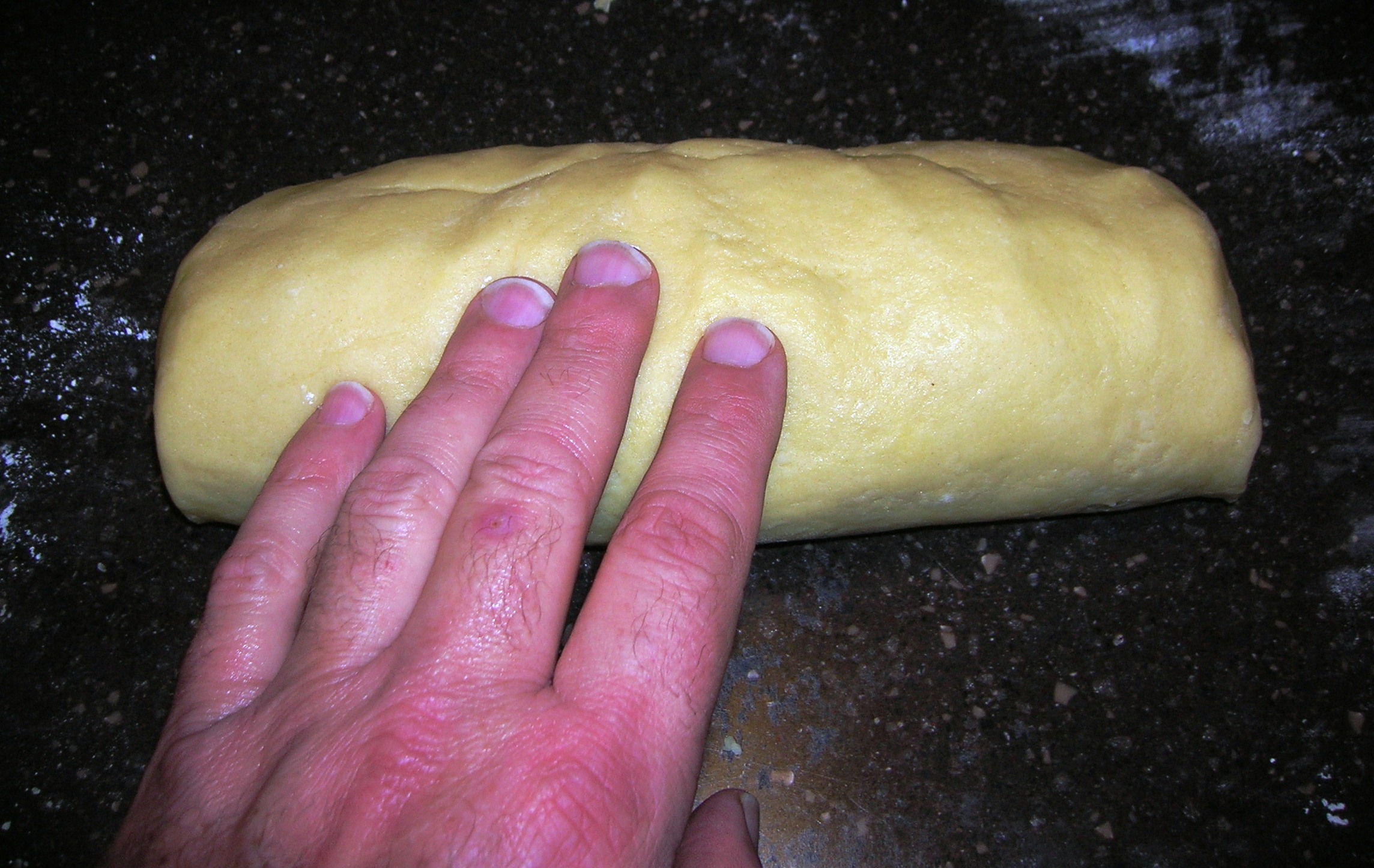
To make the dough place the flour, sugar, salt and baking powder in a large bowl and mix well. Cut in the butter until it is totally incorporated into the flour. Add the four eggs and vanilla and mix well until it forms a dough.

Roll the dough into a log and wrap in plastic wrap while you make the filling.

In a food processor add the figs, raisins, candied orange peel, toasted almonds or hazel nuts, semi sweet chocolate, apricot jam, cinnamon and dark rum. Pulse until you have a binding paste.

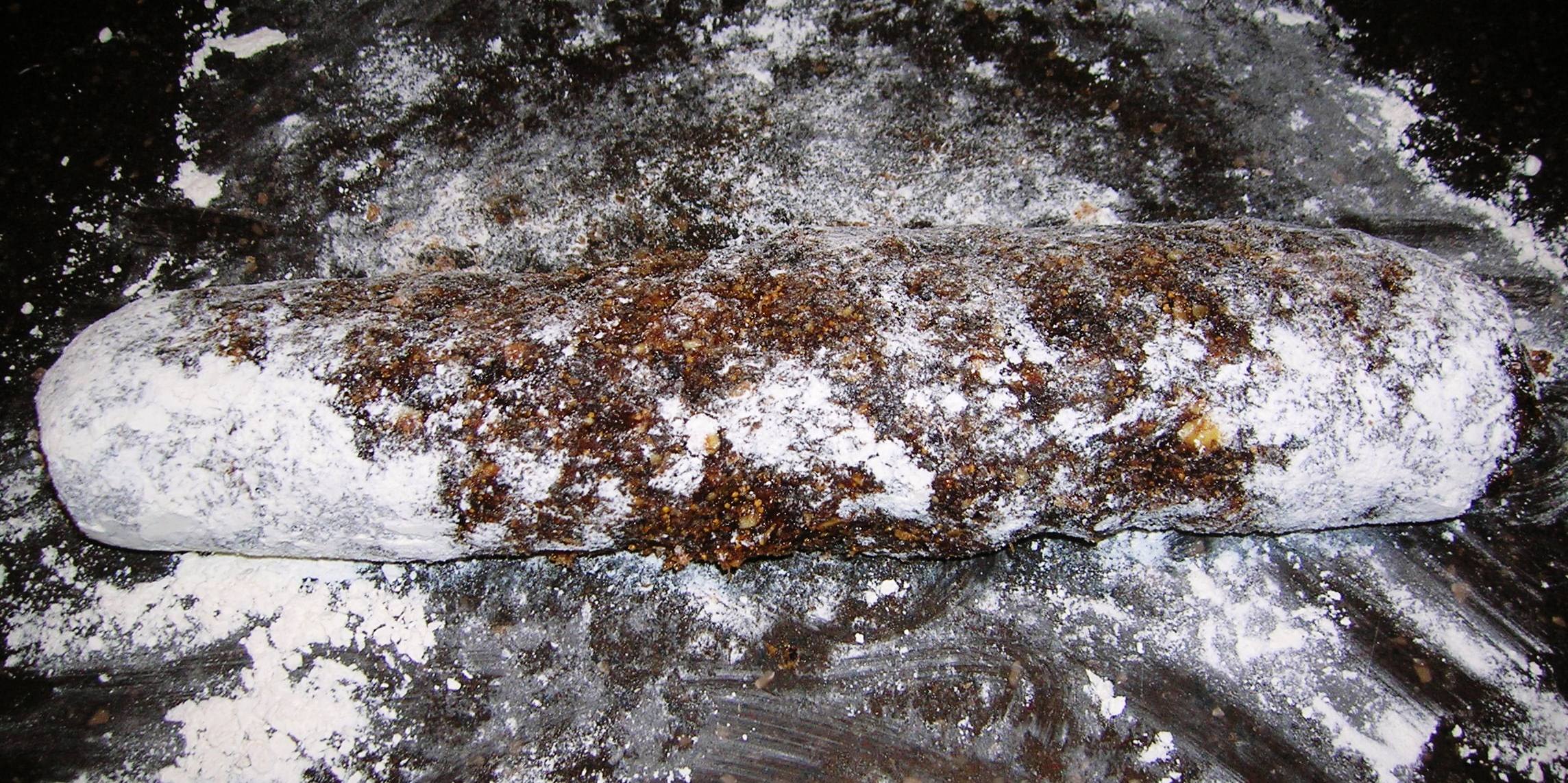
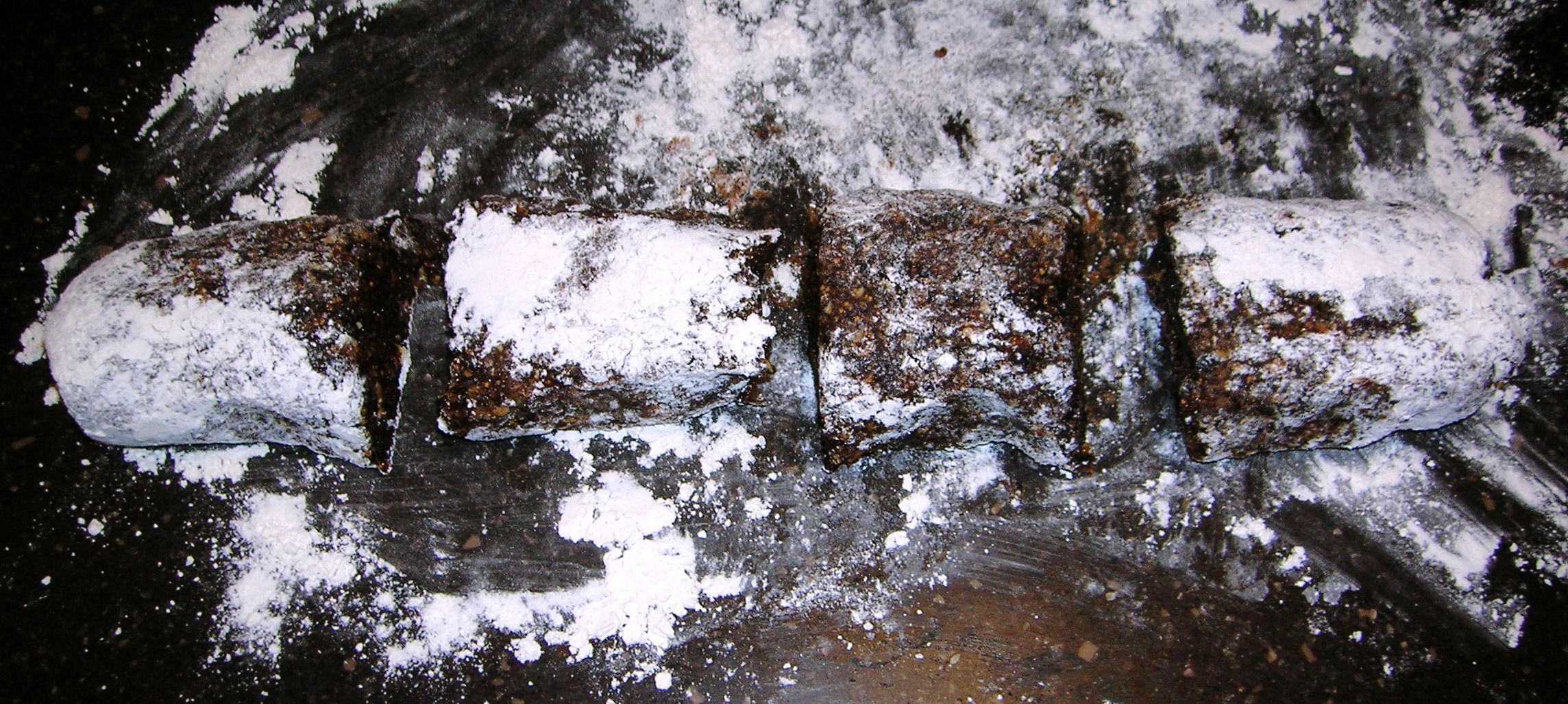
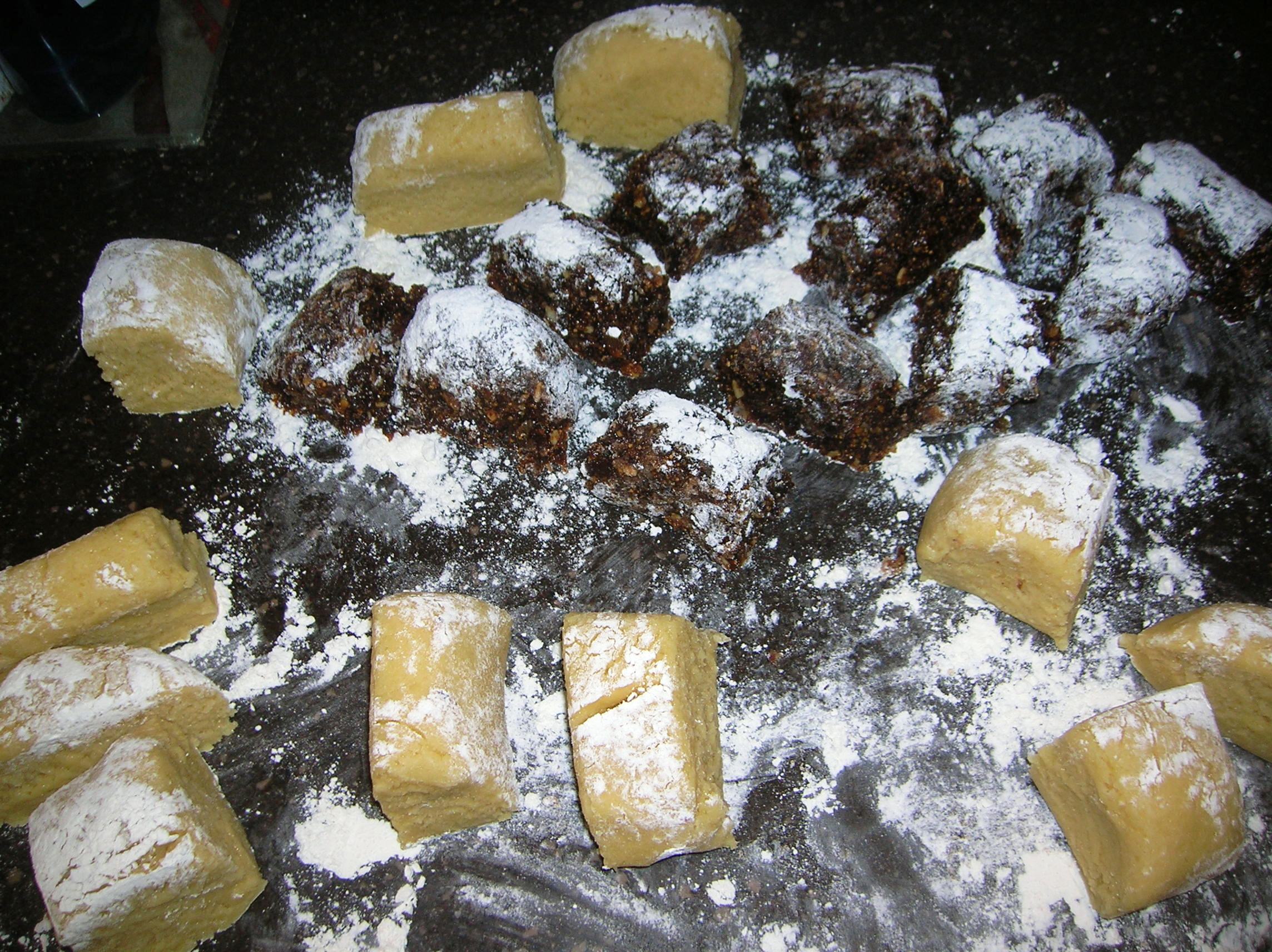
Roll the filling into a log on a floured surface, same size as the dough. Cut the cylinder into 4 pieces and divide each piece into 3 yielding 12 pieces.

Roll out the dough into a cylindar. Cut the cylindar into 4 pieces and divide each piece into 3 yielding 12 pieces.

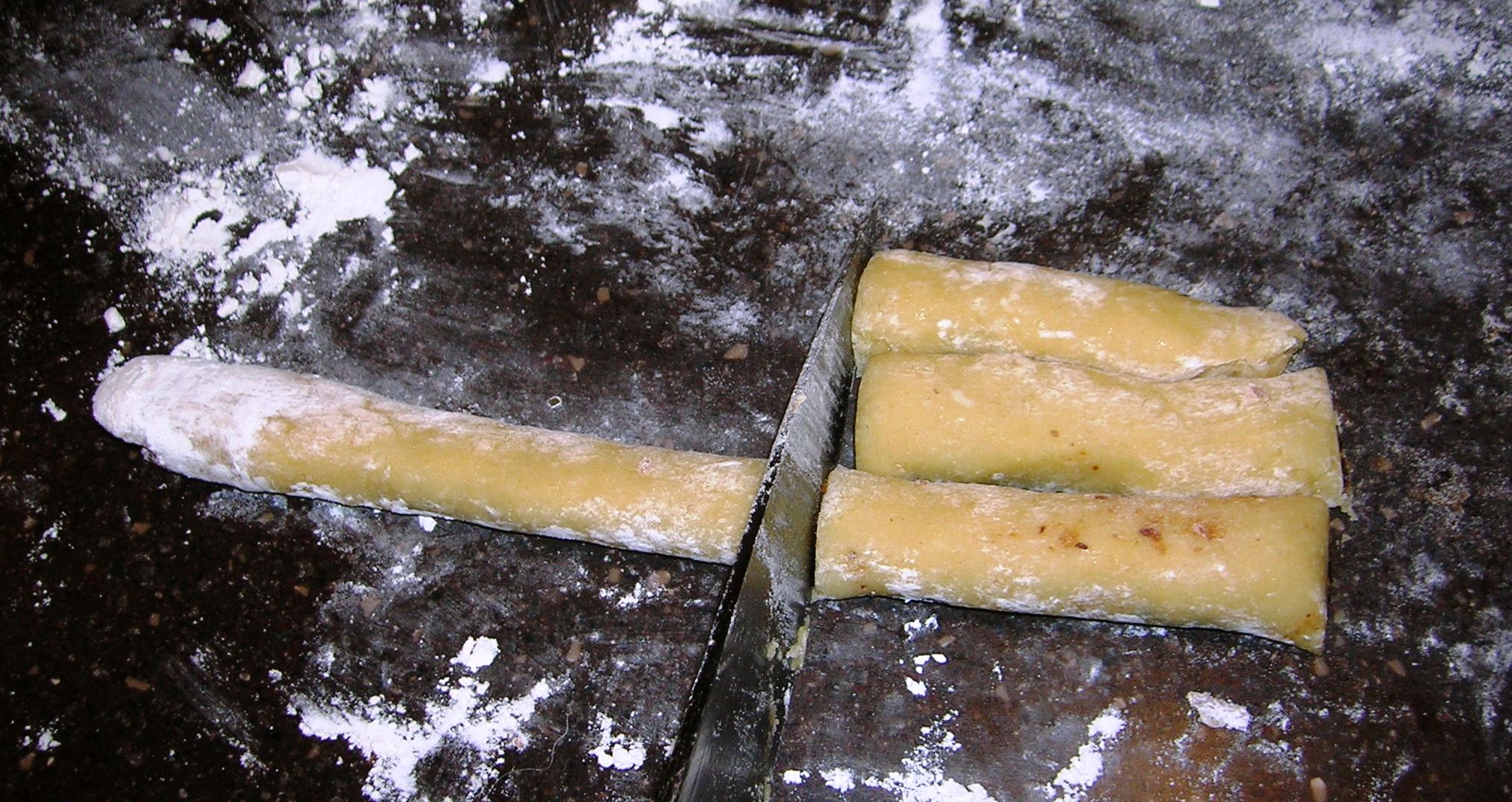
Roll 1 piece of dough about 12″ long on a floured surface. Flatten the dough slightly. Roll out the fig filling into the same size as the dough. Brush the top of the dough with egg wash.

Place the filling on the center of the dough and wrap the filling with the dough. Roll it out a little longer.

Cut the filled cookie into 5 pieces. Make a slit at each end with a knife and open into an “X” and place on a parchment lined cookie sheet. Repeat till all the filling and dough are used up.

Bake at 350 degrees for 15-20 minutes. Cool and sprinkle with powdered sugar.

Sealed in an air tight tin, these cookies will keep for a month.

Posted in Dessert | Tagged , , , | 5 Comments

Elbow Macaroni with Peas and Bacon

“EXCUSE ME SIR!!! THAT’S NOT CAPOCOLLO YOU’RE CUTTING, IT’S SALAMI!!!!” 

 Nothing burns my butt more than a person that doesn’t have a clue about their job or how to do it, then argues with you. You think I would have known better than to order Italian cold cuts at my local Pearl River Shop Rite. I guess I deserved it.

I had to shout it out at least three times above the crowd that was standing three deep holding numbers at the counter on a recent Saturday afternoon. “HELLOOOO!  SIR!  THAT’S NOT CAPOCOLLO!!  SIR!  STOP!  HELLOOOO!” He finally turned around when he realized I was yelling at him and not his coworker slicing the American cheese. “That’s not it! You’re slicing salami”, I said.  He turned to me with the hunk of meat in his hand and held it towards me and said, “it’s capi-cola”. I could see his coworker looking over from her slicer and saying that’s “capi-cola”, as he was looking for approval from her. “No”, I said, as he came closer to me insisting it was capocollo and when I saw it even closer, realized it was sopressatta. “No, look, here is the capocollo”, I said as I pointed to an unopened piece of the product right in front of me in the display case with the lettering as clear as day “Boar’s Head Capicola”. 

The man standing behind me also saw the grave mistake and shouted out “GABAGOOL! THE MAN WANTS GABAGOOL!”  Gabagool is the Americanized version of the Italian word Cappocollo made popular by Tony Soprano (“Let’s have a gabagool sandwich after we wack Big Pussy”) and other ignorant 2nd and 3rd generation Italo-Americans who have forgotten to speak Italian properly. The nice gentleman who had my back suggested I go to his favorite place in Blauvelt for Italian cold cuts. I didn’t want to seem ungrateful for his help so I agreed with him. But all I wanted was a half pound of the capocollo so I could get out of there and continue with my shopping.

The deli man finally stopped slicing the sopressata and went in the back to find the product I was asking for. A moment later he came back and held up a fresh one and showed me the name on the package. It was Boar’s Head Capicola.

As I watched him slicing it I was glad I was on blood pressure medication. Instead of placing the sliced meat slightly overlapping in single layers with paper between each layer, the way it was supposed to be sliced, he was piling it up like a mound of corned beef you get at a Kosher deli for corned beef sandwiches. I bit my tongue. I knew it was going to get ugly if I jumped around the counter and gave this young man a lesson in proper “gabagool” slicing and packaging.  So I’ll spend the next week peeling apart the mound of capocollo that will stick together when sliced in this fashion. I didn’t think the rest of the crowd at the counter would have been as understanding as the gentleman who suggested the Blauvelt deli to me and came to my defence.

 He handed me the pile of meat that he packaged and priced and asked me if I wanted anything else. I hesitated…..my eyes looked around at the crowd in back of me…..nah!  I was going to get a pound of mortadella with my order but decided to skip it and just continued shopping.

_______________________________________________

This is a quick dish you can make. Nothing is quite as good as the combination of peas and bacon. If you’re looking for an easy pasta dish, this is it. It’s quick and delicious.

Elbow Macaroni with Peas and Bacon

  • 1/4 pound hickory smoked bacon
  • 1 pound frozen peas
  • 1 medium onion, chopped
  • 2 carrots, chopped
  • 1 bay leaf
  • 1/2 teaspoon dried oregano
  • 1   14 ounce can low sodium chicken broth
  • 1/2 cup grated Parmesan cheese
  • salt and pepper to taste
  • 1 pound elbow macaroni


In a large dutch oven cook bacon on medium flame till crisp. Remove bacon and place on a plate to cool. Drain all but 3 tablespoons of bacon fat from the pot.

Cook the onions and carrots in the bacon fat till soft. Add the peas, bay leaf and oregano. Cook, stirring for about 5 minutes.  

Add the can of chicken broth and bring to a boil. Simmer for about 5 minutes then turn off the heat. Cut the bacon into 1 inch pieces and add back to the pot with the peas.

In the meantime cook the elbow macaroni in a separate pot according to directions, about 7 minutes. Drain and add the cooked macaroni to the pot with the peas and bacon. Stir well. Add the Parmesan cheese and mix well. Drizzle about 3 tablespoons of extra virgin olive oil over the pasta and stir. Taste for salt and pepper. Remove the bay leaf.

Posted in Pasta | Tagged , , | 11 Comments

Arancini al Forno

The first time I made rice balls I didn’t cook the rice just right and what resulted was a mess of mushy rice that would not hold together no matter what I did. I got so frustrated that I dumped the whole mess in a roasting pan and discovered the lazy man’s version of rice balls. Some of our best inventions come from mistakes and this is the result of one of them. I guess I picked up one of my grandmother’s traits of never waisting anything. I could have easily dumped the whole thing in the garbage. She would never have dreamed of it.

Many cooks are intimidated by making rice balls the traditional way. It could be a messy venture trying to form the sticky masses of rice into a ball then frying them. And it’s also very time consuming.  Others just try and stay away from fried foods, for health or other reasons.

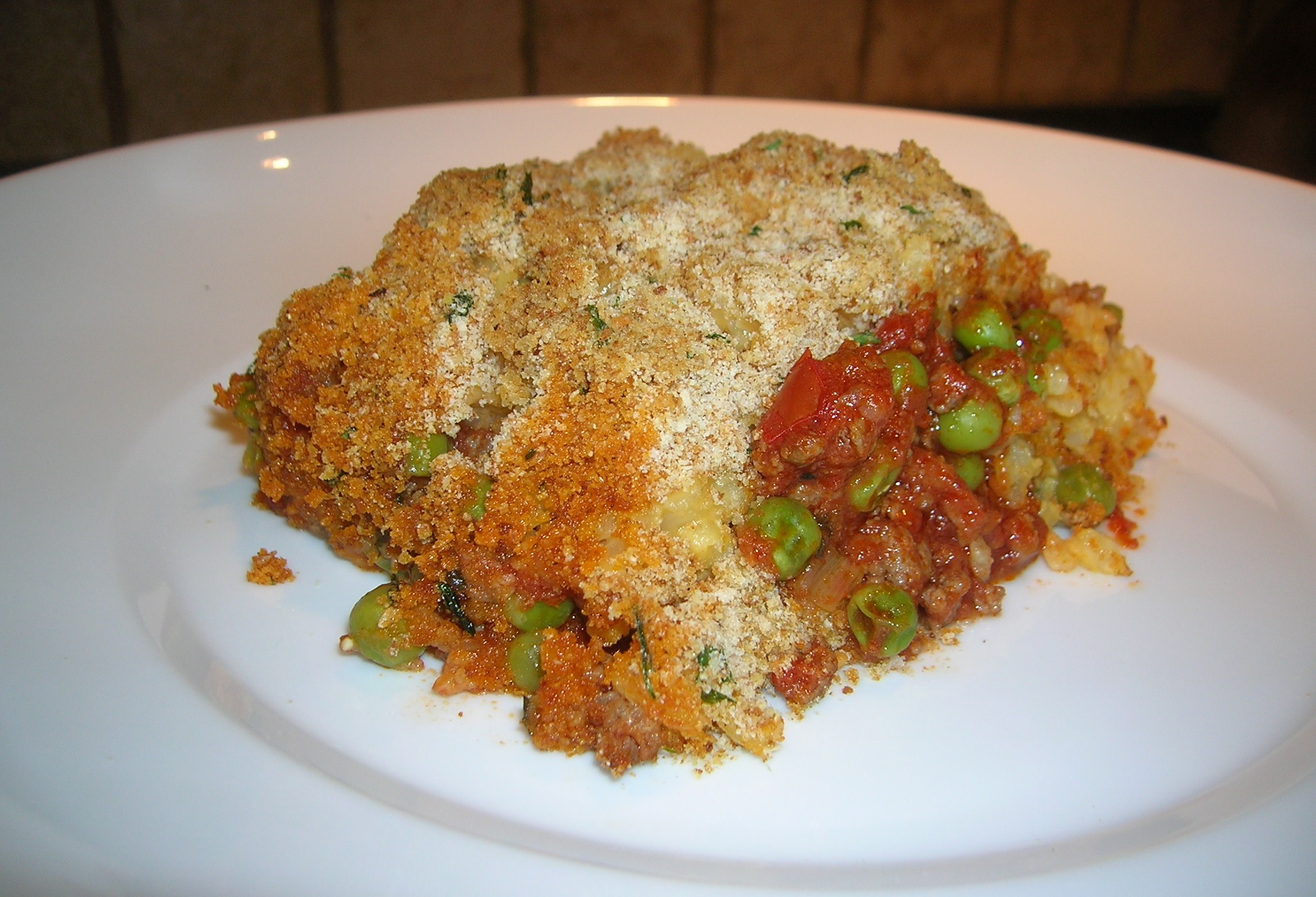
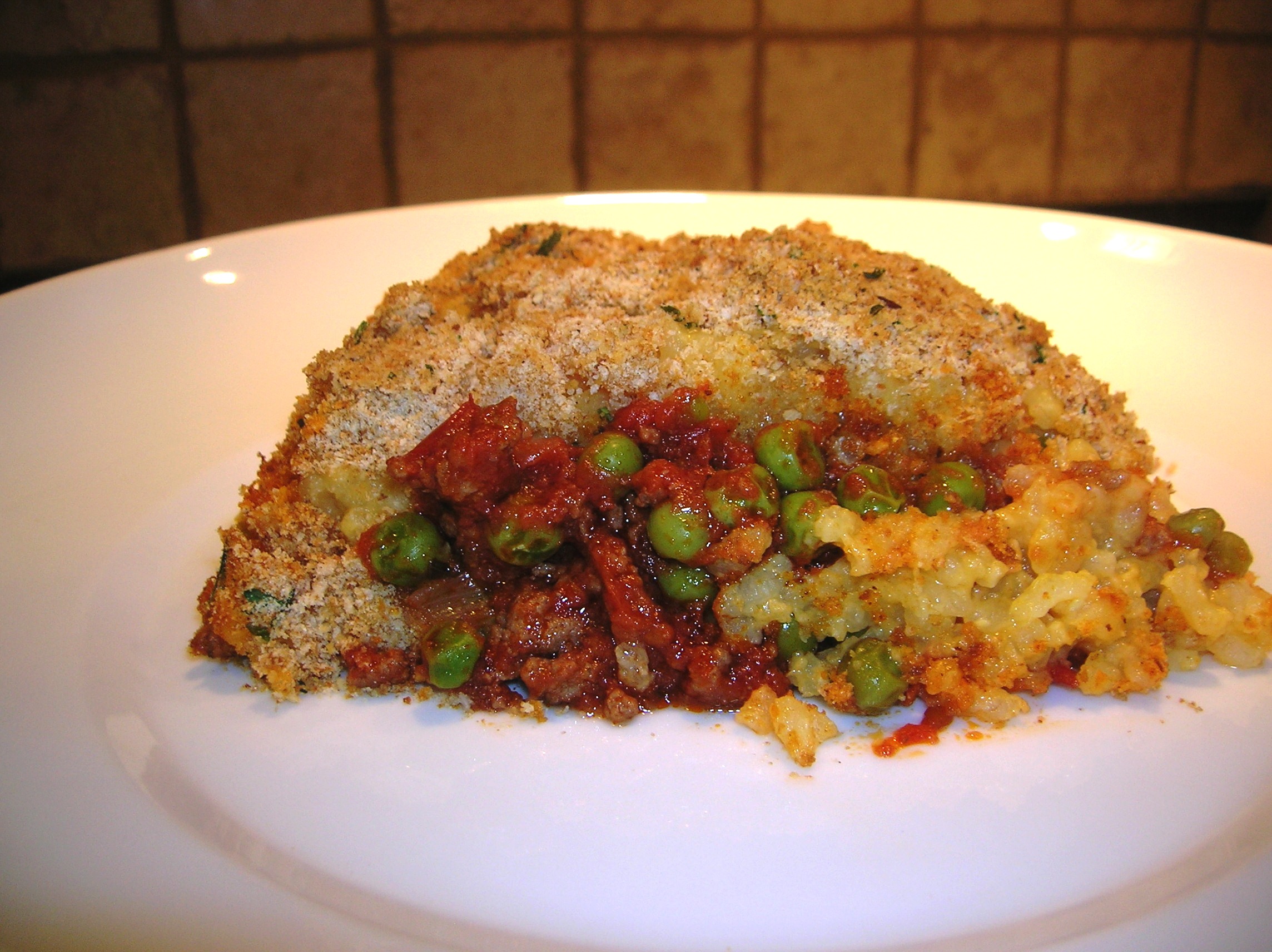
 For those reasons I decided to share my “rice ball mistake” and put together a version of “rice balls” that you bake in the oven as a casserole. You can still enjoy the great taste of the traditional rice ball without the fuss. And it’s very easy to make. All the ingredients are the same, with a few changes here and there. I call it Arancini al Forno. This could be served as a first course or side dish with meat or fish.


Arancini al Forno

  • 2 tablespoons olive oil
  • 1 small onion, finely chopped
  • 1 clove garlic, finely chopped
  • 1/2 cup white wine
  • 1 pound chopped beef
  • 1  28 ounce can Italian peeled tomatoes, chopped
  • 1  10 ounce package of frozen peas
  • salt and pepper to taste

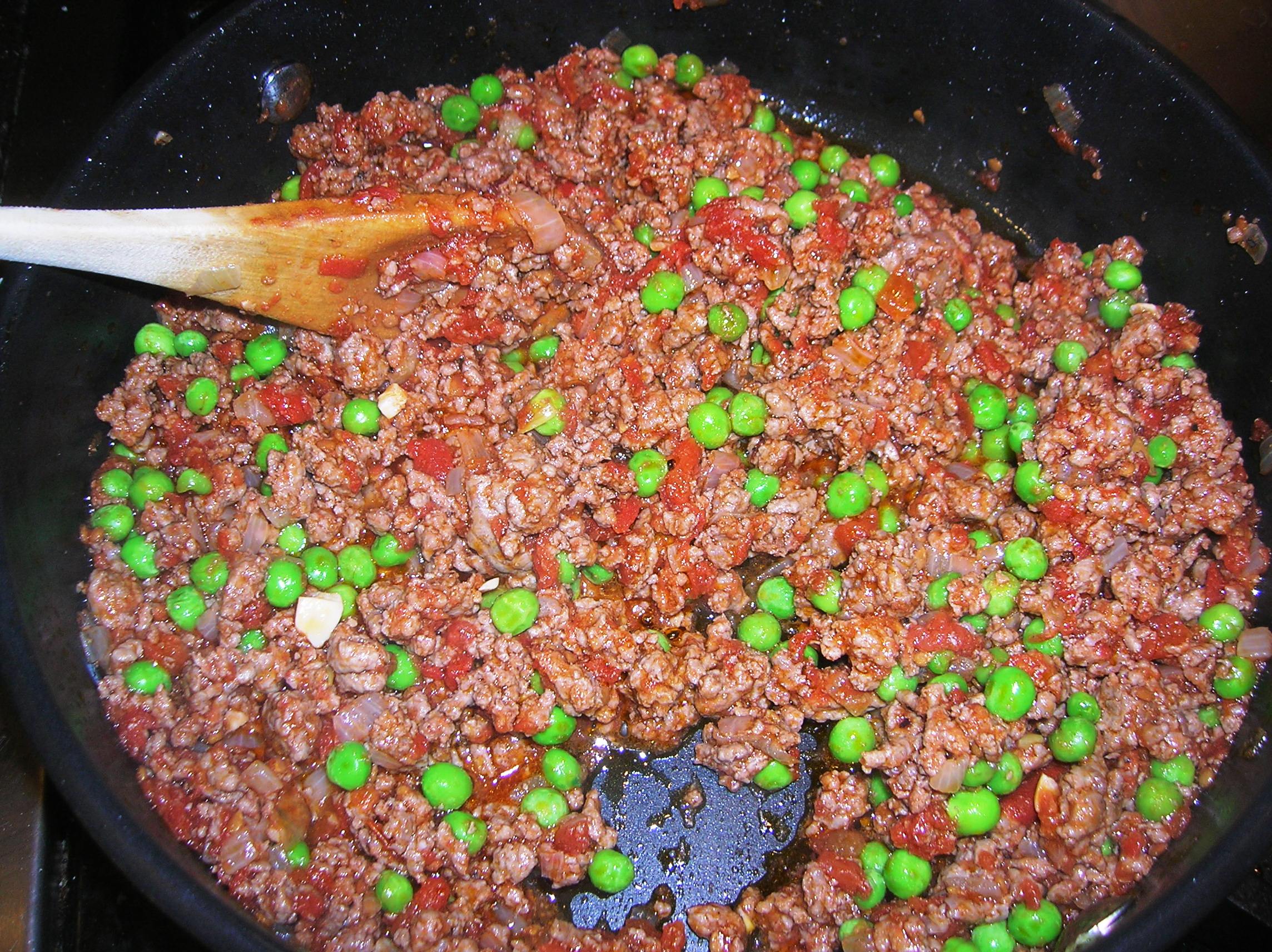
To make the filling, put the oil, onion and garlic in a medium skillet and cook on medium heat until the onion is soft.

Add the beef to the skillet and brown, breaking up and stirring for about 10 minutes. Add the white wine and cook down for a minute.  Add the tomatoes, salt and pepper. Simmer on low heat, stirring occasionally for about 30 minutes, or until thick.

Add the peas and cook 5 more minutes.  Taste for seasoning. Set aside to cool.

Rice preparation

  • 5 cups of chicken broth (3 – 14 1/2 ounce cans)
  • 1/2 teaspoon saffron threads, crumbled
  • 2 cups of Arborio rice (1 pound)
  • 2 tablespoons butter
  • Salt
  • 1/2 cup Parmigiano Reggiano cheese, grated
  • 1/2 cup Pecorino Romano cheese, grated
  • 4 large egg yolks

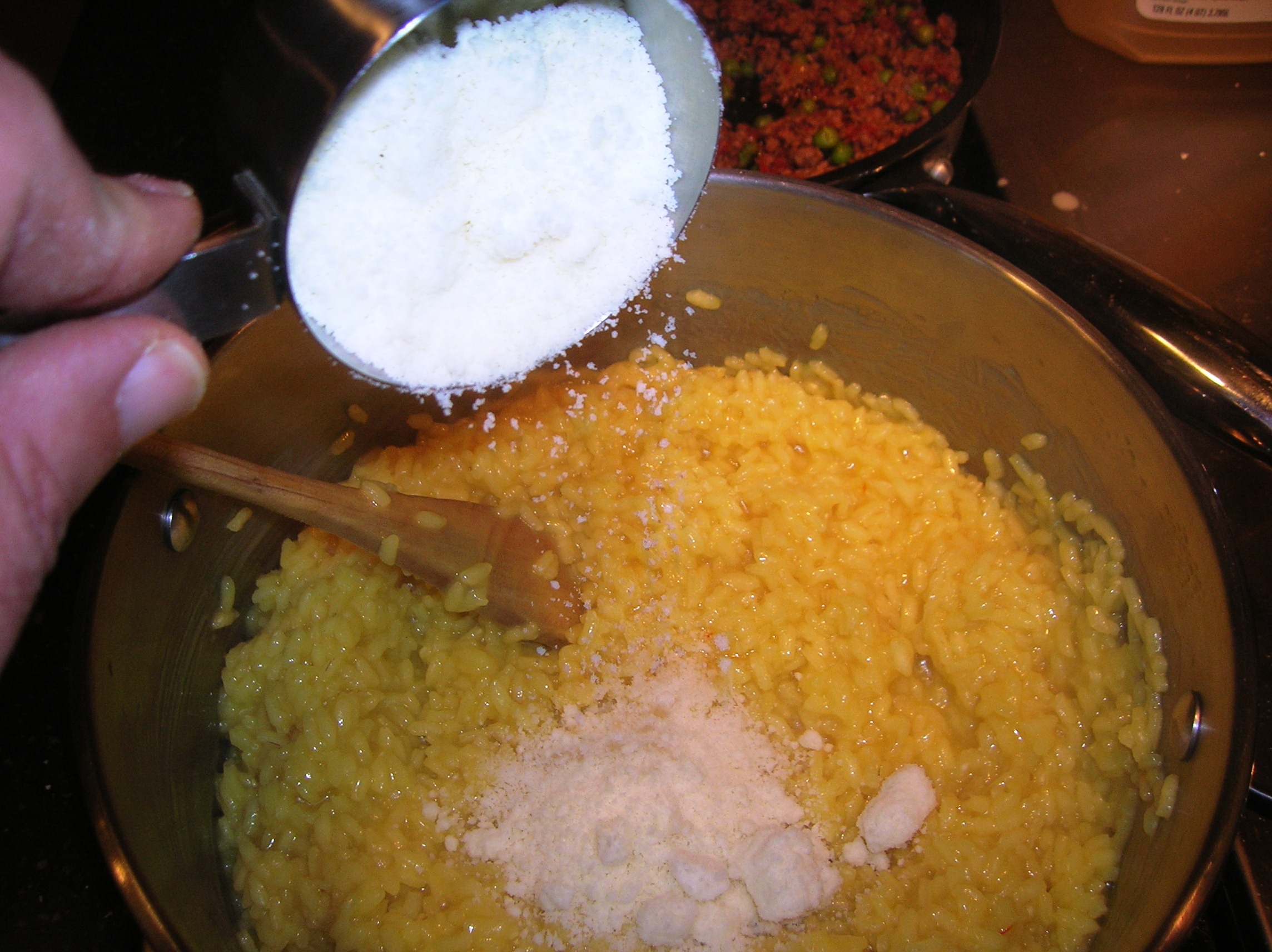
Bring the broth and saffron to a boil in a large pot. Add the rice, butter and salt to taste. Cover, reduce the heat to low and cook until  tender, about 19 minutes.

Remove from the heat and stir in the cheeses. Allow the rice to cool for at least 10 minutes, stirring occasionally, then stir in the egg yolks. Add about a 1/2 cup of the sauce mixture to the rice and stir.

Assembly

  • 1 cup plain bread crumbs
  • 6 ounces sharp provolone cheese, grated
  • the whites of 4 eggs, beaten by hand until frothy


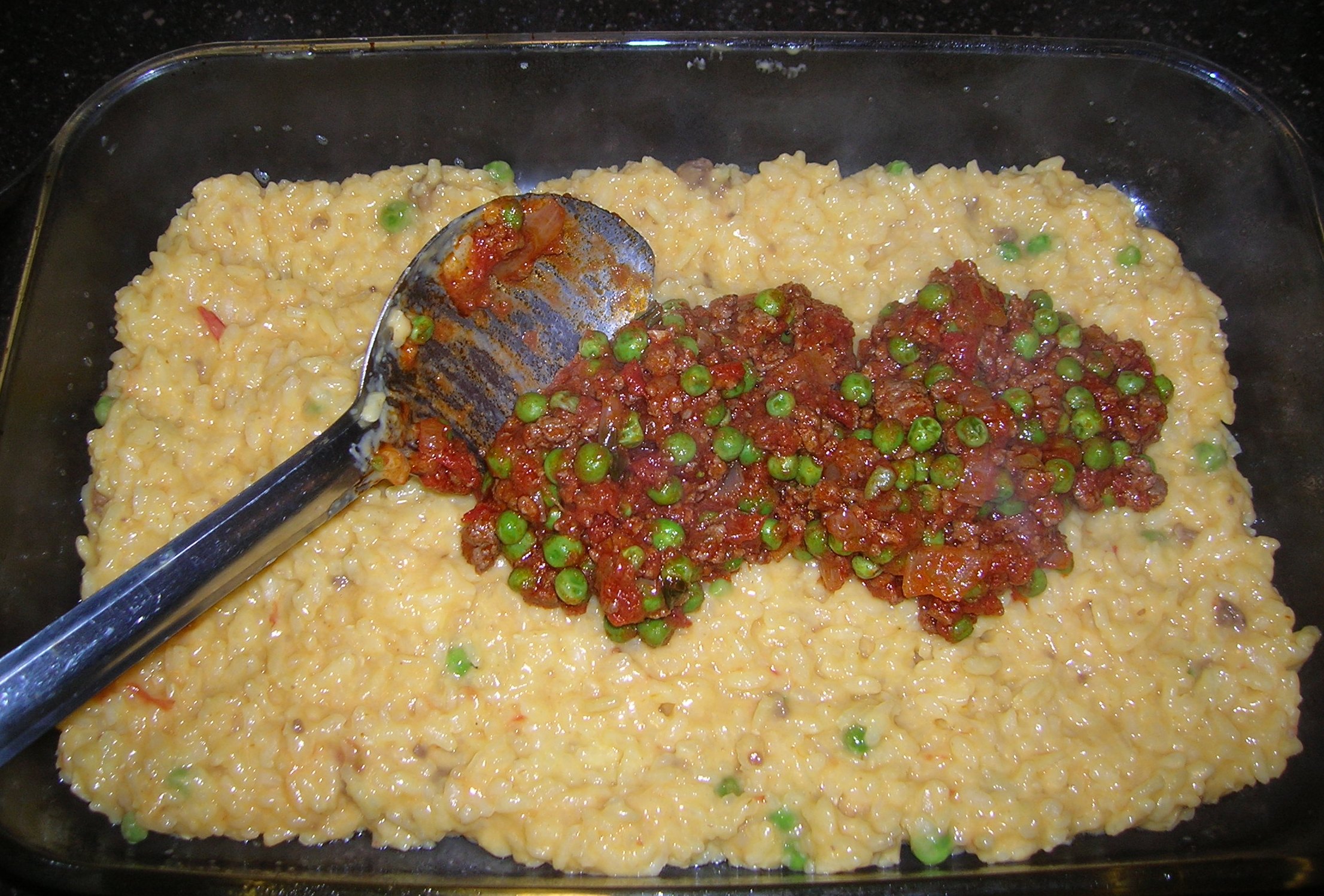
Spray a medium roasting pan or Pyrex baking dish with non stick cooking spray.  Layer half the rice on the bottom of the roasting pan. On top of that add the chopped meat and peas, covering the entire layer with the sauce. Sprinkle on top of the sauce the provolone cheese. Next layer on top of the sauce the remainder of the rice. Brush the top of the rice with the egg white. Top with the  bread crumbs and sprinkle some extra virgin olive oil over the bread crumbs or use an olive oil cooking spray to cover the breadcrumbs evenly.


Bake, uncovered, in a 350 degree oven until the bread crumbs brown, about 30 minutes. Allow to cool for about 5 minutes before cutting into squares to serve.

Posted in Rice | Tagged , , | 3 Comments

Chicken Cutlet Milanese

When I make chicken cutlets in my house I could never make enough. Kept wrapped in the refrigerator, they are great for sandwiches and just plain snacking. My son Joseph eats them like chicken fingers. He would never refuse a meal of chicken cutlets. They are one of his all time, any time, favorite comfort foods. When my mother or grandmother made them they always served the cutlets with a salad and loaf of crisp Italian bread. When you eat these cutlets together with the salad they make a great flavor combination in your mouth. With just a wedge of lemon to squeeze over the cutlets, you have the making of a wonderful meal.

As a leftover, these cutlets make great sandwiches. My all time favorite is to take a loaf of Italian bread and toast it. I then rub a clove of garlic over the toasted inside of the bread and butter it. On top of that I put the chicken cutlets, roasted red peppers and slices of sharp provolone cheese. I then place the open face sandwich in the oven to melt the cheese.  Add some arugula  on top of that with a sprinkle of balsamic vinegar. Man…that’s a good sandwich!


Chicken Cutlet Milanese

  • 3 pounds boneless , skinless chicken breasts halves, about 6 pieces
  • 2 large eggs
  • 1  1/2 cups plain bread crumbs
  • 1 clove garlic, minced
  • 1/2 cup Grated Romano Cheese
  • 1/4 cup fresh chopped parsley
  • 3 fresh basil leafs, chopped
  • 1/4 teaspoon dried oregano
  • 1/4 teaspoon black pepper
  • 1/2 teaspoon salt 


To prepare the chicken, lay the breast on your cutting board and slice width wise against the grain. You should get three slices of cutlet for each breast.


Between two layers of plastic wrap, pound each cutlet till they are flattened 1/4 inch thick. Lay the prepared cutlets on a plate.

Mix the plain bread crumbs in a medium bowl with the cheese, garlic, parsley, basil, oregano, salt and pepper. Place the prepared crumbs on a flat plate.

Beat the two large eggs in a medium bowl with a pinch of salt and pepper.

Dip each cutlet in the beaten eggs to cover both sides. I like to put all the cutlets at once in the egg mixture and mix them around. Lift the cutlet out of the egg and hold up to let the excess egg drip off. Place the cutlet in the bread crumbs and press down to coat. Turn the cutlet and coat the other side, pressing down to make sure the breading sticks. Shake off any excess breading and place the cutlet in a clean plate. Finish off the rest of the chicken in the same way.

Heat a large frying pan with enough oil to cover the pan and come up the sides about a half an inch. I like to use a combination of peanut oil and regular olive oil for added flavor. You can also use canola oil and olive oil. Use 3/4 vegetable oil to 1/4 olive oil.

When the oil is hot fry the cutlets on medium heat about 2 minutes each side or until golden brown. Place the cooked cutlets on a clean plate lined with a couple of sheets of paper towel. As you fry the cutlets in batches you can keep the cooked ones in a 200 degree oven to keep warm, covered in foil.

I enjoy these chicken cutlets just the way they are with a wedge of lemon to squeeze over the top. That’s a true chicken cutlet Milanese. Add a side salad and you have a meal.  You are also halfway there in preparing Chicken Cutlet Parmigiana. Just place the cooked cutlets in a baking pan, cover with marinara sauce, sprinkle some Parmesan cheese over the top and finish with a good helping of mozzarella. Bake  uncovered for about 15-20 minutes in a 375 degree oven or until the cheese is melted and bubbling.

My son Michael enjoys these cutlets with a side of mayonaise to dip in. “Americana”! The left overs are always enjoyed and eaten as snacks or for sandwiches. Ok, I have to admit, I love a chicken cutlet sandwich on a crisp Italian roll with lettuce, tomatoe and mayo.

Posted in Chicken | Tagged , , | 1 Comment

Calzone Barese

Growing up in Brooklyn, every pizzeria had the two basics, pizza and calzones. Maybe a few zeppole off to the side. But that was just about it. Today you walk into a pizzeria and it’s hard to find a plain slice among all the “gourmet” varieties.

Calzones were about as simple a meal as a slice of pizza, and very satisfying. Back in the day, a calzone was simply pizza dough stuffed with ricotta, mozzarela and ham. I don’t remember any other calzone being available. Or maybe that’s all my mother ever ordered when we had take out from the pizzeria. No one even delivered. The pizza boxes were not the heavy boxes you could stand on today. They were also a lot easier to get rid of after the pizza was eaten. Today’s pizza boxes protect the pies a lot better but you need a hydraulic press to break them down and place them in the garbage. You would think they were being shipped across the country and protecting fine china.

A calzone is like a turnover. Translated from Italian it means stocking or trouser. A neat little pocket filled with something good. Calzone Barese is a baked turnover originating from the town of Bari in southern Italy. Bari is on the Adriatic Sea above the heel on the boot of Italy.

If you like fried onions you will love this calzone! The combination of the sweet from the onions and raisins and the salty from the olives and ricotta salata make this a wonderful savory calzone treat. A nice change from the usual ricotta filled calzone. 

Calzone Barese

  • 3 large Spanish onions, sliced 1/4 inch thin.
  • 1/4 cup olive oil
  • 3/4 cup olives Baresane, pitted and roughly chopped (Baresane olives are a small green olive. If you can’t find these you can use kalamata olives) An easy way to pit the olives are to smash them with the side of your knife like you would smash a clove of garlic.
  • 3 anchovies
  • 1/4 cup raisins soaked in hot water till soft then drained
  • 4 peeled plum tomatoes, finely chopped
  • 1 cup ricotta salata, grated (ricotta salata is fresh ricotta that is pressed, salted and dried into a hard cheese)
  • 2 pounds basic pizza dough, recipe follows

Basic Pizza Dough

  • 1 envelope dry yeast
  • 1 teaspoon sugar
  • 1 cup warm water
  • 3 1/4 cups all purpose flour
  • 1 1/2 teaspoons salt
  • 1/3 cup olive oil, plus extra for coating dough
  • or purchase 2 pounds pizza dough from bakery or supermarket

Put the yeast, sugar, and water into a small bowl. Stir and let rest for 5 minutes.

Mix flour and salt in a large bowl . Add the olive oil to the yeast mixture and pour into the bowl with flour.

Stir and work into a dough.

On a lightly floured surface, knead the dough for at least 8 minutes, or until smooth and silky. Add some extra flour if dough is too sticky. Shape the dough into a ball. Lightly oil a bowl. Place dough in oiled bowl to coat one side then flip dough over to coat the other side. Cover with a dish towel and put in a warm place for 1 hour, or until doubled in size.

To prepare the filling:

In a large frying pan heat 1/4 cup olive oil on medium heat. Cook the anchovies, breaking them apart with your spoon, till they dissolve into the oil. Add the sliced onion and stir well. Let the onion cook, without stirring too often, to caramelize on medium high heat. 

When the onions are nicely browned add the chopped tomatoes. Cook the tomatoes down for about 5 minutes on medium heat. Take the pan off the heat and add the olives and raisins, stirring well. Let the mixture cool.

If you have a pizza stone, place it in the oven and preheat to 400 degrees for at least 15 minutes. If you don’t have a pizza stone, lightly oil a baking sheet and cook the calzone on the baking sheet.

Once the dough has risen to double in size cut in half and then half again, so you have four pieces. Roll each piece into a ball and set aside, covered with a cloth.

On a lightly floured surface roll out the ball of dough into a circle about 10-12 inches.

Spoon 1/4 of the onion mixture onto the dough. Add about 1/4 cup grated Ricotta Salata cheese on top.

Turn over one half of the dough over the other and seal the edges by pressing down with your fingers. Cut off any excess dough around the edge, leaving about a half inch from the filling. Poke a little hole at the top to allow steam to escape.

Bake at 400 degrees for about 25 minutes or until golden brown.

Posted in pizza | Tagged , | 1 Comment

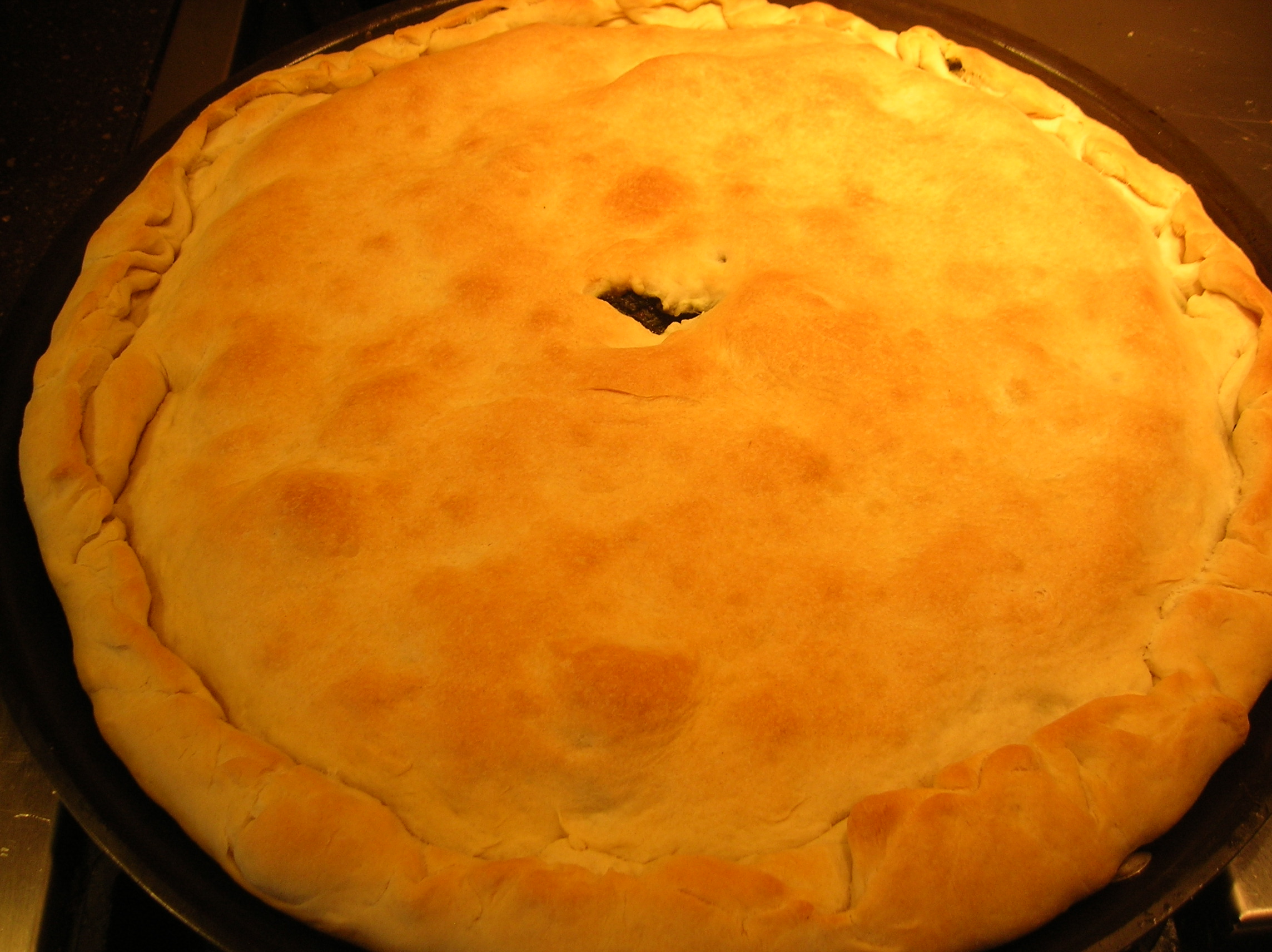
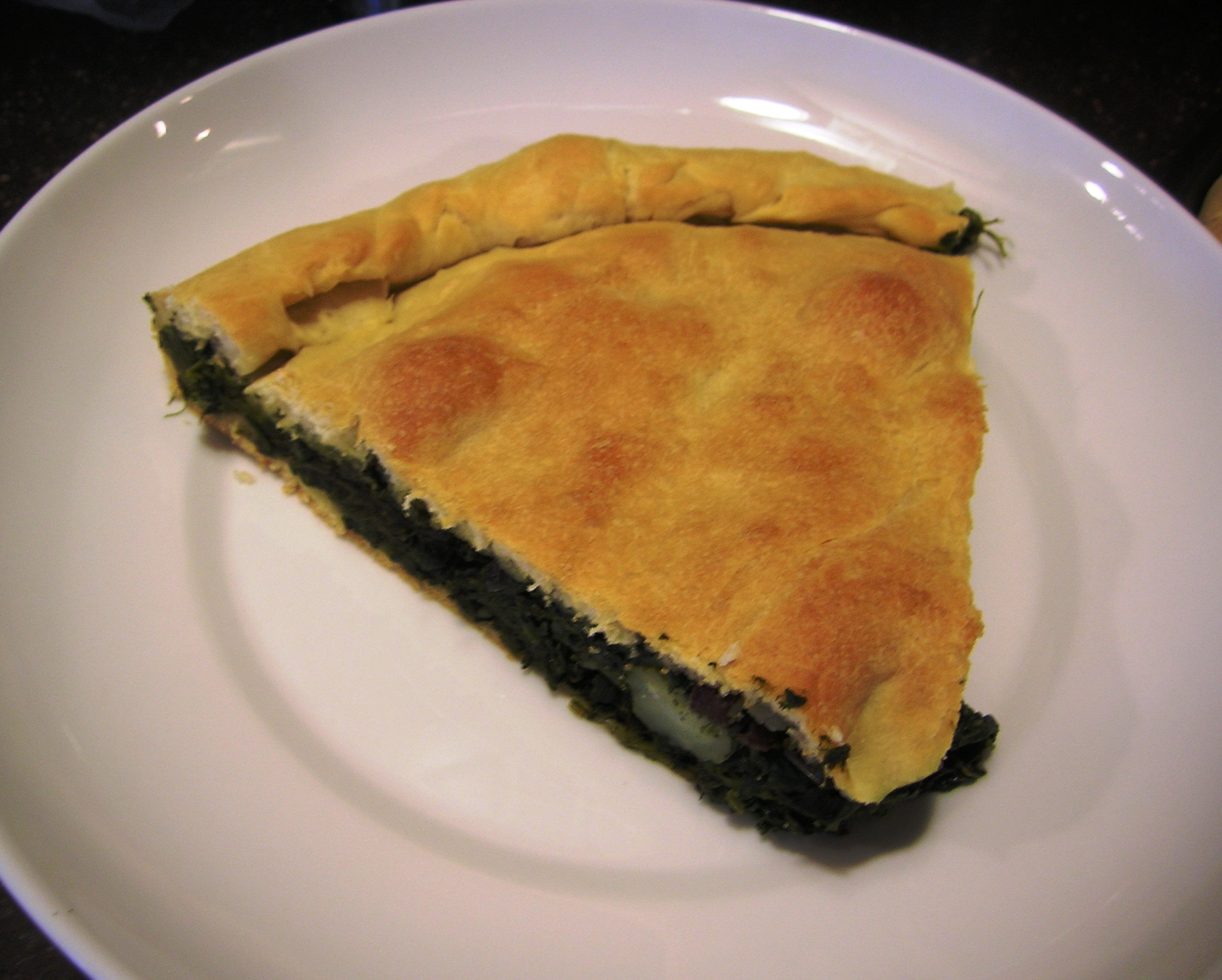
Spinach Mpanada

This spinach filled mpanada was another staple for Christmas Eve dinner. Along with the broccoli pie and scaciatta, these savory pies were always a big hit. Whatever we didn’t finish on Christmas Eve was always on hand for breakfast the next morning along with my grandmothers home made Sicilian pizza. We would take them out of the refrigerator before we opened our gifts and in between tearing open the packages we would take a piece out of the foil and enjoy them. Who had time to make breakfast when we had these delicious treats all ready to go. They were as good, if not better, the next day. My grandmother would never let anything go to waste. If one of us just ate the filling and left the crust of the mpanadas or pizza around my grandmother would take them from our plates and eat them herself. She just loved the crust! Another great Christmas morning left over we craved was my Aunt Mary’s cassata cheese cake. That was great with a cup of morning coffee.

Eating all those leftovers gave my mother and aunts enough time to start preparing our Christmas day dinner. It was a two day Christmas food fest. We were always too busy playing with our new toys and games to be aware of anything else that was happening around the house. But miraculously a Christmas day dinner appeared on the table when mid afternoon came rolling around. And we started eating all over again. What a great holiday!


Spinach Mpanada 

Basic Pizza Dough

  • 1 envelope dry yeast
  • 1 teaspoon sugar
  • 1 cup warm water
  • 3 1/4 cups all purpose flour
  • 1 1/2 teaspoons salt
  • 1/3 cup olive oil, plus extra for coating dough
  • or purchase 2 pounds pizza dough from bakery or supermarket

Put the yeast, sugar, and water into a small bowl. Stir and let rest for 5 minutes.

Mix flour and salt in a large bowl . Add the olive oil to the yeast mixture and pour into the bowl with flour.

Stir and work into a dough.

On a lightly floured surface, knead the dough for at least 8 minutes, or until smooth and silky. Add some extra flour if dough is too sticky. Shape the dough into a ball. Lightly oil a bowl. Place dough in oiled bowl to coat one side then flip dough over to coat the other side. Cover with a dish towel and put in a warm place for 1 hour, or until doubled in size.

Spinach Stuffing

  • 3 pounds fresh spinach, stems removed or frozen spinach.
  • 1/2 cup olive oil, plus extra for topping
  • 4 cloves garlic, minced
  • 3/4 cup black olives, calabrese or calamata, pitted and roughly chopped
  • 2  medium potatoes, boiled, skin removed and roughly cubed*
  • 1/4 teaspoon red pepper flakes
  • salt & pepper to taste

Wash the potatoes and cut them in half. Place the potatoes in a pot and cover with cool water. Place on medium heat. When water comes to a boil cook for 20 minutes. Cool slightly and peel. Cut into small cubes.

 Boil the spinach in small amount of lightly salted water for 4 or 5 minutes. Drain the spinach well and after it’s slightly cooled squeeze out most of the liquid with your hands. Coarsely chop.

Heat olive oil in a saucepan and add the spinach and garlic. Let the mixture saute  for 10 minutes, stirring occasionally. Add the potatoes, red pepper flakes and olives and stir gently for 5 minutes.  It’s ok for some of the potatoes to be mashed into the spinach, it’s actually desirable. Taste for salt. Put the mixture into a bowl and set it aside , stirring to cool.

When the dough has risen, preheat the oven to 425 degrees. Punch the dough down and divide in half. Roll each half into a 9-10 inch circle.

Lightly oil a baking sheet. Put 1 circle of dough onto the baking pan. Evenly spoon the spinach mixture over the dough to within one inch of the edge.

Place the second circle of dough over the filled half. Brush the edges lightly with some water.  Seal the edges securely by pinching and folding them together. Brush the top of the mpanada lightly with oil and make a couple of slits on top to allow steam to escape.

Bake for 15-20 minutes or until golden.

Slice it like a pie and enjoy!

Posted in Antipasto, pizza, vegetable | Tagged , , , | 4 Comments

Arancini – Sicilian Rice Balls

Some of the best rice balls I have ever had, outside of my mother’s kitchen, was at a food stand on the ferry that went across the straights of Messina from Calabria to Sicily. Leave it to the Italians to serve a delicious dish like rice balls as a fast food snack. They made them just like my mother used to make, crispy on the outside, tender rice midway through and a center filled with tomatoe sauce, chopped meat and peas. I envisioned four or five little old Italian ladies back in the galley of the ship forming the rice balls and frying them up to be served. I’m sure I’m not far from that reality. These rice balls were not massed produced or brought in frozen or microwaved.

Rice balls are the perfect on the move snack. They taste great hot but are just as delicious served at room temperature.

The rice you need to use in this dish is Italian  Arborio rice. This is a short-grian rice that is named after the town or Arborio in the Po Valley, where it is grown. When cooked, these rounded grains are firm, creamy and chewy. They have a higher starch content than long grain rice and are ideal for making rice balls because they hold together better. Arborio rice is also used for making risotto and is a good rice for making rice pudding.

I broke up this recipe into three parts. The first is for the chopped meat with peas tomatoe sauce filling.  The second is the preparation of the rice. And the third is the assembly and frying of the rice balls. It’s not a really complicated recipe but I thought it would be easier to show it this way. I hope you try it and enjoy it!


Arancini – Sicilian Rice Balls

Filling

  • 2 tablespoons olive oil
  • 1 small onion, finely chopped
  • 1 clove garlic, finely chopped
  • 8 ounces chopped beef
  • 1  1/2 cups Italian peeled tomatoes, chopped
  • 1/2 cup frozen peas
  • salt and pepper to taste

To make the filling, put the oil, onion and garlic in a medium skillet and cook on medium heat until the onion is soft.

Add the beef to the skillet and brown, breaking up and stirring for about 10 minutes. Add the tomatoes, salt and pepper. Simmer on low heat, stirring occasionally for about 30 minutes, or until thick.

Add the peas and cook 5 more minutes.  Taste for seasoning. Set aside to cool.

Rice preperation

  • 5 cups of chicken broth (3 – 14 1/2 ounce cans)
  • 1/2 teaspoon saffron threads, crumbled
  • 2 cups of Arborio rice (1 pound)
  • 2 tablespoons butter
  • Salt
  • 1/2 cup Parmigiano Reggiano cheese, grated
  • 1/2 cup Pecorino Romano cheese, grated
  • 4 large egg yolks

Bring the broth and saffron to a boil in a large pot. Add the rice, butter and salt to taste. Cover, reduce the heat to low and cook until tender, about 19 minutes. Make sure all the liquid is evaporated other wise you are going to have a mess trying to form the rice balls if the rice is too liquid.

Remove from the heat and stir in the cheeses. Allow the rice to cool for at least 10 minutes, stirring occasionally, then stir in the egg yolks. Spread the rice mixture out on a sheet pan and allow to completely cool, also allowing some of the moisture to evaporate. The rice ball will be easier form this way.

Assembly

  • 5 large egg whites
  • 2 cups plain bread crumbs
  • flour for dredging
  • 4 ounces sharp provolone cheese, cut into small dice
  • canola oil for deep frying

For assembly, beat the egg whites in a bowl until foamy. Spread the bread crumbs on a flat plate and the flour on another plate. Place a baking sheet nearby.

OK, now comes the fun part.

Dip your hands in cool water  or coat in oil to prevent the rice from sticking. Scoop up about 1/3 cup of rice mixture and place in the palm of one hand. Poke a shallow hole in the center of the rice. Press about 1 tablespoon of the sauce filling into the hole and top it with a piece of provolone. Cup your hands around the rice, molding the rice over the filling to enclose it completely. Add a little more rice if necessary to cover the filling completely. Gently squeeze the ball together to compact the rice. This takes some practice. Handle the rice ball gently.

Carefully ROLL the rice ball in the flour, then the egg whites. ROLL the ball in the bread crumbs, covering completely. Place the rice ball on the baking sheet to dry. Continue making rice balls with the remaining ingredients.

When all the rice balls are made place the rack in the refrigerator for 30 minutes to dry.

Pour about 3 inches of canola oil into a deep fryer or heavy pot and heat to 350 degrees. Fry the rice balls a few at a time until golden brown. Ease them into the oil with a slotted spoon.  Place on a plate with paper towels to absorb the oil.

Keep the rice balls in a warm 200 degree oven until all the rice balls are fried. Serve warm.

Posted in Antipasto, Rice | Tagged , | 3 Comments