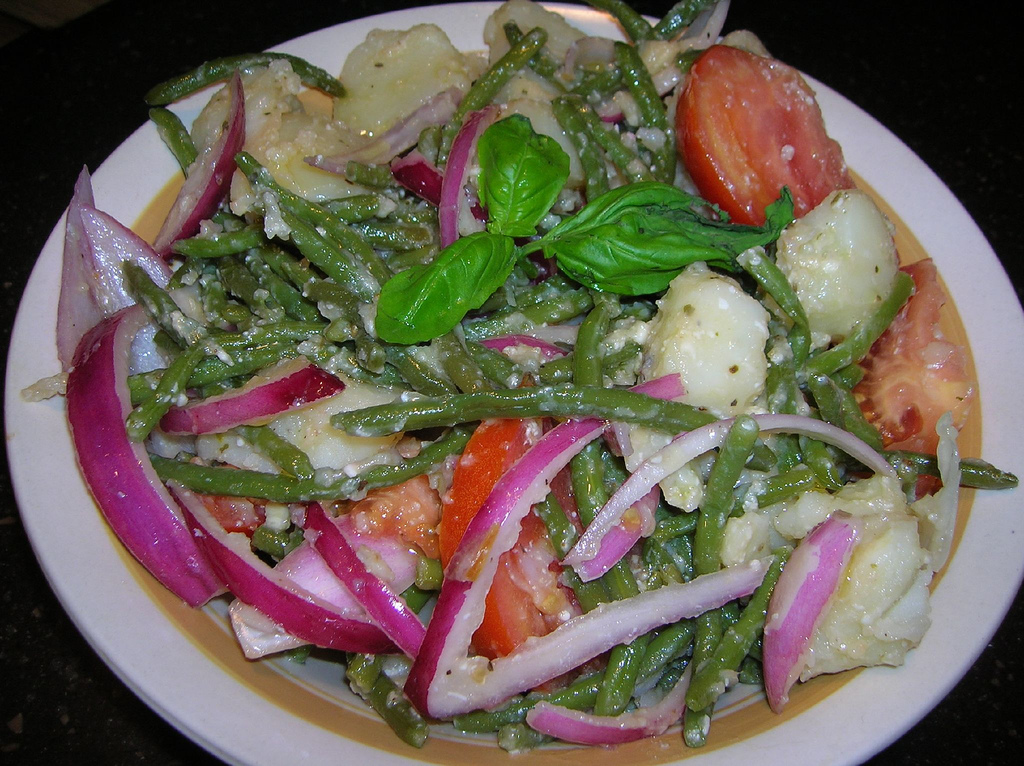
Rose’s String Bean and Potato Salad

Mother’s day is this Sunday and it got me thinking about some of the things my mom used to cook. The menu is long, but one of her signature dishes that stand out in my mind with summer approaching is her String Bean and Potato Salad. It was a classic in our family.

My mother Rose used to make this salad in the summer when the string beans were fresh and the tomatoes from the garden were plentiful. On a hot summer day this dish was a meal in itself. She always used the freshest ingredients to make this salad. Always fresh string beans, never frozen…and God forbid, never canned. It’s  a hardy salad with the potatoes mixed in. Full of garlic, olive oil and red wine vinegar,  just when you thought there was enough flavor in the dish she would add the grated cheese. This is a great side salad, part of an antipasto table or with a loaf of Italian bread a great summertime supper.

I’ll be visiting my mom this mother’s day, but will not be bringing this salad. My 92 year old Mamma requested I make and bring to her a cassata cheese cake and mpanada pie filled with broccoli and olives. God bless her! She loves my cooking, especially now that she has a hard time in the kitchen and can’t make these herself. I learned from the best. And it gives me great pleasure to watch her enjoy the traditional foods we grew up eating.

Love you Mamma! Happy Mother’s Day!


Rose’s String Bean and Potato Salad

  • 1 pound fresh string beans
  • 1 small red onion, sliced
  • 4 medium potatoes, cooked, peeled
  • 2 ripe beefsteak or slicing tomatoes cut into wedges
  • 1 clove of garlic, minced
  • 5 fresh basil leaves, chopped
  • 1 teaspoon dried oregano
  • 1/4 cup extra virgin olive oil
  • 2 tablespoons red wine vinegar
  • salt & freshly ground pepper to taste
  • 1/4 cup grated Romano cheese

Cook the string beans till tender. Cool under cold running water. Drain and place in large salad bowl. Slice cooked potatoes into 1/2 inch slices and place in bowl. Peel and slice onion into 1/8 inch thick slices, place in bowl. Add sliced tomatoes, basil, oregano, garlic, salt and pepper. Add olive oil and toss gently. Then add the vinegar. Mix well and sprinkle on grated cheese. Chill to allow flavors to combine. Take out about 15 minutes before serving and mix well.

Posted in Antipasto, Salad, vegetable | Tagged , , | 2 Comments

Fried Stuffed Eggplant

 Whatever happened to the Easter Bonnet? You know, the one with all the frills upon it. Does anyone care to be the grandest lady at the Easter Parade anymore?

I remember having a new suite at Easter. OK, so it was from Robert Hall. I was only 10 years old, what do you expect,  a Hugo Boss?  I remember my sister and mother would wear white gloves on Easter along with their Easter bonnets. Both my mother and sister had their best outfits on that day. My mother would take out her fur stole and wear it for Easter services. We would all go to church on Easter with a sense of renewal. New clothes, new hats, new shoes. My grandfather would wear his better made Italian suite and don his slick Fedora, his dress hat. His shoes were polished, even though he would wear something close to an army boot with metal taps on the heels. You could hear him coming a block away.

It was Easter, spring, a tradition of wearing new clothes with the spiritual promise of redemption and renewal. I didn’t realize it at the time, but that is pretty much what dressing up for Easter was all about. When we walked home from church we would stop at the Italian bakery to pick up some bread for Easter dinner along with an Italian braided Easter Bread for me, complete with colored Easter eggs cooked right into the bread. Does anyone color Easter eggs anymore? I hope so.

When we got home my friends had to wait. I couldn’t go out and play with them today. It was Easter, and my mother wanted to keep me in that suit for as long as she could. Back home my grandmother was putting the finishing touches on Easter dinner. She didn’t go to church anymore, it was to much for her to make that trip. Instead, she would sit in her arm chair by the front window every day and pray her rosary. Cooking in my grandmother’s oven was a roast leg of lamb. I could see my grandfather peeking into the oven and drooling over that leg of lamb. To keep his appetite at bay he would go into the hall pantry closet and pour himself a sip of sweet vermouth. He gave me a little taste as well. “It’s good for your blood”, he would say. I believed him, he was my grandfather and he knew what was good.

We were all having dinner in my parent’s dining room. My father would go upstairs to my grandparent’s apartment and carry down the roast lamb. My grandfather was right behind him with his bottle of red wine.  Once my grandmother made it down the steps we were ready to eat. My mother was serving the plates of manicotti as my grandmother finished them with a ladle of sauce and sprinkle of grated cheese. The lamb was resting on top of the kitchen stove while we finished our first course. My grandfather would carve the lamb right at the table while my mother and grandmother brought in the rest of the feast. Stuffed artichokes, string beans with garlic and oil, roasted potatoes, a bowl of escarole and beans, stuffed eggplant. And at the end of dinner we always had the Easter wheat pies with coffee and fruit.

I lasted till dessert before I got out of my suit. I’m lucky I lasted that long. The chocolate Easter bunny was safe on the end table in my living room. I couldn’t eat that until we had finished dinner. And then, it was all mine.


Fried Stuffed Eggplant

  • 2 pounds small eggplants, cut lengthwise 3/4 up their length and left attached at the stem
  • 2 eggs, whole
  • 2 eggs, beaten
  • 1/4 cup grated Romano cheese
  • 2 cloves garlic, finely chopped
  • 1 tablespoon finely chopped basil
  • 1 tablespoon finely chopped parsley
  • 1/4 cup, plus 1 cup bread crumbs
  • 1/2 pound provolone cheese cut into small cubes
  • 1 cup flour
  • 1/2 cup olive oil
  • salt and pepper to taste

In a large pot bring 6 quarts of water to a boil and add 2 tablespoons salt. Cook the eggplants in the salted water for 10 minutes. Drain and let sit in colander till cool.

Cut the eggplant through the stem so you now have two halfs. With a spoon, scoop out the eggplant flesh, leaving the skin intact. Roughly chop the flesh. Place the flesh in a large bowl and add 2 whole eggs, Romano cheese, garlic, basil, parsley and provolone cheese. Season with salt and pepper and mix well. Add the 1/4 cup bread crumbs and stir well. Add more bread crumbs if mixture is too loose.

Fill the eggplant shells (skins) with the mixture. Dredge each eggplant in the flour, then the beaten egg, then the remaining bread crumbs.

In a large skillet, heat the olive oil until almost smoking. Add the eggplants and fry on both sides until cooked through, about 10 minutes.

 Drain on paper towels and serve with lemon wedges.

Posted in Antipasto, vegetable | Tagged , , | 2 Comments

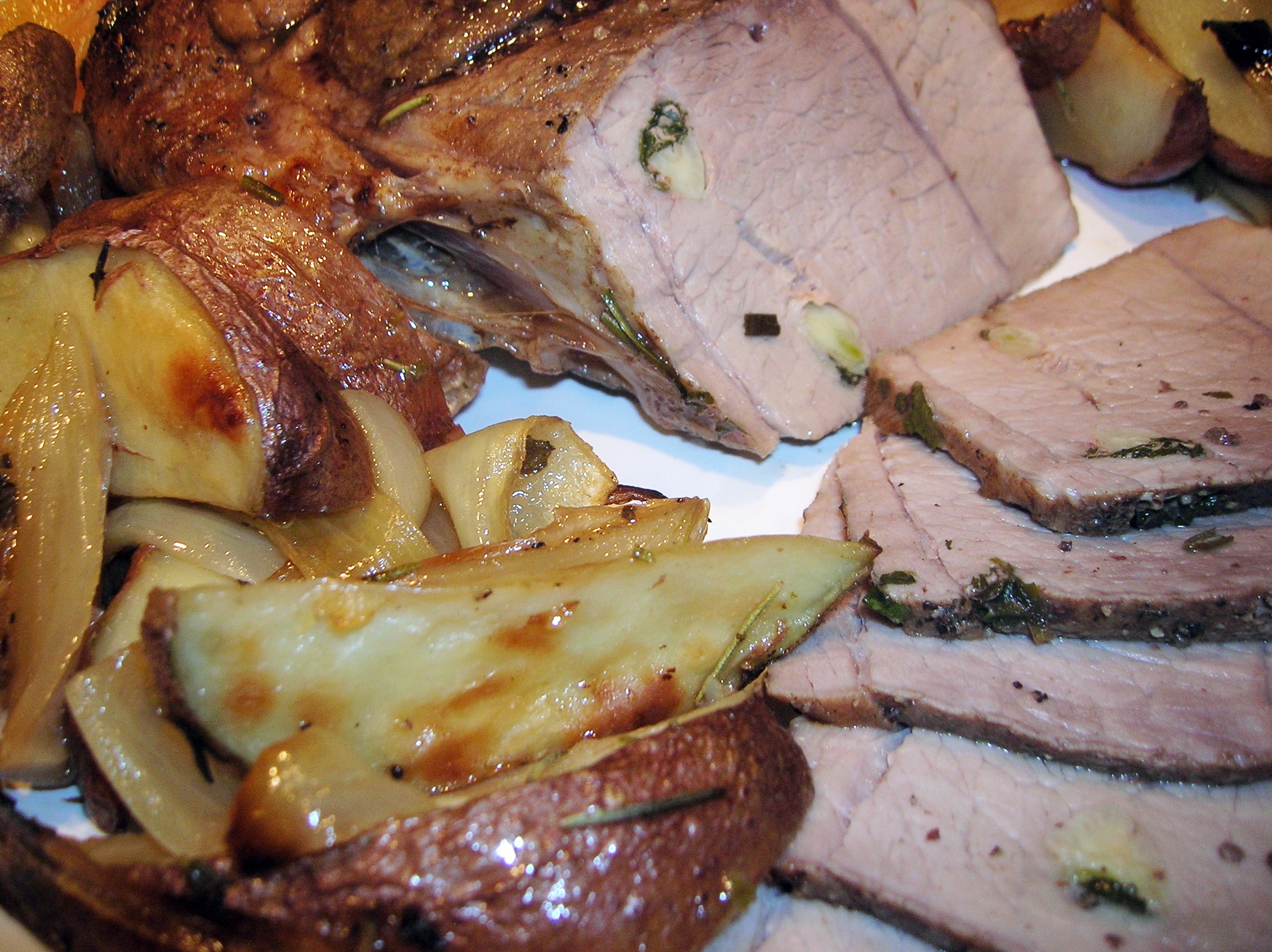
Pork Shoulder Roast

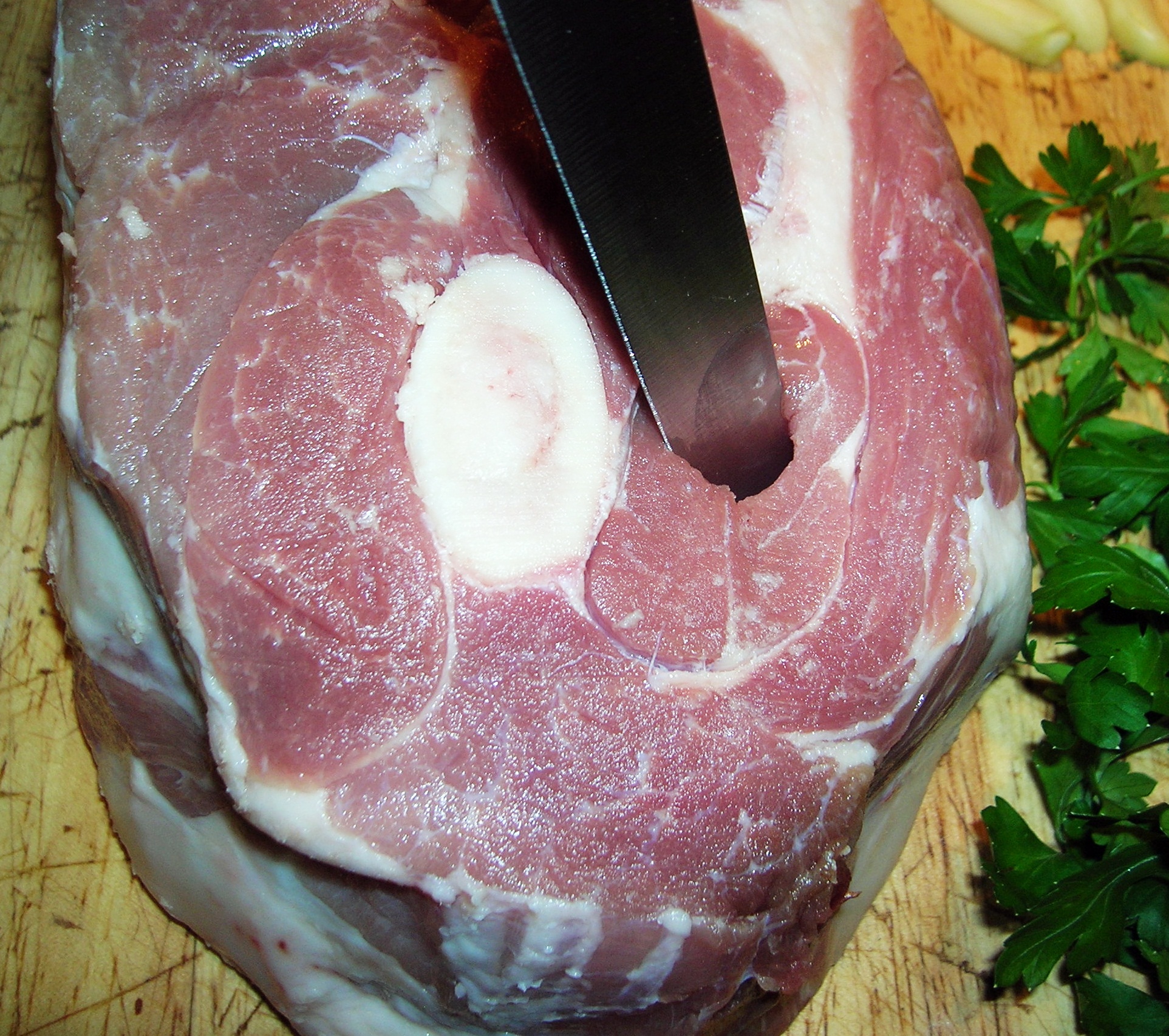
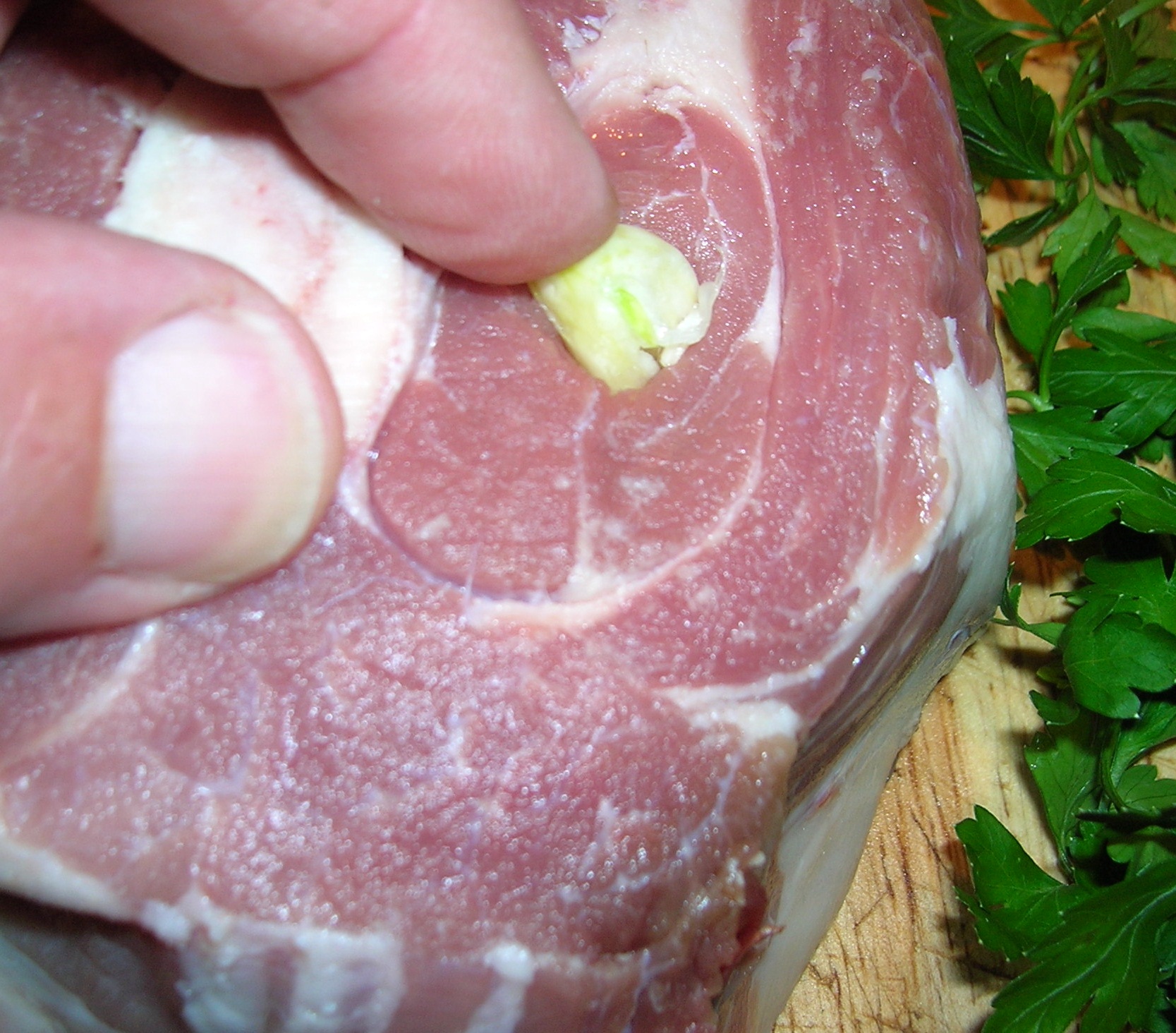
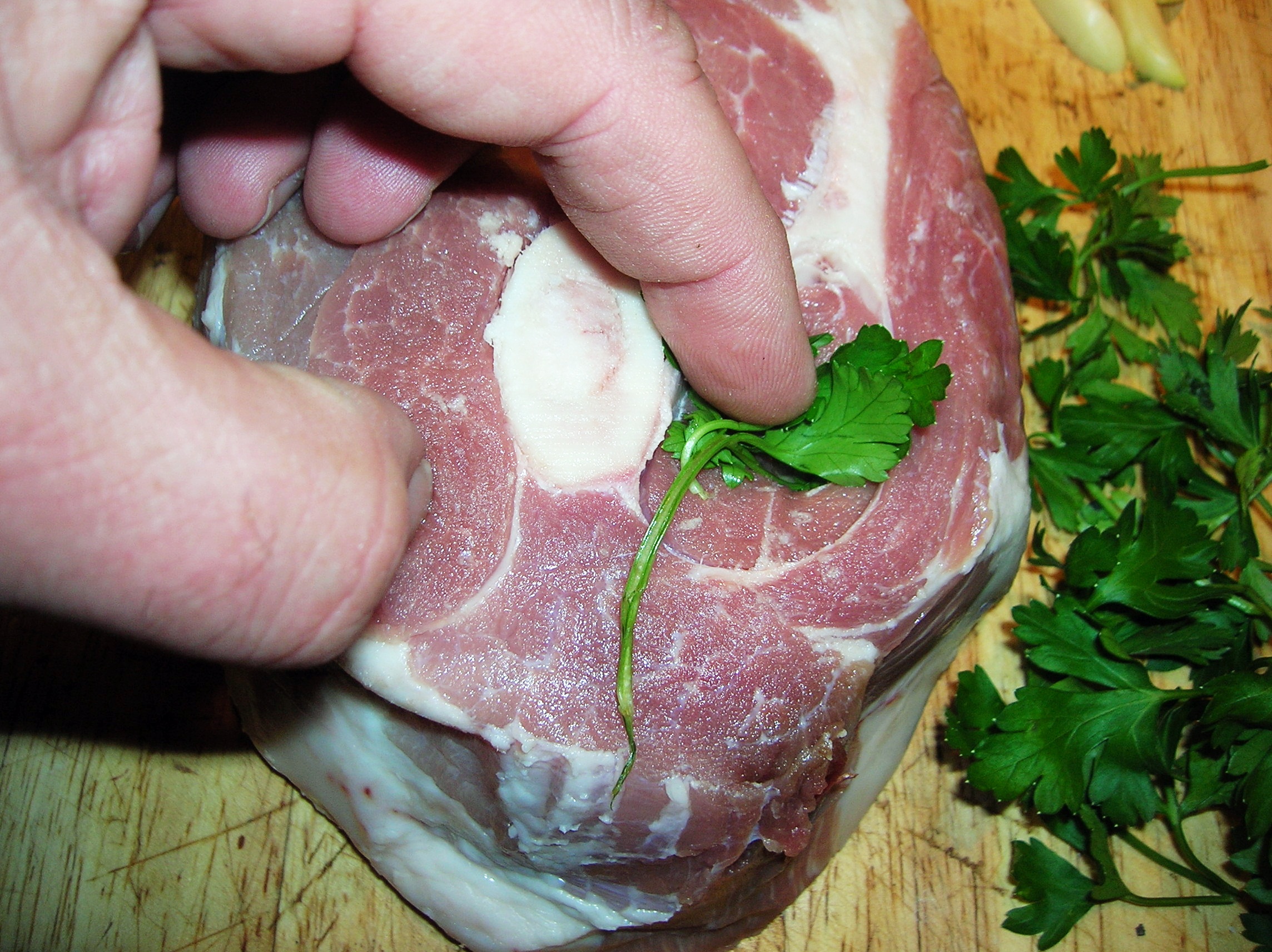
 My grandmother prepared many of her roasts this way. Not sure if it’s a Sicilian thing, but she used to poke holes in the roasts and fill them with cloves of garlic and sprigs of fresh parsley. She did this with pork as well as lamb.

My Aunt Phyllis and Uncle Sal would prepare their pork roast with potatoes and onions and a touch of vinegar. The flavor of their roast was amazing. I remember the many times we had dinner at their house in Paterson, New Jersey and when they served their pork roast I couldn’t get enough.  From the moment I walked into their house the aroma that filled the kitchen just made me more hungry and anticipate what was coming.

 I put this recipe together combining the best of both their methods.

Pork Shoulder Roast

  • 1  2-3 pound Pork Shoulder Roast
  • 4 cloves garlic
  • 1/4 cup fresh parsley
  • 1 sprig of fresh rosemary
  • 2 sage leaves
  • 1/2 teaspoon fresh thyme
  • 1/4 cup balsamic vinegar
  • 1/2 cup dry white wine
  • 1 large onion, sliced
  • 4 medium potatoes, cut into wedges
  • 1/4 cup olive oil
  • salt & pepper

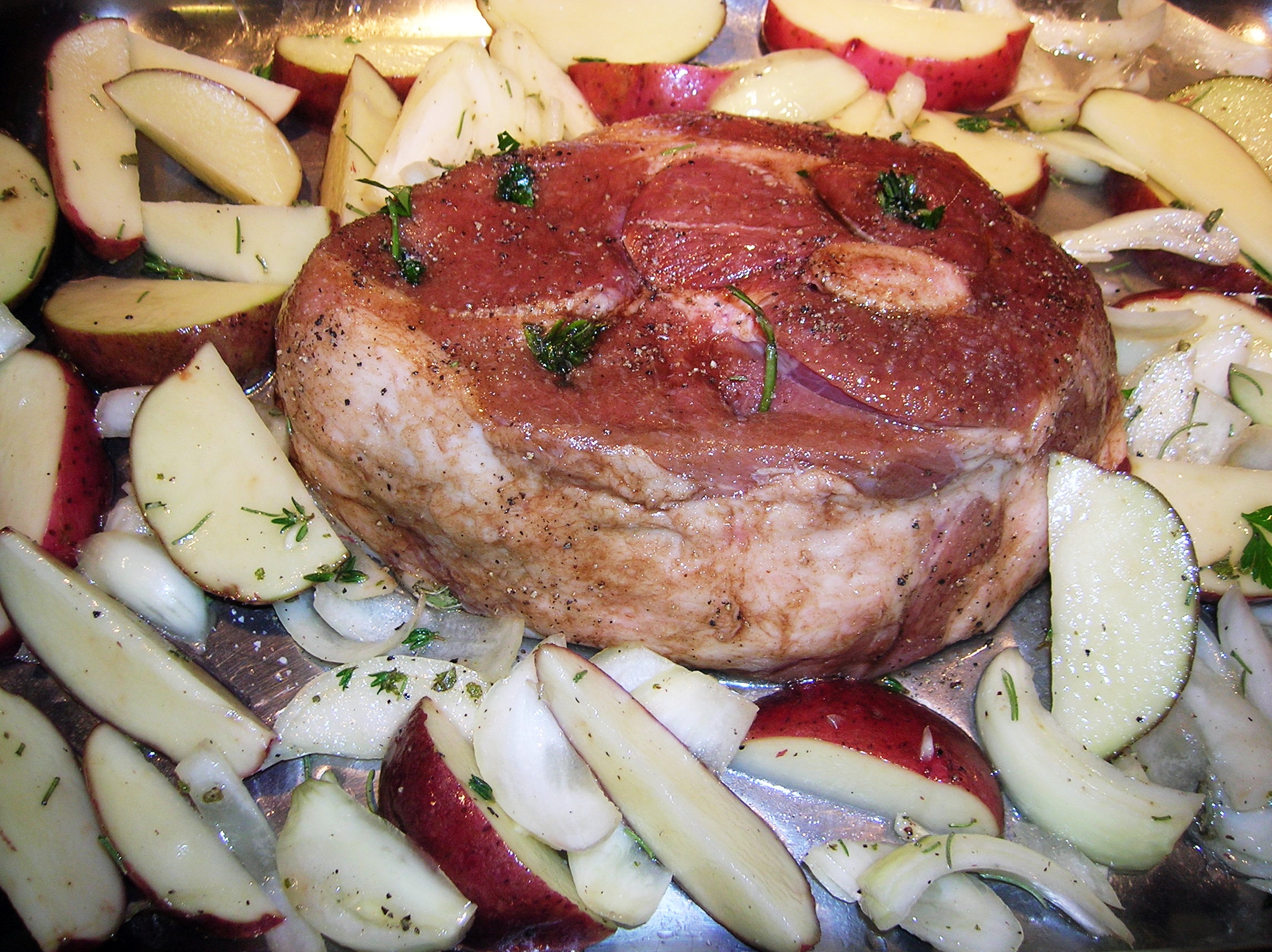
 Place the pork roast on your work surface and with a long thin knife makes a hole about two inches deep into the roast. Push a piece of garlic into the hole with your finger. Push on top of the garlic a few leaves of fresh parsley. Make these holes about 4 inches apart all around the pork roast filling them with the garlic and parsley. If a clove of garlic is too large cut it in half. The piece of garlic should be about as large as your thumb nail.

Brush the roast with the balsamic vinegar on all sides. Now brush the roast with the olive oil. Season the roast with salt and pepper.

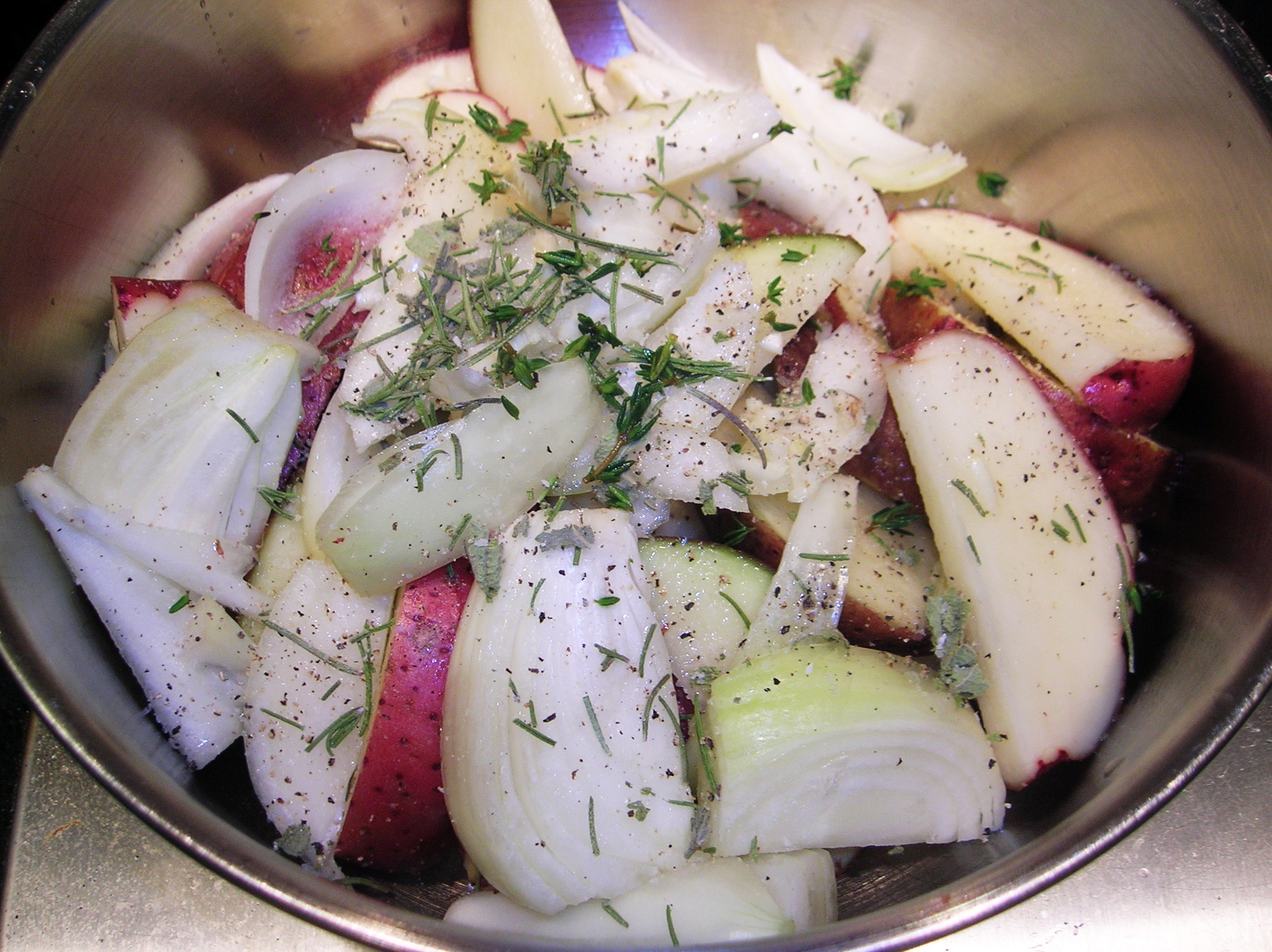
Place the roast in the center of your roasting pan. In a large bowl combine the sliced onion and potato wedges. Chop any remaining garlic and add to the potatoes and onions along with the rosemary, thyme and sage.  Pour the rest of the olive oil over the mixture and season with salt and pepper. Mix well.

Place the potatoes and onions around the pork roast. Pour the white wine into the roasting pan.

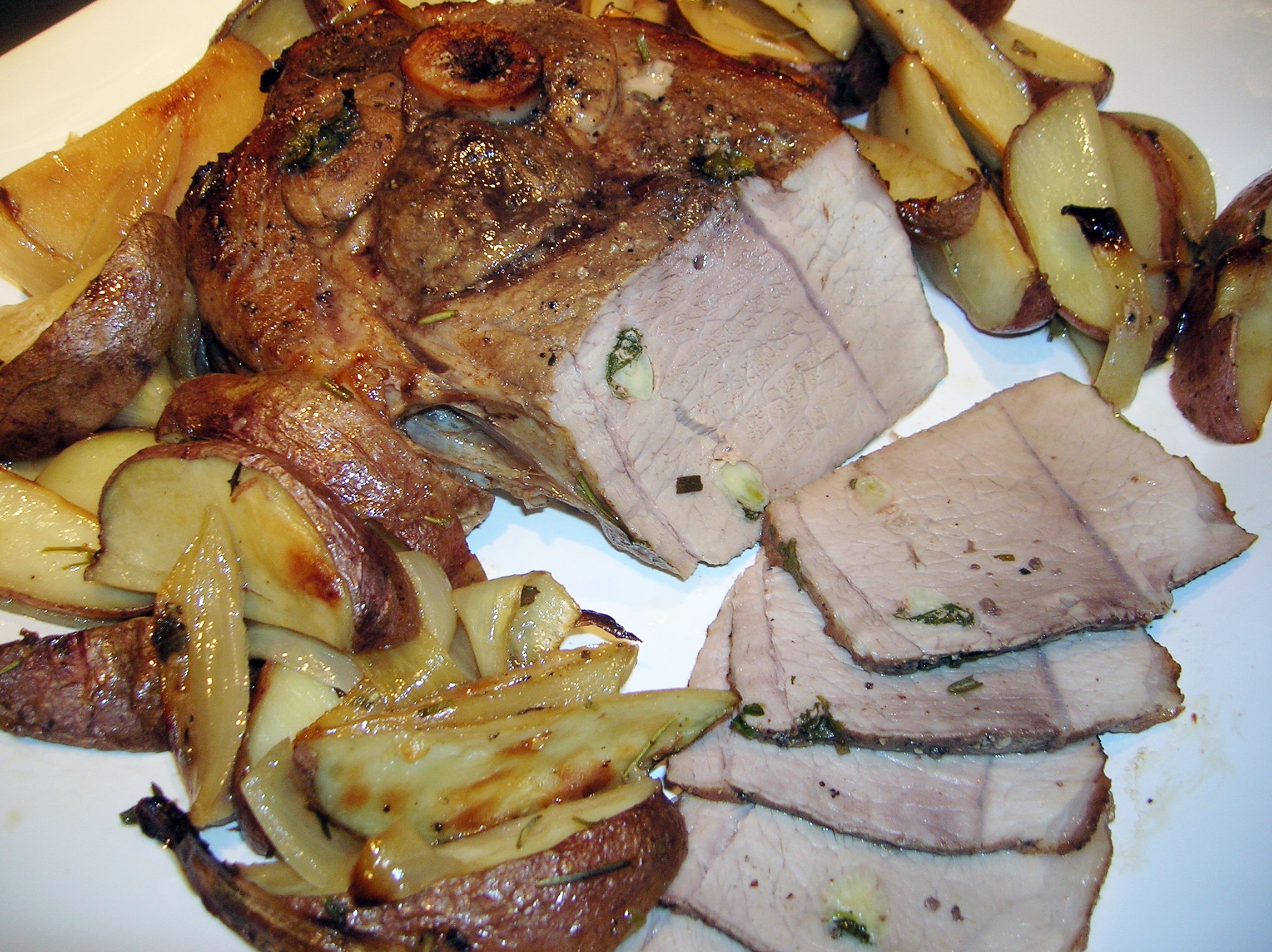
Roast in a pre-heated 375 degree oven till the temperature of the pork roast reaches 160 degrees, about 1 hour 15 minutes, depending on the size of your roast. Stir the potatoes and onions once during the cooking time. If the pan becomes dry add a little water.

Allow the roast to rest 15 minutes before slicing. Save the reserved pan juices and use as a sauce.

Posted in Pork | Tagged , | 3 Comments

Corn Muffins

Man does not live by Italian bread alone. I’ve loved corn muffins for most of my adult life. When I was a teenager, my friends and I would stop at the neighborhood candy store, BonBons, for a buttered corn muffin and chocolate egg cream. BonBons was on 77 Street and New Utrecht Avenue, right under the El. The El was the elevated railroad that the B train ran on from Coney Island to Manhattan.

Those were some of the best corn muffins I ever had. They were mildly sweet, moist and delicious. Slab on a little butter and wash it all down with an egg cream. I could taste it now. Eddie, the owner of BonBons used to always have a half-dozen of those corn muffins under the cake stand he had on top of his counter. There was never any need to toast them either because they were always fresh and moist. I wish I knew where he got them from.

I tried duplicating the taste and texture of those corn muffins over the years. After much trial and error I came up with a corn muffin as good if not better than the ones I used to get at BonBons.

One ingredient I use that really adds to the flavor is Vanilla Kefir Cultured Milk. One of the brands they sell at my local store is Lifeway Lowfat Kefir Cultured Milk Smoothie, Vanilla flavor. It’s essential for the flavor and moist texture of these muffins. It takes only about 15 minutes to whip up and another 20 minutes to bake.

Corn Muffins

  • 1 cup of stone ground corn meal
  • 1 cup of sifted flour
  • 1 cup of sugar
  • 3 teaspoons baking powder
  • 3/4 teaspoons salt
  • 1 stick of salted butter, room temperature
  • 1/2 cup of whole milk
  • 1/2 cup of Lifeway Lowfat Kefir Cultured Milk Smoothie, Vanilla flavor
  • 1 large egg, beaten

Pre-heat oven to 425 degrees.

In a large mixing bowl combine the corn meal, flour, sugar, baking powder, and salt. Mix well. Add the butter by cutting it into small pieces. The best way to incorporate the butter into the flour is by hand. With one hand, mix and squeeze the flour and butter together until the butter is totally incorporated into all of the flour and you do not have any whole pieces of butter left.

In a smaller mixing bowl beat the egg well. Add the milk and Kefir to the beaten egg and mix well. Add the milk and egg mixture to the dry ingredients and stir to combine. Do not over mix, just be sure that all the flour is moistened. It will look like a very thick pancake batter.

Fill your greased muffin tin 3/4 of the way to the top with the batter. Place in the oven for 20 minutes. The muffins are done when you stick a toothpick into the center and it comes out clean.

Posted in Dessert | Tagged | 1 Comment

Spaghetti Alla Carrettiera

This is a fresh uncooked tomato sauce. It’s named after the drivers of the colorful Sicilian carts the Sicilians are famous for.

It’s somewhere between the taste of a pesto and a fresh tomato salad.  It’s important to use very ripe fresh plumb tomatoes. If you purchase your tomatoes from the market be sure they sit on the counter until they are very soft and ripe. This a wonderful recipe to use if you grow your own and pick your tomatoes when they are very ripe and sweet. If you never had an uncooked tomato sauce you will be in for a very pleasant surprise at how wonderful it taste. Again, the quality all depends on the ripeness and sweetness of the tomatoes.

My son Joeseph likes this dish cold. He says it reminds him of a fresh pasta salad. When he first tasted this hot he asked for some Italian bread so he could sop up the juice from the tomatoes inside his dish. We both love a fresh tomatoe salad that is juicy so we can dip our bread in it and soak up that wonderful flavor mixed in with the olive oil and garlic and basil. This pasta dish has the same elements. Enjoy!

Spaghetti alla Carrettiera

  • 1 1/2 – 2 pounds of ripe fresh plumb tomaoes
  • 1/2 cup olive oil
  • 4 cloves garlic
  • 3/4 cup basil
  • 1 1/2 teaspoon salt
  • 1/4 teaspoon red pepper flakes
  • 1 cup grated pecorino Romano cheese
  • 1 pound spaghetti

Bring a large pot of water to a boil. Place the whole tomatoes into the boiling water for three minutes in order to blanch them for easy skin removal. Remove the tomatoes from the water and place under cool running water. 


  Slice the stem portion off the tomato and peel the skin off. It should come off very easy. 

Cut the tomatoes in half and remove as much seeds as you can. Chop the tomatoes very fine and place in a large bowl with all its juice. Stir in the olive oil and set aside.

Make a paste out of the garlic, basil and salt. You can use a mortar and pestle or use the side of your chef knife to grind the ingredients together, using a rubbing motion with your knife until you have a paste. Add the red pepper flakes.

Stir the paste into the tomatoes and mix well. This mixture should sit for at least a half hour or longer while you make your pasta.

Cook the spaghetti al dente. Drain and placed the cooked pasta back in the pot.

 Immediately add the tomato mixture and mix well. Add the grated cheese and serve immediately.

Posted in Pasta | 4 Comments

Merluzzi Fritti con Cipolle all’Aceto – Fried Whiting with Vinegar Onions

Merluzzo. This is still one of the cheapest fish on the market. At about a $1.99 a pound it’s a real bargain. It’s the only fish I remember my grandparents eating, aside from Baccala on the holidays. Back then they must have paid 25-50 cents a pound.

 I could remember when the fish monger drove down my block on 77 Street. My grandmother would hear him coming and go out on her second floor porch to wave him down. He would stop in front of the house and I could remember the scale he used to weigh the fish swinging along side the truck. All the fish would be laying on ice as he opened the side panel of the truck to display his catch. My grandmother didn’t even leave the porch. He knew what she wanted. He would pick 5 or 6 nice whole merluzzo and clean and gut them right there. He weighed them on the scale and shouted out their weight to my grandmother in Italian. After the fish monger wrapped the fish in newspaper he walked it up the stairs to my grandmother’s house and she paid him. That’s just how it was.

This was one of my grandmother’s signature fish dishes. I used to enjoy eating this on Friday evenings when she made it. The whiting has a mild flavor and  is a real firm textured white fish that goes so well with these fried onions in vinegar. Even as a child I enjoyed this dish.

I’ll never forget one year we had a guest from Italy visiting my grandparents. It was a summer afternoon and we were getting ready to go to Coney Island and enjoy a day at the beach. My grandmother packed a lunch for all of us of Merluzzi with onions and vinegar. I could remember sitting on the blanket and my mother taking out the plates and forks as she dished out this delicious seafood. Other people were eating hot dogs and knishes. We had a banquet of Merluzzi Fritti con Cipolle all ‘Aceto. With a loaf of Italian bread and a thermos of red wine, we dined on seafood at the seaside. That is what made us Italians different. We brought our good food where ever we went. Didn’t matter if it was the beach or the mountains. We ate good.


Merluzzi Fritti con Cipolle all’ Aceto

  • 6 Whiting cleaned
  • 2 cups all-purpose flour
  • 1 teaspoon salt
  • 2 large onions, sliced
  • 1/4 cup olive oil
  • 1/2 cup red wine vinegar
  • salt & pepper to taste
  • oil for frying

Place the flour on a flat plate. Season the fish on all sides with salt and pepper. Dredge the whiting in the flour to cover all sides. Shake off the excess flour.

Heat enough oil in a frying pan to go 1/2 inch up the sides. Fry the whiting until golden on all sides, about 3 minutes each side. Remove the whiting and place on a plate.

In another frying pan heat 1/4 cup of olive oil on medium heat. Cook the onions until tender. Do not brown.  Add the vinegar and cook 1 minute. Season with salt and freshly ground black pepper.  Remove from the heat.

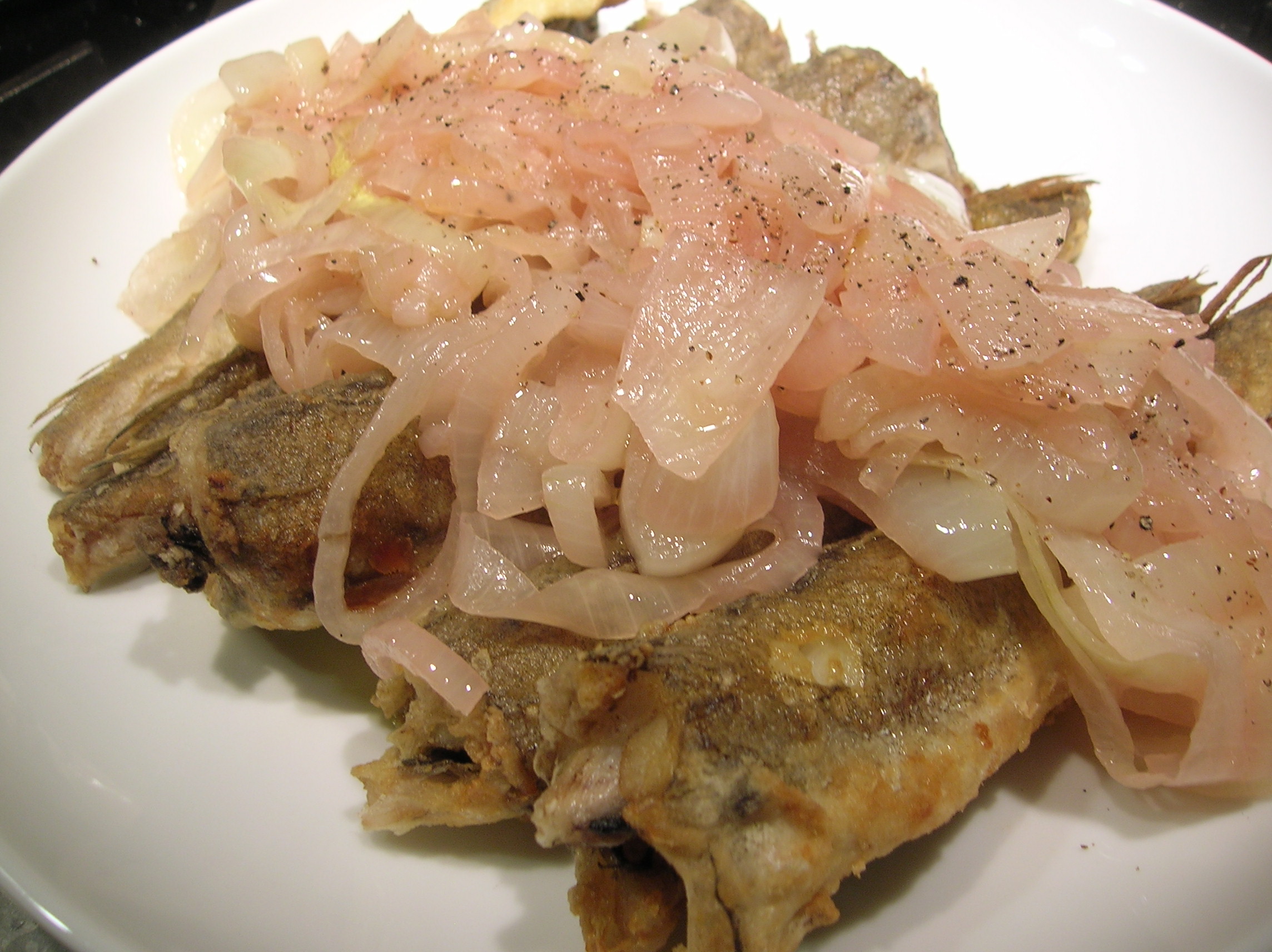
Place the whiting on a serving platter and top with the onion and vinegar mixture. This dish is best served at room temperature.

Posted in Seafood | Tagged , , , | 3 Comments

Pork Chops In Red Wine

This is a real simple dish bursting with flavor. A great way to prepare pork chops in the rustic Sicilian way. Garlic, rosemary, parsley and fennel seeds enhances the pork flavor and the reduced wine sauce gives it that burst of flavor bringing it all together.

The wine I use for this dish is CR Cellars Fortissimo. This is a red California grape wine that is full bodied, mellow and similar to southern Italian homemade wine. I find it great for cooking and even better for drinking.  What more can you ask for. Have a glass of Fortissimo with this dish and a loaf of Italian bread along side. Roasted potatoes and a side of broccoli rabe sauteed with garlic and olive oil make the meal complete.

Pork Chops In Red Wine

  • 4 pork chops, rinsed and dried
  • 4 cloves garlic, minced
  • 1 tablespoons fennel seeds
  • 1 sprig fresh rosemary, leaves minced
  • 1/4 cup parsley, finely chopped
  • 1/2 cup red wine
  • 1/4 cup olive oil
  • salt and pepper to taste

In a smal bowl add the garlic, parsley, rosemary, and fennel seeds and mix together.

Rub the pork chops with olive oil and then salt and pepper them. Rub the pork chops with the garlic, parsley, rosemary and fennel seeds by pressing the mixture onto the chops on both sides.

Place a large pan over medium heat with about 2 tablespoons of olive oil. Add the pork chops and lightly brown each side about 4 minutes. Pour the wine over the pork chops and deglaze the pan scraping the bottom with a spoon.

Reduce the wine by half, about two minutes of cooking time.

Plate the pork chops and cover them with the wine sauce.

Posted in Pork | Leave a comment

Sausage Stuffed Red Peppers

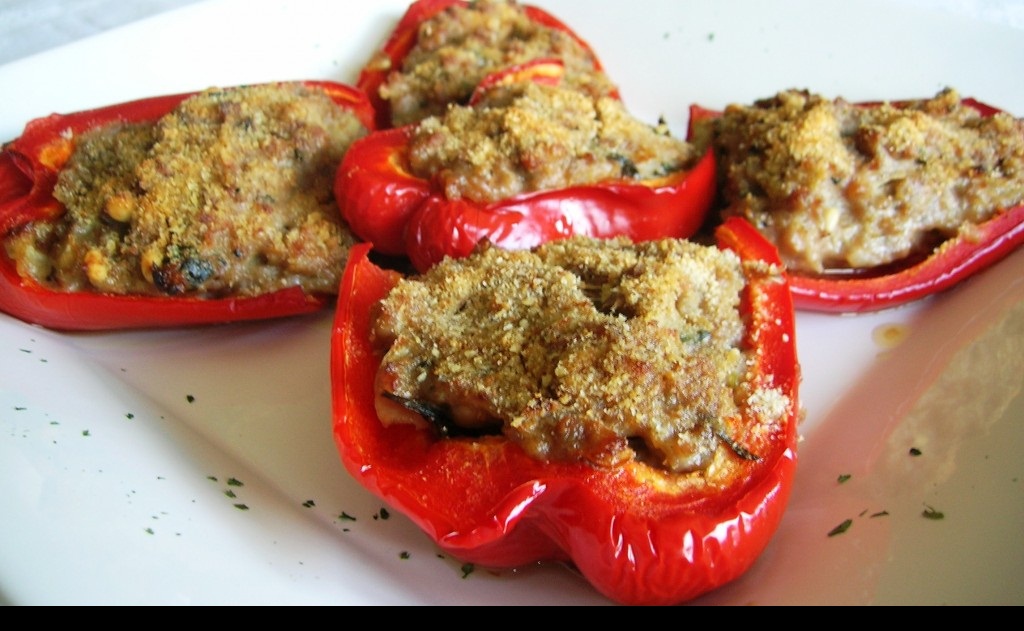
I knew I hit a good note when my son Joseph tasted these peppers and said they were the most flavorful stuffed peppers he ever ate. That was good enough for me. When I make stuffed peppers I always like using the red peppers. They are so much sweeter and just bring an extra level of flavor to the filling inside.

These stuffed peppers are great as a main course or part of your antipasti table. We would usually serve these as a side dish with other meat dishes. There is always room for a stuffed pepper on your plate.

During Christmas and Thanksgiving these stuffed peppers usually found an empty spot on your plate as grandma went around the table serving and saying “mangia, mangia!” Grandma never liked seeing an empty plate. And if yours wasn’t full or you didn’t go for seconds she thought there was something wrong with you. “Watsa matta, you no eat? Mangia!”

One time I had a friend over for dinner and he made the mistake of finishing before everyone else. You just don’t do that with grandma at the table! She will just keep filling up your plate until you roll over in submission. And even then she’ll keep feeding you.


Sausage Stuffed Red Peppers

  • 3 large red bell peppers
  • 4 italian sausages with cheese and parsley, casing removed
  • 1 anchovy fillet
  • 1 large onion, diced
  • 1 clove garlic, diced
  • 1/4 cup grated Romano Cheese
  • 4 slices bread, 4 ounces, cubed and soaked in 1/4 cup red wine and 1/4 cup water
  • 1/4 cup olive oil
  • 5 fresh basil leaves, chopped
  • 2 tablespoons pignoli nuts (pine nuts)
  • 1 teaspoon red wine vinegar
  • 1 egg, beaten
  • pinch of salt
  • 3 tablespoons plain bread crumbs

In a large frying pan heat the oil and cook the anchovy,breaking it up untill it melts into the oil. Add the onions and garlic and cook till soft. Add the sausage meat and brown as you break it up fine with your spoon.

Once the sausage is cooked remove the pan from the heat. With a slotted spoon scoop out the sausage meat, leaving the oil behind, and place in a large bowl.  Squeeze the excess wine out of the soaked bread and add the bread, cheese, basil and pine nuts, pinch of salt and red wine vinegar to the sausage mixture. Mix well to incorporate the bread into the mixture. Allow to cool slightly. Add the beaten egg and mix well.

Cut the tops off the peppers and slice the peppers in half length wise and remove the seeds and ribs from the inside.

Stuff the peppers with the sausage stuffing and place in a well oiled baking pan. Sprinkle the tops lightly with the plain bread crumbs. Place in a pre-heated 350 degree oven, on the lower part of the oven,  and bake for 50 minutes.

Allow to cool slightly before serving.

Posted in Antipasto, Pork, vegetable | Leave a comment

a Stemperata

My father used to talk about his mother and aunts making this dish in Italy. Somewhere in the back of my mind, I remember eating this as a child, the same way I remember eating caponatina. The smell of the vinegar and unusual taste of the vegetables just etched the experience in my mind.

This vegetable side dish or antipasto is a specialty from my father’s town of Ragusa in Sicily. It is eaten like you would eat a caponata, as a condiment or part of an antipasto with provolone cheese and dried sausages. This savory vegetable dish is great on its own with a loaf of Italian bread and a glass of red wine. The most popular way to use A Stemperata is to cook it with chicken, sword fish, tuna or rabbit. You brown the meat and then cook A Stemperata in the pan then add back the meats and vinegar to finish cooking. This is always served at room temperature. It’s a most flavorful dish!

‘A Stemperata

  • 1  1/2 cup pitted green olives, whole
  • 4 cloves garlic, crushed
  • 1  1/2 cups carrots, skinned, sliced into rounds 
  • 1/2 cup capers, rinsed and drained
  • 7 stalks of celery, sliced
  • 1/2 cup fresh mint leaves
  • 1 cup of red wine vinegar
  • 1/4 cup olive oil
  • salt & pepper

Peel the carrots and cut into 1/4 inch thick rounds. Steam in a 1/4 cup of water for 5 minutes.. Drain. Brown whole crushed garlic in  olive oil over medium heat.

Add olives, capers, chopped celery and boiled carrots, and mint. Salt and pepper to taste. Turn heat to medium high.

Cook until the celery starts to get tender, about 10 minutes. Pour in the vinegar and cook on a high flame for another 10 minutes.

Serve chilled or at room temperature.

You can also enjoy this vegetable dish with any light meat such as Italian sausage, chicken, sword fish, tuna, pork or rabbit. Add a glass of red wine and a loaf of crisp Italian bread and you can start to sing praise to our ancestors!

Posted in vegetable | Leave a comment

No Knead Bread – Fresh Baked Bread In No Time

There is nothing quite as satisfying as making your own bread. Most people who love to cook have a creative side to them. It’s that creative process that takes cooking to a whole new level. Baking your own bread helps feed that creative process. It takes you back to a time when making things from scratch was common place.  Taking fresh baked bread out of the oven and slicing the crusty loaf and spreading it with butter is as simple a comfort food as you can get.

I started making my own bread after I got my KitchenAid Artisan 5-Quart Stand Mixers. I don’t know how I ever lived without this mixer.  The recipe that came with the mixer was simple enough and made some pretty good bread. But after a while I took it to the next level. I wanted to get to the heart of bread making and started reading about sour dough breads. Bread making is thousands of years old and at its beginnings, somewhere along the line, some stored flour became wet, and began to ferment, and the discovery of yeast took bread making in a whole different direction.

I became fascinated by this naturally occurring process and investigated further. If you take a mixture of flour and water and leave it in a container, the yeast micro organism will begin to grow. That’s right, yeast is probably one of the earliest domesticated organism there is. People have used yeast for fermentation and baking for over 4,000 years. And here I am in my kitchen in Pearl River reproducing a process that our early ancestors discovered so long ago. Yeast organisms are all around us. They occur in the flour and the air around us. When cultivated properly they help produced such wonderful things as bread.

The yeast today we buy in packets has been engineered to produce a quick rising result. What has been a very successful result for commercial bakeries, producing bread in a quicker and more  profitable fashion, has resulted in a less tasty product. Naturally occurring yeast takes longer to rise. But it’s this additional time that adds the wonderful flavor to the bread. And the longer it ferments the more “sour” the bread will taste, giving you that great tasting sour dough you get from Artisan bakers.

 I won’t lie to you, making bread from sour dough starter takes longer than using the packet yeast. But the results are worth it in my opinion. And once you  have an active yeast culture you can use it forever. I’m not kidding, those little beasties will live longer than we will. I guess there is something of a mad scientist inside me that takes pleasure in knowing there are living organisms that I helped cultivate at home in my refrigerator.

I’ve been making my own sour dough bread for a number of years now and have three different cultures stored in my refrigerator. The first one I captured and grew myself, starting with a mixture of flour and water and going through the process of “feeding” it every day with fresh flour and water.  You use equal parts flour to water and discard that amount from the container before adding more. So, for example, you start your culture with 2 cups of flour and two cups of spring water.  After 24 hours you discard 1 cup of the batter and add a cup of flour and cup of spring water.  You repeat this process daily. After about 5 days a bubbling activity takes place and you get a distinct aroma of beer,  signaling that the yeast is growing and thriving in the environment I provided. The other yeast cultures, Italian (Ischia Island and Camaldoli) Sourdough Cultures I purchased online. These cultures are hundreds of years old and sourced from a bakery in Italy that has been producing bread from the same strain of yeast for over 200 years. As I said, this stuff will last forever. Each culture has a distinctive flavor and activity level. Once fully activated, you should see bubbles within a couple of hours of feeding. You can use the culture for a recipe, replace what you took out with more flour and water, and after an hour place in the refridgerator until your ready to use the culture again.  To reactivate, leave the culture on your counter until you see the bubbles forming and growing. And the process repeats.

There are many books available that can take you through the process of making your own sour dough starter. Here are some I found useful: Alaska Sourdough and  Classic Sourdoughs, Revised: A Home Baker’s Handbook . If you have a passion for cooking and enjoy the process as well as the outcome then I recommend you look this up and have fun with it.

For this recipe I’m going to share with you a bread that has been developed to enable you to make fresh baked bread at a moments notice. A “5 minute” process that can put a fresh loaf of bread on your table  in just about the amount of time it takes you to bake it. In this recipe you use a packet yeast, I add some of my sour dough culture so the natural yeast will eventually take over. If you use packet yeast only, you will eventually develop a sour dough flavor because the concept here utilizes the dough from the last batch added to the fresh dough so eventually you are going to get a more flavorful loaf of bread over time. The fermentation of the older dough will add to the flavor of your new batch.

What you will be doing is making a “no knead dough” and storing it in your refrigerator for up to two weeks and using what you need when you want a loaf of fresh baked bread.

You should have a pizza stone to bake the bread on. What I use, and highly recommend, is a ceramic stone baking dish such as a SuperStone / 11″ La Cloche Dome Baker which simulates a hearth oven in your kitchen. The moist dough within the cloche creates the steam needed to produce a delicious bread with a crackly, golden crust and light crumb. If you are using a pizza stone you can help this along by placing a pan of hot water next to the stone while baking your bread.

No-Knead Bread   

 3 cups lukewarm water
1  1/2 packets yeast (1  1/2 tablespoon)
1  1/2 tablespoon sea salt
6  1/2 cups flour, all purpose or bread flour


Add yeast and salt to water in a 5 quart bowl. Mix in the flour. Mix with a wooden spoon until  the mixture is uniformly moist. Don’t knead, the stirring action is enough to develop the gluten.  Cover the bowl loosely with a towel and allow to rise 2 hours in a warm place. Once the dough has doubled in size you should refrigerate it for 3 hours before beginning to  shape a loaf.
 
 
Prepare pizza peel with corn meal and flour.  Have enough flour on the peel so the dough will not stick and will slide off easily onto your stone. Sprinkle the surface of dough lightly with flour then cut off a 1 pound piece, about the size of a large grapefruit.  Flour your hands well  and stretch the dough in your hands pulling the surface of the dough around to the bottom on all sides. 
 
Place the ball of dough on the pizza peel. Allow to rest uncovered for 40 minutes.


Preheat oven and pizza stone or cloche to 450 degrees. Dust loaf  lightly with flour and slash the surface of the dough with a serrated knife to allow the loaf to expand while baking. You can cut a single slash along the top or make a tic-tack-toe grid.
 
Slide the loaf onto the pre-heated pizza stone or into the cloche and cover it with the dome. Bake the loaf for  30 minutes or until golden. Cool the loaf on a rack for at least 30 minutes before slicing.
 
Refrigerate remaining dough covered, not air tight,  and use over the next 2 weeks cutting the amount you need for your next loaf of bread.
When you get down to about a half pound piece of dough in the bowl add that to your new batch and stir it into the water before adding your flour. At this stage, if you really want to make the natural yeast take over, do not add any packet yeast. There will be enough yeast in the left over dough to product the rise you need. It will just take a little longer to rise. Leave it till it doubles in size, about 8 hours at 80 degrees, and then refrigerate. If you continue this process you will never have to buy yeast again and your bread will become more flavorful with time.


Posted in Bread | Tagged , , , | 1 Comment