Sunday Morning Pancakes and Peach Cobbler

My children loved my Sunday morning pancakes. What they didn’t realize was what they were enjoying came from years, decades of experimenting and coming up with the “perfect pancake”. When I was a child I used to make my own breakfast. My mother would be up to make breakfast for all of us. But when I was about 10 or 11 I wanted to do it myself. Eggs, over easy or scrambled, French toast, waffles, pancakes, bacon, sausage….you name it, I did it all. So by the time I was married and my children came along, I had perfected the Sunday morning pancake. This is what they grew up eating and became their own comfort food, till this day.

Back in the late 70’s I tried out a pancake mix that I happened to see at my neighborhood Shop Rite. It was not like any other pancake mix on the shelves, that is what made it catch my eye. Aunt Jemima, Bisquick and the like all came in boxes. This brand didn’t. It came in a 5 pound flour bag. It was called “Washington Buttermilk Pancake Mix”.  All you did was add egg, milk and oil and it was ready to go. Now, by this time I was making my pancakes from scratch but I wanted to try this mix, and I’m glad I did. It was my pancake mix of choice for many years. It is what my children grew up eating, along with a bottle of Log Cabin syrup, like my mother used to buy when I was a child. We tend to stick to certain products that our parents used when we were growing up. Log Cabin syrup was one of them.

This pancake mix made such great pancakes that when I had gotten a recipe for peach cobbler one year from a friend at work I substituted the dry ingredients for the cobbler with Washington Buttermilk Pancake mix. It was awesome! When I made it for company they always had to leave with the recipe. I sent many searching their grocery shelves for Washington Buttermilk Pancake Mix.

I remember a while back, maybe five or six years ago, I was looking on the grocery shelves for my pancake mix. It wasn’t there. It had come and gone over the years. I would wind up getting something else, but, it was not even close to my Washington Buttermilk Pancake mix. After about 3 or 4 failed attempts to locate this pancake mix I went to customer service and asked them if they were getting any in. They said they have not gotten any stock on the mix in a while. As time went on I would walk up the pancake mix isle and look for my mix, but it wasn’t there.

About a month ago I got to thinking about Washington Buttermilk Pancake Mix and I tried to look it up on the internet. I found the company that made the product and looked at their product list…but Washington Buttermilk Pancake mix was not among their offering. I felt like I had gotten so close to a long-lost friend and when I though I had found him, he wasn’t there. I decided to write the company and ask where I can find their pancake mix. About a week or two later I got the reply. “I am sorry to inform you that we stopped manufacturing the Washington Pancake Mix almost 5 years ago. We did however develop a simple recipe, please see attached. You can find the Indian Head Yellow corn meal in Shoprite. Thank you for using our products. Steve Friesner, Director of Sales & Marketing, Wilkins Rogers Mills.

My pancake mix was no longer in production, but, they were kind enough to give me a recipe for it. How nice was that??? I immediately put together the ingredients and the following morning made a batch of those pancakes that eluded me for over 5 years, probably longer. It was like getting together with an old friend you have not seen in many years. My son Joseph agreed, these were the pancakes he loved eating growing up. There is nothing worse than loosing something you had while growing up. I’m glad I was able to relive some of the simple moments of making the Sunday morning pancakes my kids, and myself, loved to eat.

Washington Retail Pancake Mix

Blend dry products together in a mixing bowl using a wire whip. Add eggs, milk and oil and mix using wire whip until batter is uniform. Pour onto 400 degree griddle and cook about 1 minute on each side, turning when bubbles form on top. Makes 10-12 delicious pancakes.

Note: Different brands of baking powder may give different batter thicknesses, if needed add more or less milk to get the desired pancake thickness.

Variation: For a buttermilk pancake, substitute 1 1/4 cup + 3 tablespoons buttermilk for the milk. As above, use more or less buttermilk to get the desired pancake thickness.

I tripled this recipe with only the dry ingredients and keep it in a zip lock bag. When I’m ready to make pancakes I use 1 cup of ready-made mix to one cup of milk or buttermilk, 1 tablespoon of oil and one egg.

Peach Cobbler Cooking Italian Comfort Food

Peach Cobbler

  • 1 cup of ready-made pancake mix
  • 1 cup of sugar
  • 1/2 cup of whole milk
  • 1/2 cup of buttermilk
  • 3/4 stick of butter
  • 1  29 ounce can of sliced yellow cling peaches in heavy syrup

Preheat oven to 400 degrees

Place the butter in a 9×13 inch baking pan. Place the pan in the oven until the butter melts.

While the butter is melting, mix together the pancake mix, sugar, milk and buttermilk. Wisk till all the ingredients are combined and the batter is smooth. Drain the heavy syrup from the can of peaches.

Take the hot pan with the melted butter out of the oven and pour the batter directly into the center of the pan. The heat of the pan will start to set the batter along the edges. Place the peaches evenly all around the pan directly on top of the batter.

Cook in the oven for 30 minutes or until the cobbler is golden brown.

Peach Cobler with Vanilla Ice Cream Cooking Italian Comfort Food

Serve warm with plenty of Vanilla ice cream.

Posted in Dessert, eggs | Tagged , , , | 4 Comments

Spaghetti con Aglio Olio e Alici

My friend Tommy Abatemarco reminded me of this dish the other day. I have not had this in a long time, spaghetti with garlic and oil and anchovies with toasted breadcrumbs. Man! This takes me back to Christmas Eve in Brooklyn. This is also the kind of dish you make at midnight when you’re hanging out with your friends and need something to eat. It’s always ready, available and quick. And it’s delicious!

A while back while visiting in Calabria, we were all up late drinking wine and talking and just enjoying the company of friends and family. And then I heard someone shout, “Pasta Aglio Olio e Alici”! And in no time the lady of the house was boiling the water for the spaghetti and preparing a simple but delicious dish. It’s something you can make at a moments notice, and usually do.

Every Italian pantry should have spaghetti, olive oil, garlic, anchovies and breadcrumbs. These are the ingredients that make up one of the most satisfying, most tasty macaroni dishes you can eat.

Spaghetti con Aglio Olio e Alici

Serves 4

  • 1/4 cup olive oil plus 3 tablespoons
  • 4 cloves garlic, chopped
  • 4 anchovies fillets
  • 1 cup Italian flavored bread crumbs
  • 1 pound spaghetti
  • grated Parmigiano Reggiano cheese

Fill a large 6 quart pot with water and bring to a boil. Generously salt the water with a tablespoon of salt. Add the spaghetti.

While the spaghetti is cooking, in a medium frying pan heat over medium flame the 1/4 cup of olive oil. Add two of the anchovy fillets and cook till the anchovies melt into the oil, breaking apart with your spoon. Add the garlic and cook for 2 minutes just until the garlic starts to brown. Add  2 cups of the salted pasta water to the garlic and oil and reduce the flame to low and simmer.

In a small frying pan over medium heat add the three tablespoons of olive oil. Add the other two anchovy fillets to the pan and cook till the anchovies melt into the oil, breaking them up with your spoon.  Add the cup of Italian flavored bread crumbs and mix well so you absorb all the anchovy flavored oil and toast lightly. Be careful not to burn the bread crumbs, but lightly toast them. Remove from the heat.

Once the pasta is cooked reserve another cup of pasta water and drain the pasta well. Place the pasta back in the large pot and add the garlic and oil mixture over the pasta and mix well. If the pasta is too dry add more of the pasta water.

Plate the pasta into individual bowls, one pound pasta should serve 4 people,  and sprinkle about a quarter cup of the bread crumb mixture over the spaghetti. Serve immediately with plenty of grated cheese.

Posted in Pasta | Tagged , | 11 Comments

Pasta with Bolognese Sauce

Who’s that knocking at the door?

This past Sunday I get a call at about 11am from the emergency service that my 94-year-old mother is subscribed to. “Your mother fell and an ambulance has been dispatched. Your sister Annette and brother Richard have been called and Richard is on his way to your mother now.” That’s a call we all knew we would get, but you are never prepared for something like that. I knew my brother Richard was 10 minutes away from my mom, so I waited a while before I called him to find out how serious it was. About a half hour later I heard the news, and it wasn’t good. “Mom is in the emergency room, she broke her hip, had heart failure and has water in her lungs”, my brother said. It sounded like the end would be near. A broken hip for any elderly person is a death knell. I told my brother I would head to Long Island and see him as soon as I can.

After fighting weekend beach traffic for 2 hours,  I’m about 10 minutes away from the hospital and I called my brother. “Pete, now they are telling me she didn’t break her hip”, my brother said. “She’s still in ICU and they are trying to clear the water from her lungs and treat the pneumonia. At least there is some good news!” I was glad to hear that, and also glad I was about to see her, because I’m sure in her state nothing is more important than being together with family.

I get to my mother’s  room and my sister in law Lillian is there. I greet her and get the run down as to what is happening. They have her hooked up to oxygen with a full face mask and are giving her antibiotics intravenously. She has been on morphine pain killers most of the day so she was drifting in and out of sleep. As I’m sitting at the foot of her bed, with my son Joseph by her side, she begins to open her eyes  and slowly come out of her sleep state. I was holding her hand and called out to her, “Mom!, it’s me Peter! How are you feeling?” She started to open her eyes and was responding to my voice. I saw that her eyes began focusing in on me sitting at the foot of her bed. As her frail, shaky hand moved up to her oxygen face mask she moved it below her chin so she could talk. She spoke what was probably her first words of the day after her accident.

“Oh my God!” my mother exclaimed, “You’re here?!!??!! I must be dying!”

Even what could have been on  my mother’s death-bed, she was able to yield her trusty sword of guilt that she so skillfully honed over the years. “Yea Mom, I thought you were dying, that’s why I’m here!” I said.  She responded with the words I knew she had in her, “I’m not ready to die!”

I’m sure Italian mothers are not the only parents that lead a needy and all-consuming life with their children. There is plenty of guilt to go around in other ethnic groups. But I did  what any good son would do when his mother was in need…be by her side. And I was glad to hear the words, “I’m not ready to die”. I’ll keep her as long as our Good Lord is willing to let us have her.

My mother or grandmother never made Bolognese Sauce. At least they didn’t call it that. My mother made a meat sauce that was similar to Bolognese but not quite the same. Bolognese sauce originated from the town of Bologna, Italy. Bologna is in the north. Quite a way from Sicily.

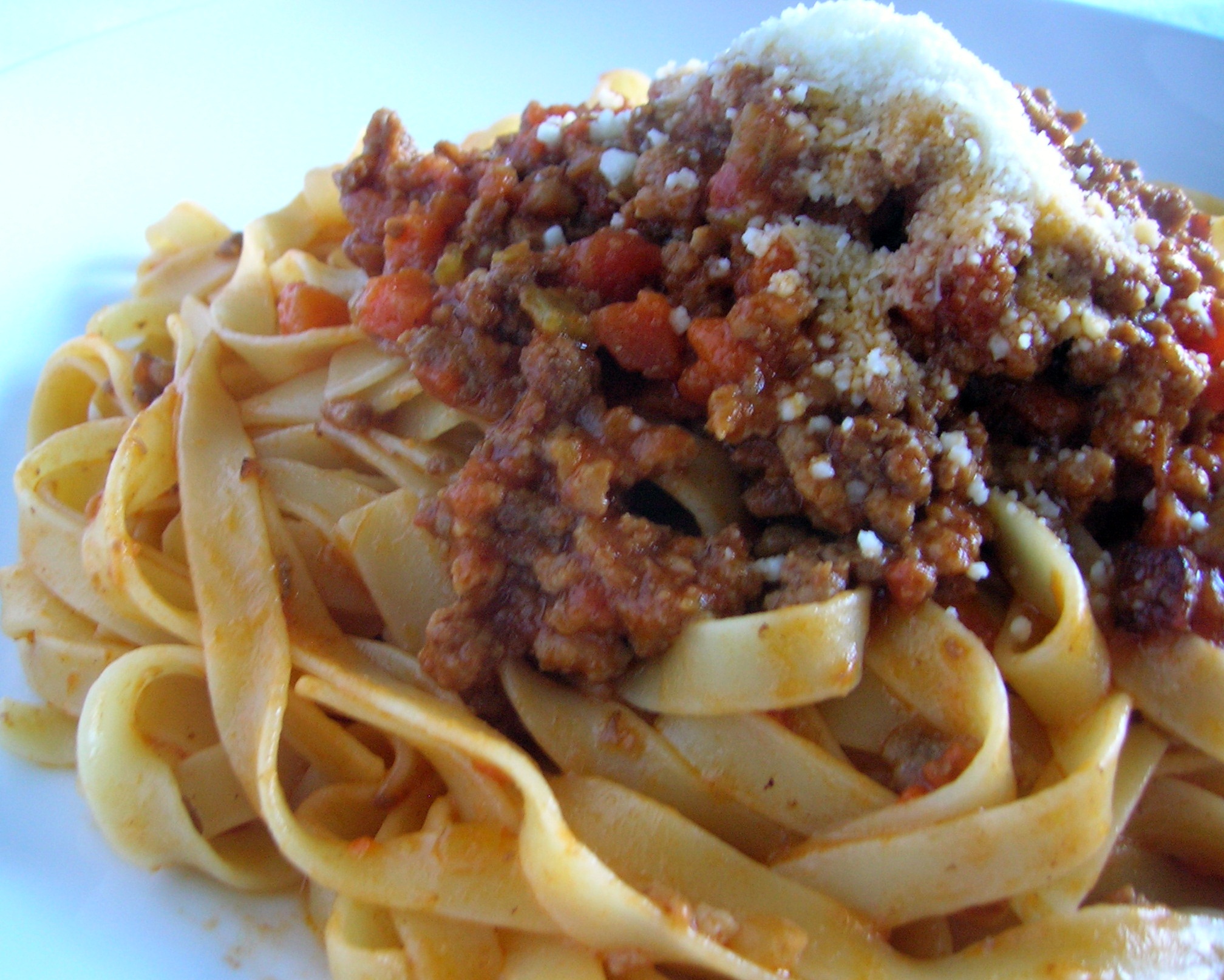
This Bolognese sauce is intense with flavor. The secret is cooking out most of the moisture in the vegetable and browning the meat to the point of carmelization before adding the tomato sauce.

Pasta Bolognese Cooking Italian Comfort Food

Ragù Bolognese

  • 2 tablespoons olive oil
  • 4 tablespoons butter
  • 1 large onion, finely and evenly diced
  • 4 carrots finely and evenly diced
  • 3 stalks celery, finely and evenly diced
  • 4 cloves garlic, finely diced
  • 4 1/2 ounces of diced pancetta
  • Salt and pepper to taste
  • 2 pounds of ground meat (blend of veal, pork and beef)
  • 1 cup of dry white wine
  • 2 cups of whole milk
  • 1 28-ounce can whole San Marzano tomatoes, crushed with liquid
  • 1 cup of beef stock or broth
  • 1 pound of Tagliatelle Nests or any flat and wide macaroni
  • Plenty of Parmigiano Reggiano cheese

It’s important that the onions, celery and carrots are all finely and evenly diced. That way they cook more uniform, adding a better texture to the sauce. You don’t want large chunks of these veggies sticking out.

Place a large, heavy saucepan over medium heat and melt the butter in the oil. Add the onion, carrot,  celery and garlic with a good pinch of salt and sauté for 5 minutes, stirring often.

Add the diced pancetta and cook for another 10 minutes, until vegetables are softened and pancetta is golden.

Turn the heat up high and add to the vegetables half of the chopped meat. Brown the meat by breaking up the large chunks with your spoon. Once the first half is browned add the remainder of the meat and brown at least 15 minutes over high heat. Stirring occasionally.

You want the meat to carmelize. Be careful not to burn the meat, but carmelize it so that some of the meat even gets crispy.

Deglaze the pot with the white wine, stirring up the little brown pieces that stick to the bottom of the pot. Before all the wine evaporates and the meat starts sticking to the pot again, add the tomatoes, milk and beef stock.

Stir well and bring to a boil. Reduce the heat to the lowest setting you have and simmer half covered for at least 2 1/2 hours. Make sure to stir the sauce from time to time and especially more often at the end of the cooking cycle to keep from burning.

The sauce should be thick and glossy with oil with most of the moisture and liquid evaporated.

Cook your pasta and place back in the pot and mix in a couple of ladles of the sauce.

Pasta Bolognese1 Cooking Italian Comfort Food

Serve immediately with additional sauce on top with plenty of grated Parmigiano Reggiano cheese.


(adsbygoogle = window.adsbygoogle || []).push({});

Posted in Beef, Pasta | Tagged , | 20 Comments

Lobster Fra Diavalo

May I have some more Mrs. Bocchieri?

The first time I ever ate lobster was when my mother prepared a meal for my brother-in-law Arthur, before he was my brother-in-law.

Back in the day, 1962 or so, one sure way to a man’s heart was through his stomach.  Today, I’m not sure what a woman does to convince a man that she is right for him. For the most part, it’s certainly not cooking. My family firmly believed that if my sister was ever going to get married she would have to convince her suitor that she could do more than just boil water. And my mother did everything in her culinary power to convince Arthur that what he was getting if he married my sister was a prepared woman who knew how to feed her man. Or at least she came from a good blood line of great cooks. My grandmother and aunts also played a role in the sleight of hand.

Arthur would dine with us every Friday night, and the meal was always a seafood delight. I remember when my mother made this dish she made sure that Arthur got the whole lobster. My brother and father and I were usually left with a claw and the legs, which we learned was loaded with wonderful lobster juices that we would suck out….and we filled up on spaghetti. But we didn’t complain. My mother always made sure there were plenty of the cheaper and smaller Rock Lobster tails in the sauce so we could have “lobster tails”. My sister would always tie a dish towel around Arthur’s neck to keep his shirt neat and dry. If boiled lobster wasn’t messy enough, eating lobster cooked in tomato sauce takes on another whole  dimension of splatter.

What made this dish great was the sweetness of the lobster roe and tomalley. They would melt into the sauce, thickening it and adding a briny sweetness of the lobster to every bite of spaghetti. It’s what makes the dish. Don’t discard it when you cut the lobster in half. Let it cook into the sauce.

Lobster Fra Diavalo

  • Two 1 1/4 –  2-pound live lobsters
  • 1/4 cup extra-virgin olive oil
  • 1 onion, diced
  • 3 garlic cloves, smashed
  • 1 dried Italian hot red pepper, split lengthwise, or 1/2 to 1 teaspoon crushed red pepper flakes, or to taste
  • 2 tablespoons of tomato paste
  • 1/2 cup dry white wine
  • 2 cups canned crushed Italian plum tomatoes, preferably San Marzano, undrained
  • 2 anchovy fillets, chopped
  • 1/2 teaspoons dried oregano
  • 1 tablespoon kosher salt for pasta water
  • 1 pound spaghetti or linguine
  • 3 tablespoons chopped fresh Italian flat-leaf parsley
  • Freshly ground black pepper and salt to taste


You can place the lobsters in the freezer for 30 minutes if you have a problem killing the lobster yourself.

Turn each lobster on its back and, using a large knife, split it lengthwise down the middle starting at the head and cutting towards the tail. Spread open the lobster bodies and tails but do not remove the meat from the shells. Remove the eyes and antennae and scrape out the digestive sac, leave the tomalley and roe in the shell. Remove the tail from the body, leaving the tail meat in the shell. Remove the claws.

With the back of your chef knife, crack the claws and arm joints of the lobster.

 Place a large Dutch oven or wide saute pan over medium heat. When the pot is hot, add the olive oil. Add the onions, garlic and anchovies and stir until the garlic just starts to turn  golden and the anchovies melt away, about 2 minutes.

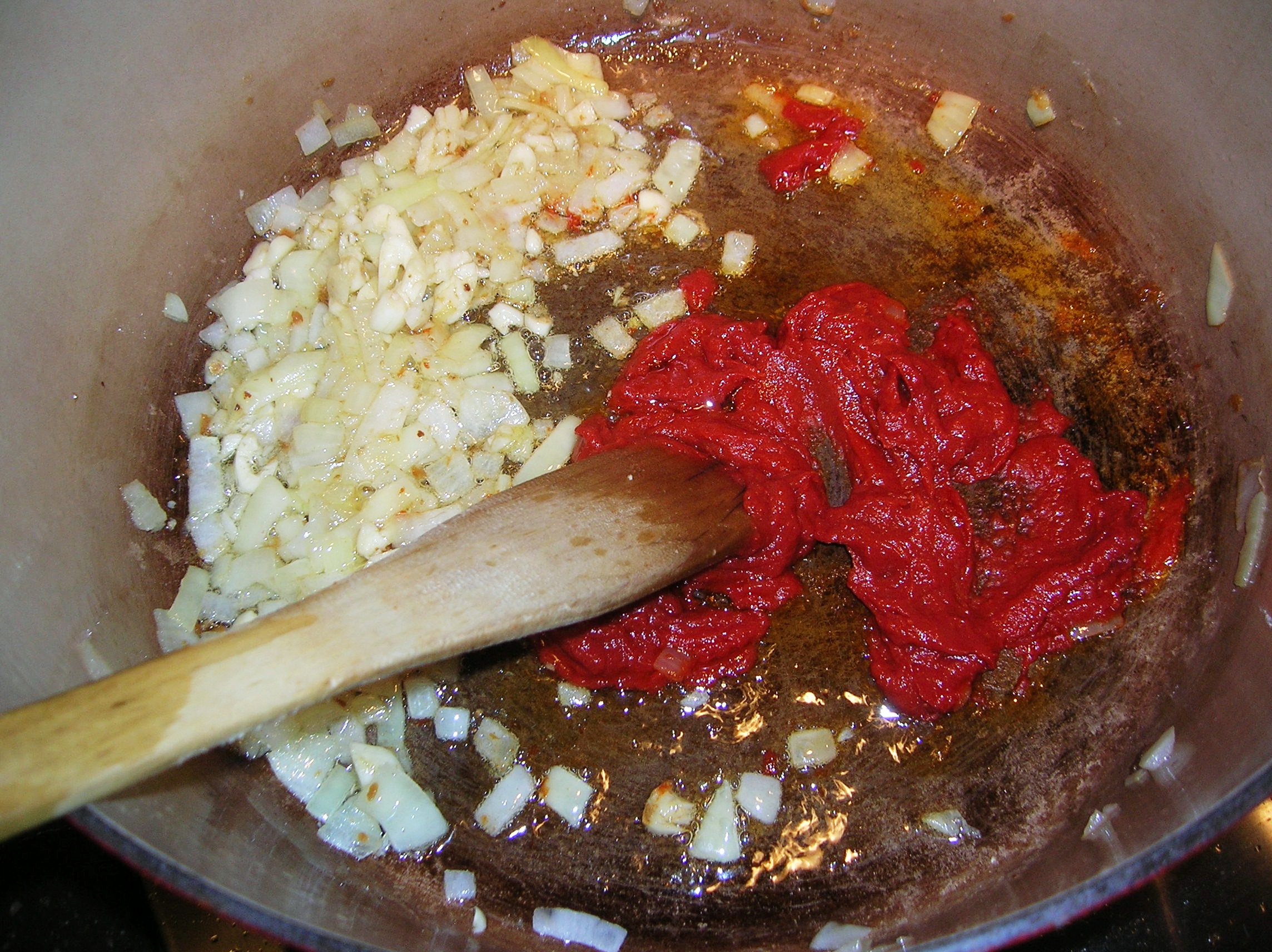
Add the tomato paste and stir to carmelize a minuet or two. Add the hot pepper and deglaze the pan by adding the wine. Next add the tomatoes to the pot and about two cups of water and bring to a simmer. Add the oregano and stir well. Simmer, uncovered, until the sauce has thickened, 6 to 7 minutes. Taste and season with additional dried pepper, to taste.

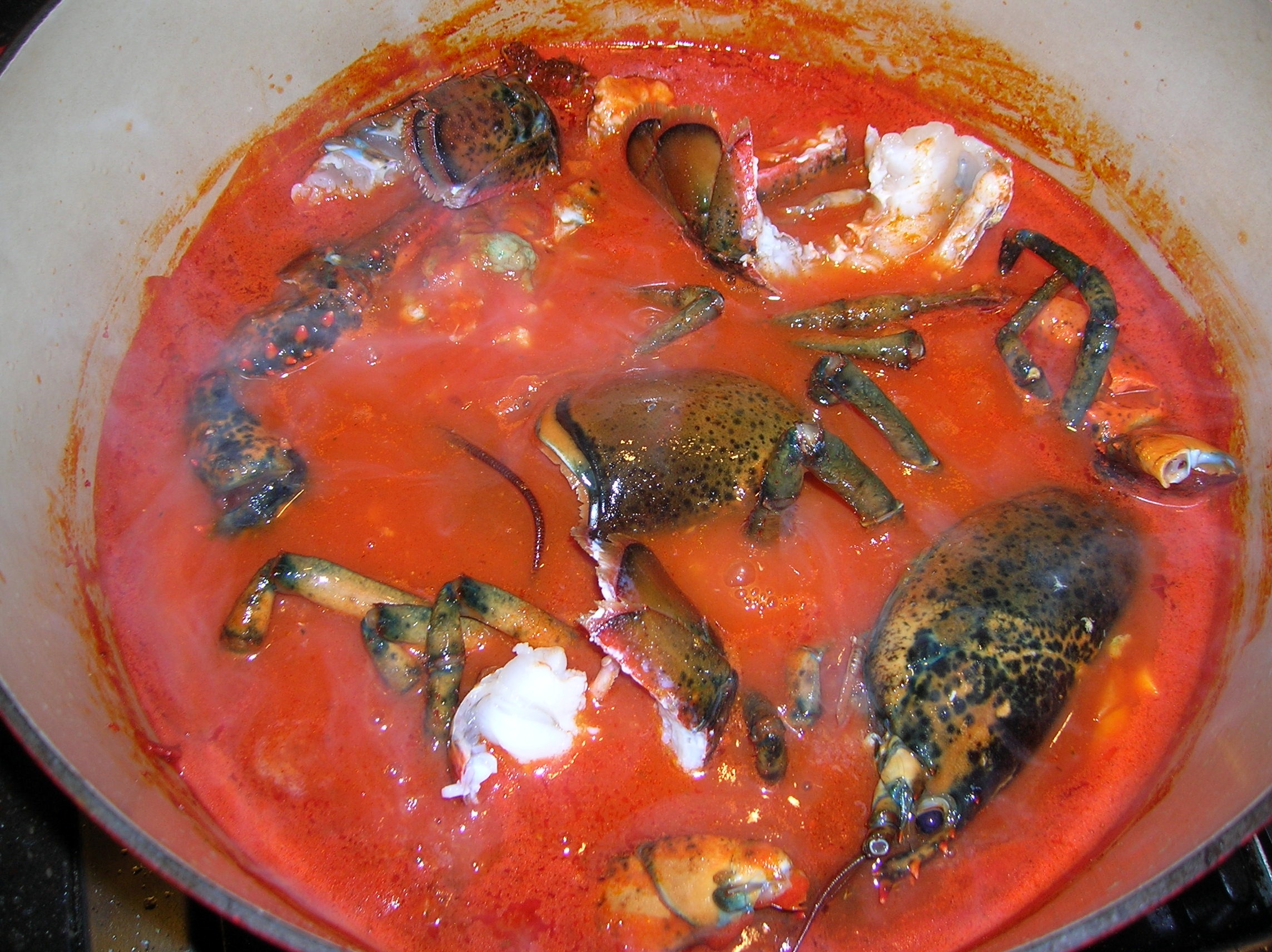
Add the lobster claws , tails and body to the sauce, cover  and simmer until the lobster is cooked through, about 5 more minutes.

In the meantime fill a pot with water and bring to a boil over high heat. Add the salt. Add the pasta, stir, and cook until al dente. Drain the pasta, reserving 1/2 cup of the pasta cooking water.

 Transfer the lobsters to a plate and either reserve to serve on top of the pasta or remove the lobster meat from the shells, chop it, and stir it into the sauce.

Add the pasta to the sauce and toss. Transfer to a large serving platter and sprinkle with the parsley. If you didn’t incorporate the lobster into the sauce, place it on top of the pasta.

Serve family style with grated cheese on the side.

Posted in Seafood | Tagged , , | 4 Comments

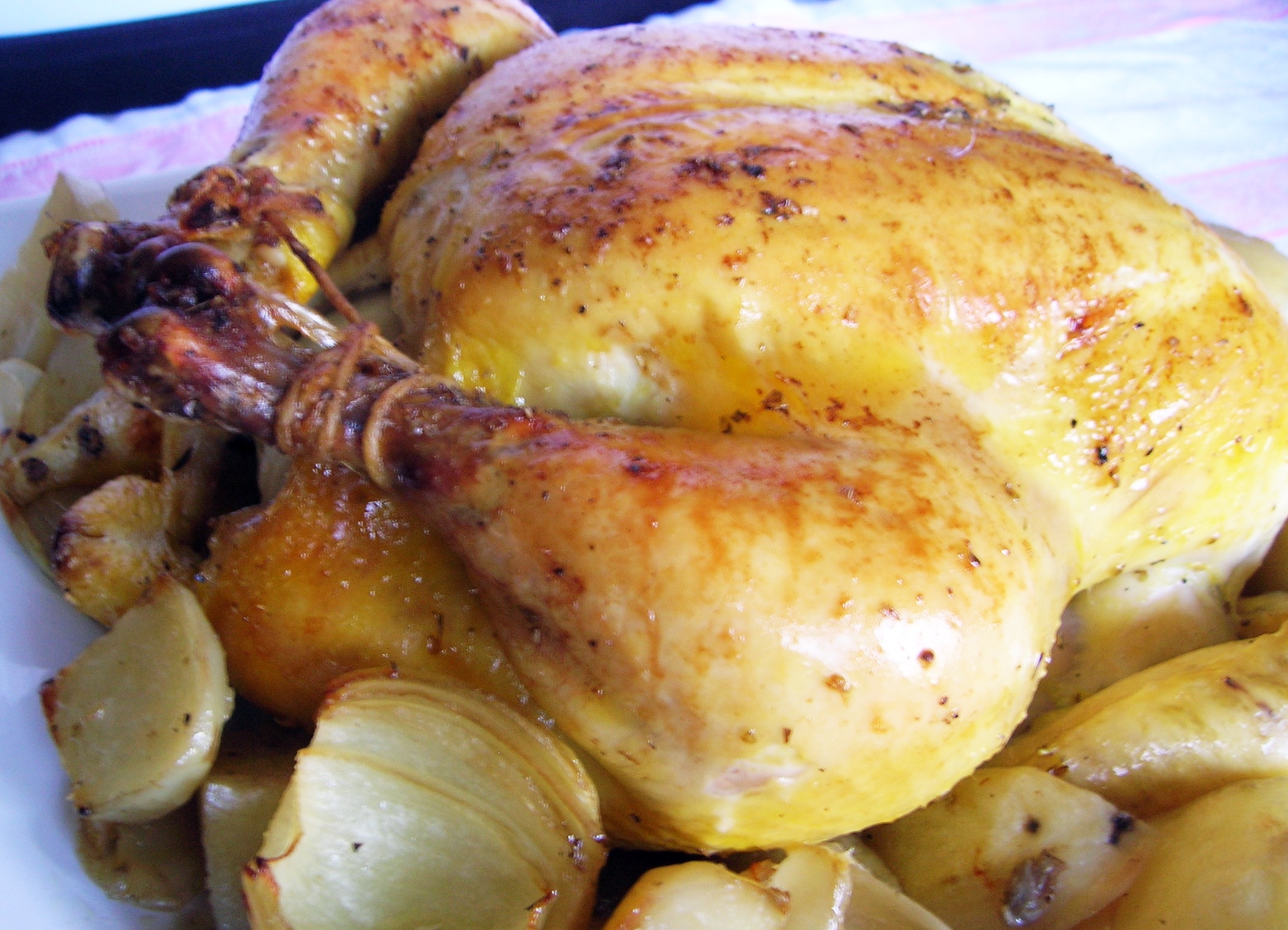
Classic Sunday Italian Roast Chicken

Nothing feels more like Sunday to me than a whole roasted chicken  cooking  in my oven. Sundays was always a special feeling kind of day when I was growing up . Everyone in the family was home on that day. The newspaper was always sitting at our doorstep early in the morning and the first person ready for church was always the first to have at it. I don’t think I ever remember my father ever going to church. I questioned that a few times and never got a straight answer, but my mother always made sure we would make it to church with her.  I remember sunny walks home from church, a quick stop at the Italian bakery to pick up Italian bread, and then home. My mother would stop and talk briefly with friends and neighbors we met along the way.

Just as soon as we got home my mother would make preparations for Sunday dinner. We always ate around 2pm, so it was somewhere between lunch and dinner. A pot of tomato sauce was bubbling on the stove top and on some Sundays a chicken was roasting in the oven. The aroma of all that goodness just traveled around the house and when the hunger pangs got too great we would sneak in the kitchen and steal a meatball from the pot and eat it on top of a hunk of Italian bread…dipped in the gravy for good measure.

Grandma, who lived above us, was involved in the same process. For some reason, she started a little later than my mother did, which worked out great for me as you will see.  My grandfather, all dressed in his good Italian suit, was sitting at the dining room table reading his Italian newspaper, Il Progresso. My grandmother was busy in the kitchen preparing their Sunday dinner. I had the best seat in the house. I would venture upstairs to see what grandma was cooking and usually got a shot of sweet vermouth from my grandfather. He said it was good for my blood….it was just good period! If grandma was cooking something that I liked (and that was always a 99% sure thing) I would make sure I went back upstairs after I finished my dinner with my family. I always had just enough room left for some of Grandma’s chicken or breaded steak. I never thought of it as having two dinners, it was just an extension of my first dinner.


Classic Sunday Italian Roast Chicken

  • 1  6-7 pound whole roaster chicken
  • 1 lemon, cut in half
  • 4 sprigs fresh thyme
  • 2 sprigs fresh rosemary
  • 5-6 fresh basil leaves
  • 1 teaspoon dried oregano
  • 3 large onions, peeled and quartered
  • 2 carrots, peeled and cut into rounds
  • 2 stalks celery, cut in half
  • 4 cloves garlic, peeled
  • 2 1/2 pounds potatoes, peeled and cut into eights
  • 1 cup water
  • salt and pepper
  • olive oil

Pre-heat oven to 350 degrees

To prepare the chicken, rinse in cold water and remove the packaging from inside the cavity. Place the chicken in a large pot filled with cold water and 1/4 cup kosher salt  in the water. Allow to soak for at least 1 hour.

Remove the chicken from the pot and rinse under cold water. Dry the chicken inside and out with paper towels. Salt and pepper generously the inside and outside of the chicken.

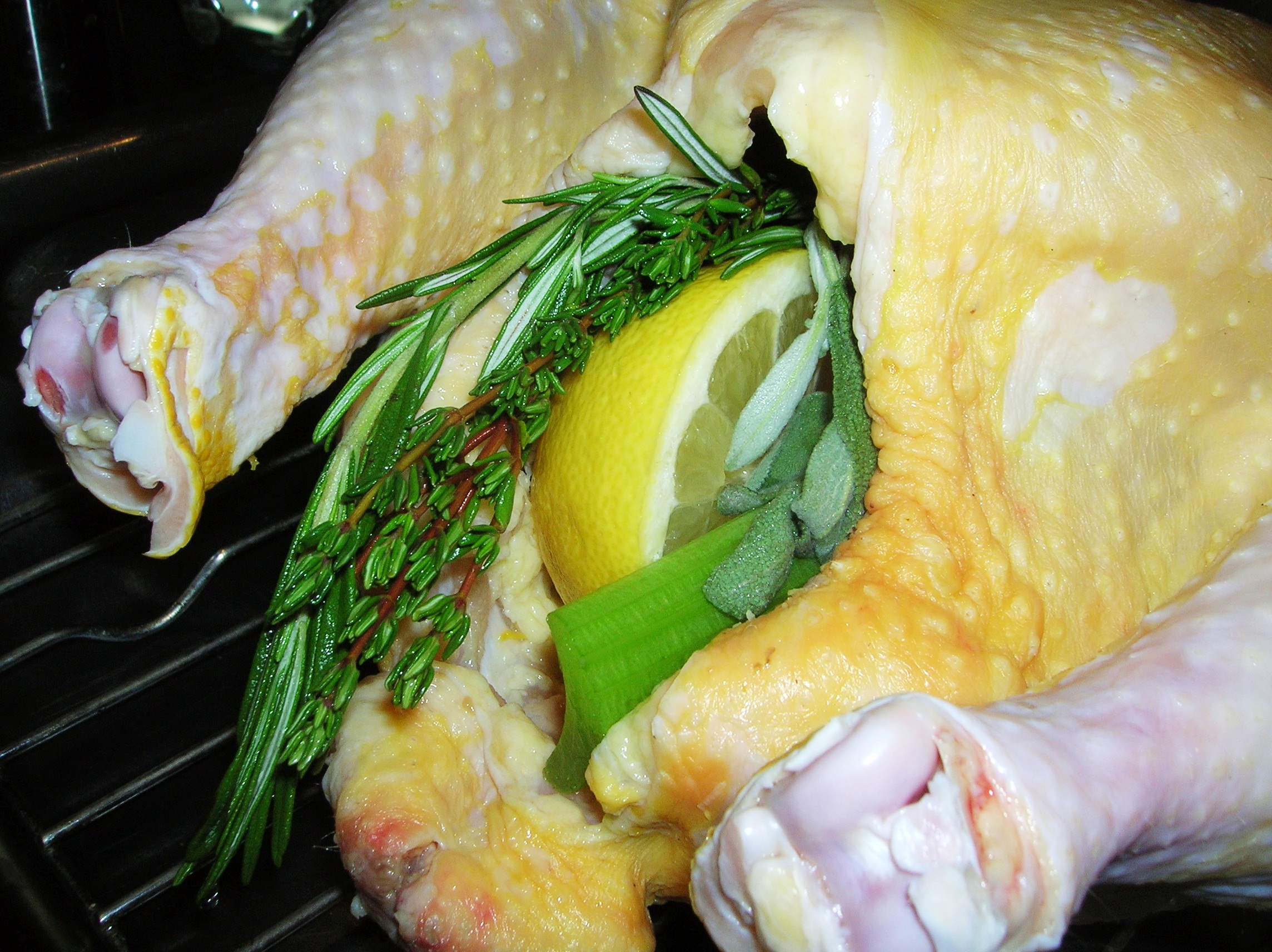
Inside the cavity of the chicken place both halfs of the lemon, thyme, Rosemary, Basil and 1/2 teaspoon of oregano along with the garlic, one half onion, 1 carrot and 1 stalk of celery. Tie the legs together with butchers twin. Coat the chicken on all sides with olive oil.

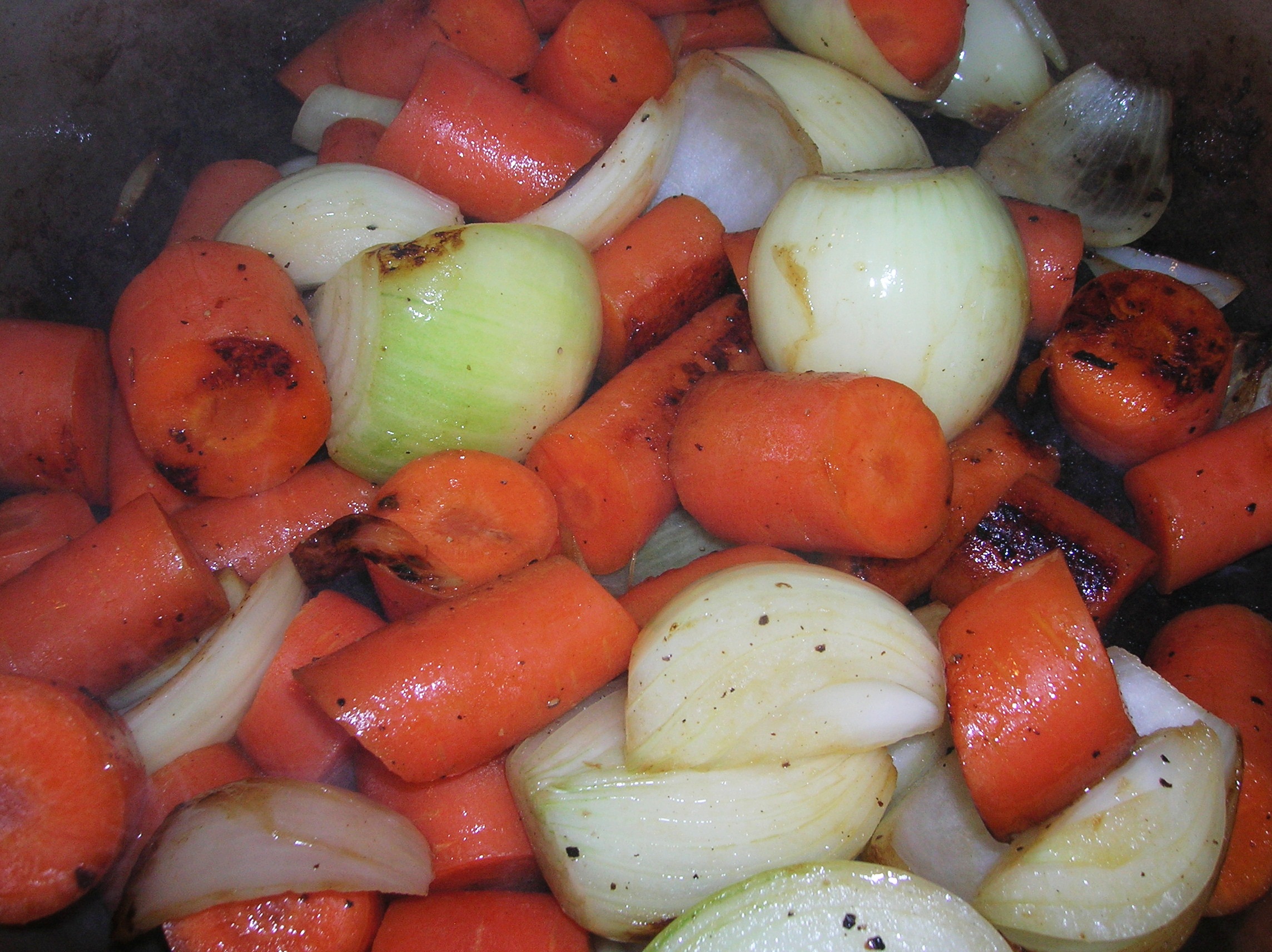
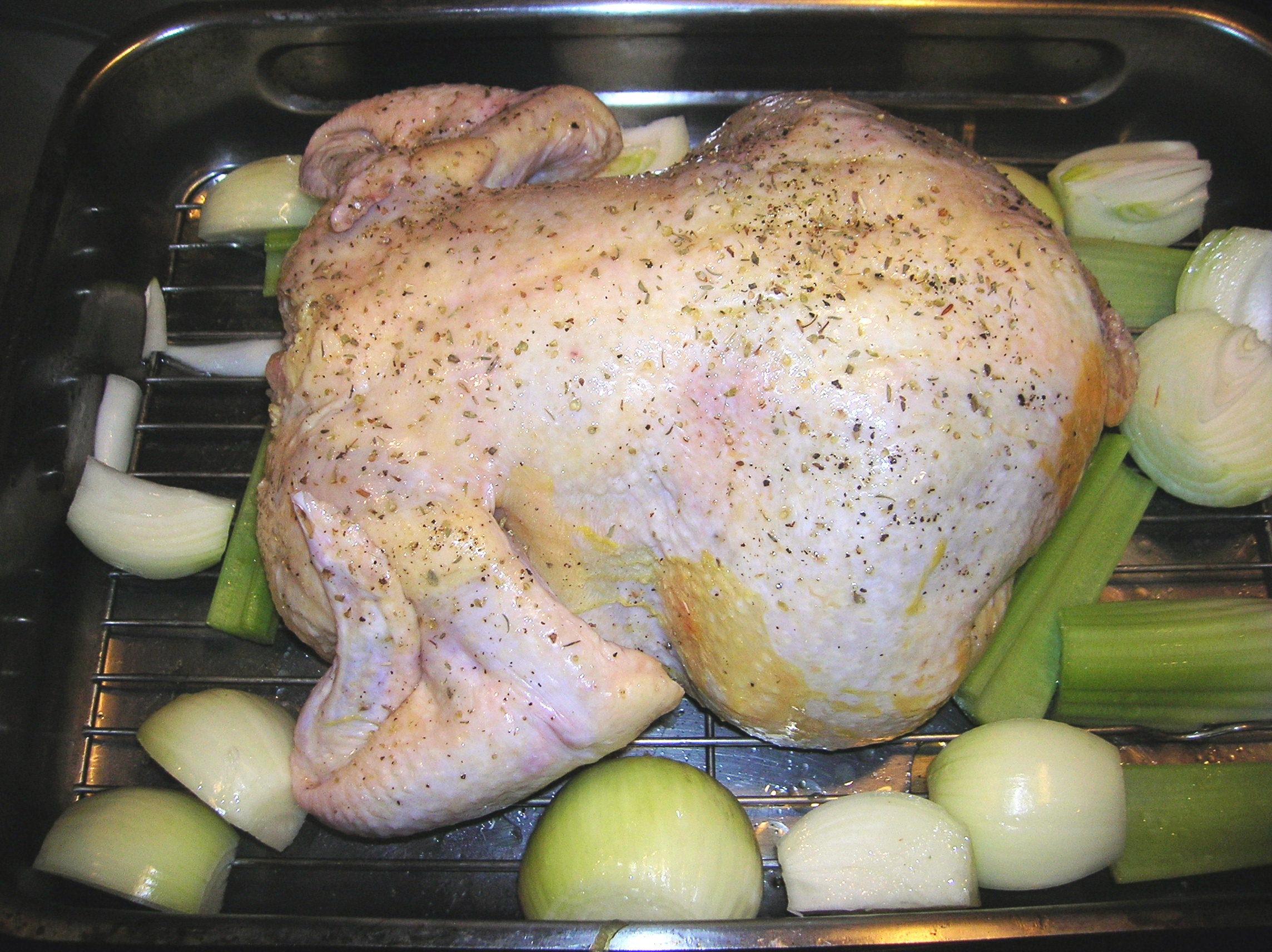
Place the chicken, breast side down,  on a rack in a large roasting pan.  Place the rest of the vegetables around the chicken, except the potatoes. Drizzle the vegetables with olive oil, salt and pepper and 1/2 teaspoon of oregano.  Add a cup of water to the pan.

Roast the chicken for 20 minutes breast side down. Turn the chicken breast side up. Add the potatoes to the pan around the chicken and roast for additional 2 hours.  Stir the vegetables from time to time during the last hour and baste the chicken with the pan juices every 15 minutes.  Add more water to the pan if it gets too dry. The chicken is done when the thickest part of the breast registers 165 degrees. Or stick a knife into the thigh and the juice should run clear.

Making the gravy

Remove the chicken and place it covered in foil on your cutting board. Remove all the vegetables and potatoes and place on your serving platter. Pour off all of the drippings through a strainer into a medium sauce pan. Allow the dripping to rest for 5 minutes and skim off as much of the fat that’s floating on the surface as you want. Mix 1 tablespoon of cornstarch with a 1/4 cup cold water. Place the sauce pan with the drippings on a medium high flame and bring to a boil. Add the cornstarch mixture while stirring and simmer until thickened. Taste for salt and pepper. If you need to make more gravy add a can of low sodium chicken broth to the drippings and add an additional tablespoon of cornstarch.

Posted in Chicken | Tagged , , , , | 3 Comments

Lamb Stew

Spring is the perfect time to make this stew. Any stew is great comfort food when the weather is cold or cool. It’s just a hearty meal that sticks to your ribs. I prefer American lamb to the imports.  And American lamb is at its best in spring.

This is a very tasty stew. The lamb is tender and flavorful. The potatoes help soak up the flavors, but nothing works quite like dunking your Italian bread into the stew’s gravy.

My family always made lamb in so many different ways, and I grew up enjoying it every way they made it.  Broiled lamb chops, lamb stuffed pies, roast leg of lamb and this lamb stew. Only type of lamb I never really latched onto was capozzelli, lamb’s head. My parents and grandparents loved it. When my grandmother would open up her over to show me the “prize” they were having for dinner…..I passed. I might try it today, if I only knew how to prepare it. I might have to research this one because I never stuck around to watch my grandmother cook this dish. But I would sit at the table, and in a macabre way, watch my grandfather devour it. In the old country, nothing is wasted from the animal. You ate it all.

No lamb head in this stew. Just succulent meat and wonderful vegetables and flavors.


Lamb Stew

  • 2 pounds of cubed lamb
  • flour for dredging
  • 2 tablespoons of olive oil
  • 1 tablespoon of butter
  • 2 onions
  • 2 cups of sliced carrots
  • 2 cloves garlic, minced
  • 1 quart of chicken stock or broth
  • 1/2 cup red wine
  • 2 cups crushed tomatoes
  • 3 sprigs of fresh rosemary, stripped from stem and chopped
  • 3 sprigs of fresh thyme, left whole.
  • 1 bay leaf
  • 3-4 medium peeled potatoes, cut into quarters
  • salt and pepper to taste
  • 2 tablespoons corn starch mixed with 1/4 cup cold water

Salt and pepper the cubed lamb. Place the flour in a flat plate and dredge the lamb cubes in the flour. Heat a dutch oven on medium high heat and add the olive oil.

When the oil is hot brown the dredged lamb cubes on all sides till brown.  Remove the lamb from the pot and set aside.

Add the butter to the pot. Then add the onions, carrots and garlic. Cook till the onions become translucent. Add the red wine and cook down for a few minutes.

 Then add the chicken stock and crushed tomatoes. Add the rosemary and fresh thyme along with the bay leaf. Bring the pot to a boil and add the lamb with all its juices to the pot. Place the heat on low and simmer  partially covered for 45 minutes. Stir occasionally.

Add the potatoes and cook another 25 minutes uncovered until potatoes are tender. Taste for salt and pepper.

If you want to thicken the sauce more add the cornstarch mixture a little at a time till you get the desired thickness of the sauce.

Posted in lamb | Tagged | 3 Comments

Pastiera De Grano and Pizza Rustica

Cooking with Nonna in Florham Park

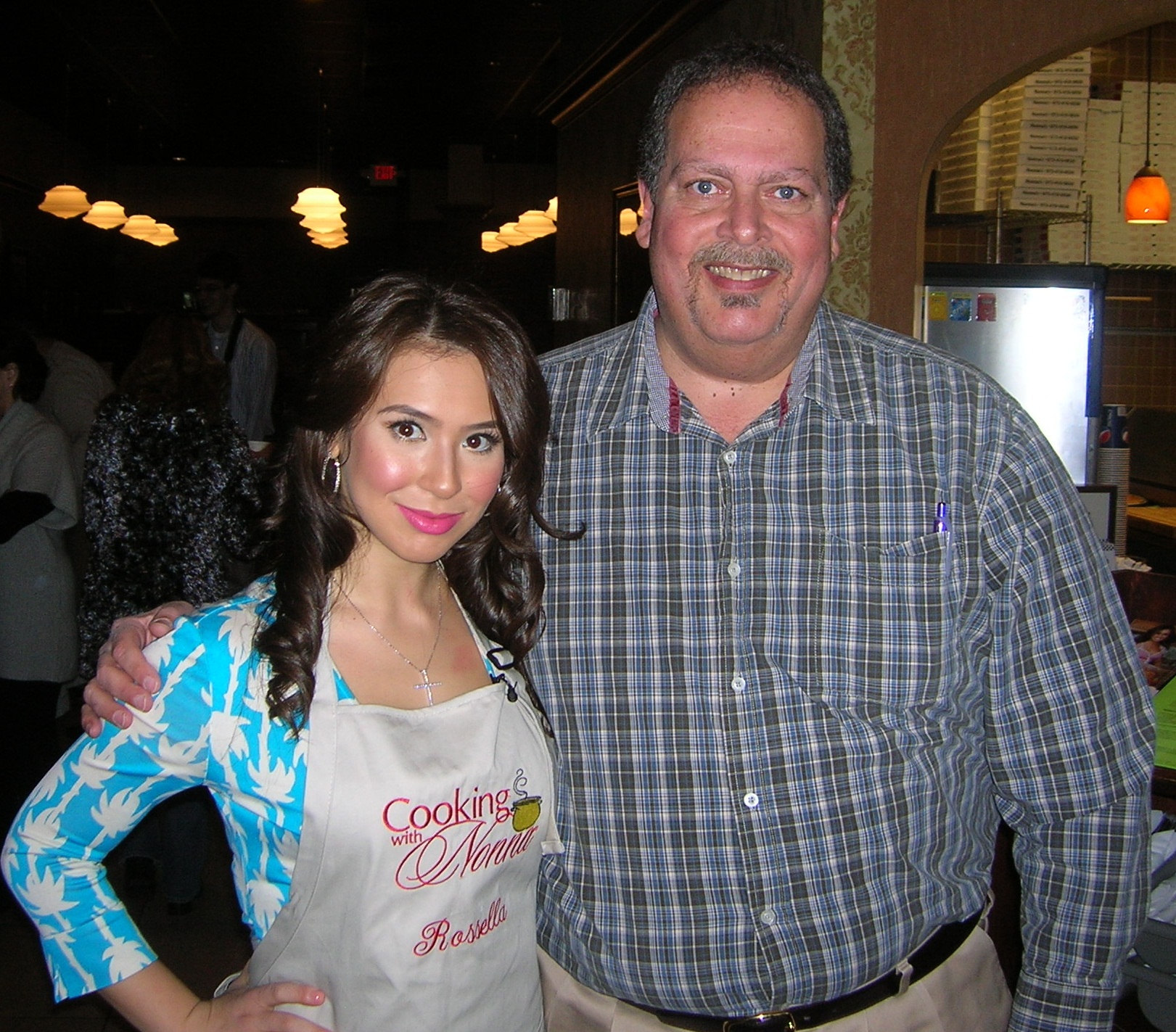
 I spent the early part of an afternoon at Nonna’s Italian Restaurant in Florham Park New Jersey. Rossella Rago was filming a webisode of Cooking With Nonna, the popular website that features Nonnas from different regions of Italy showcasing their recipes. What better way to preserve a family tradition of recipes and foods than to have a Nonna giving you lessons.

Rossella Rago, along with her father and business manager “The” Vito Rago, ventured into this media in 2009, after winning first prize in the Food Network’s “24 Hour Restaurant Battle”.  Rossella and her mother Angela Rago, along with “Nonna” Romana Sciddurlo , three generations of Italian women from Brooklyn, NY, kept their cooking authentic with recipes passed down through their family. It was enough to have them win the competition and realize that traditional family Italian cooking was as popular as ever.

The cooking demonstration was sponsored by The Center for Italian-American Culture of Cedar Grove New Jersey. The turnout was tremendous, proving once again that authentic family Italian cooking is much in demand

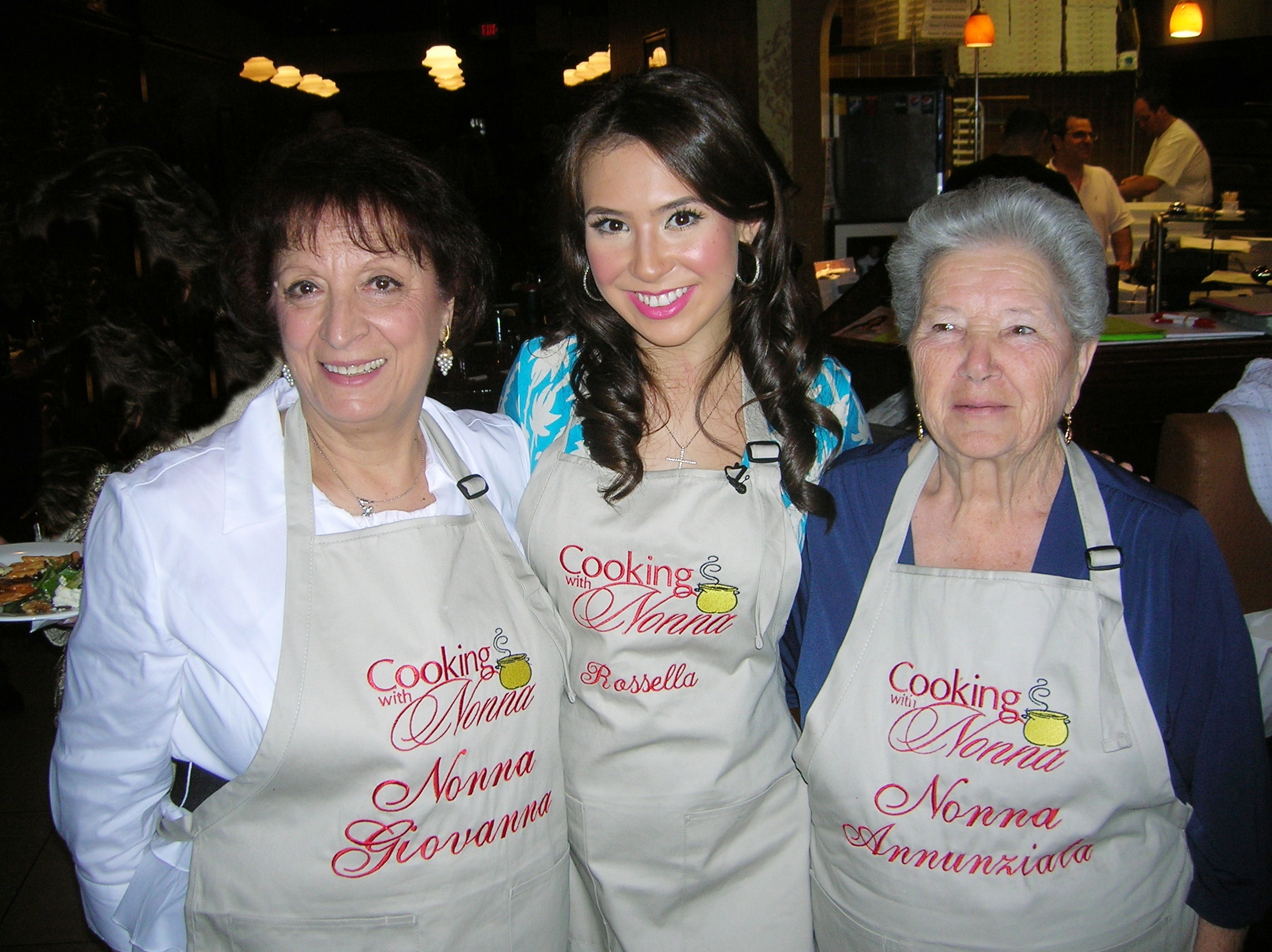
Nonna Giovanna and Nonna Annunziato take time for a photo with Rossella.

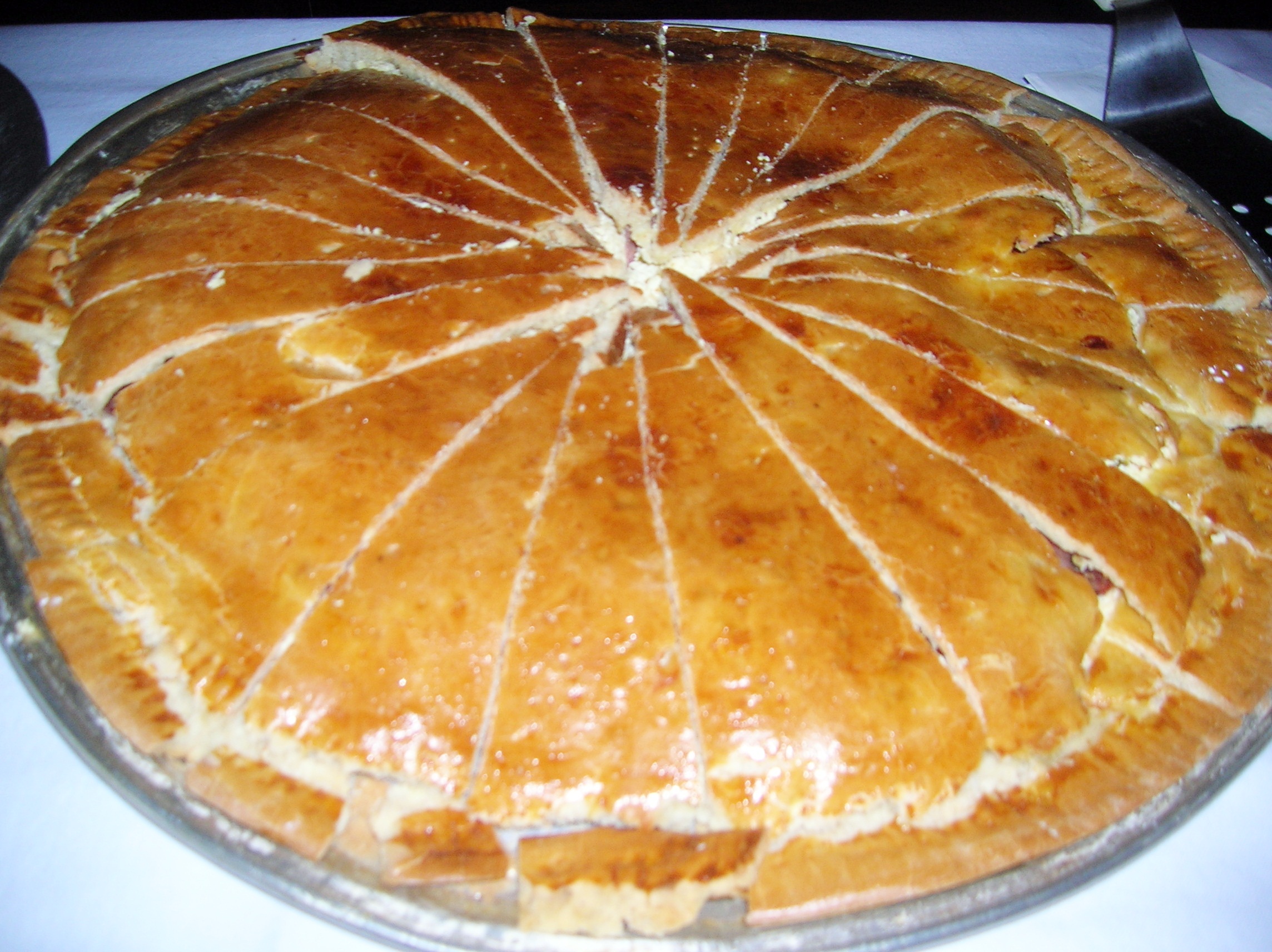
The two stars of the show were Nonna Giovanna, who prepared a traditional Easter wheat pie (Pastiera Di Grano) and Nonna Annunziato who cooked up Pizza Rustica. It was a delight watching Rossella hosting the demonstration as she tackled mixing the dough with her hands, which she says herself is not her forte,  and keeping the program moving and entertaining.  And the best part of all was that we got to eat the delicious pies that were made at the demonstration and prepared ahead of time for the large crowd.

The two following recipes are courtesy of Nonna Giovanna and Nonna Annunziato. They have been prepared this way in their family for generations. One of my reasons for starting this blog was because I wanted to share the recipes my family prepared and carry on the traditions of delicious food with others. Rossella Rago is doing the same thing by bringing the recipes of generations past to her modern audience. I hope you enjoy them!

Yours truly with Rossella Rago, keeping traditions alive.

Pastiera Di Grano

Yields 3  9-inch piesFilling:

  • 1 pound of ricotta
  • 5 eggs
  • 1 cup of sugar
  • 1 pound of raw wheat (3 cups of cooked wheat)
  • 3 tablespoons of sugar
  • 1/2 freshly squeezed orange juice and 1/2 grated orange peel
  • 1/2 cup of half-n-half
  • 1/4 cup melted butter
  • 2 ounces of Limoncello or Strega Liquor
  • 1 tablespoon of vanilla extract
  • 1/2 teaspoon of nutmeg
  • 1/2 teaspoon of cinnamon
  • 1/4 teaspoon of salt

Flaky Pastry (Pasta Frolla):

  • 2 cups of flour
  • 2 eggs
  • 1 tablespoon of baking powder
  • 1/2 stick of butter
  • 1/2 cup sugar
  • 3 tablespoons of milk
  • 1 tablespoon of vanilla

Crust:

In a pastry blender or food processor, beat eggs and sugar together. Then, mix flour and baking powder and add to the egg mixture. Mix everything together. Then, add the melted butter, milk and vanilla. Mix it well. Remove the mixture from the pastry blender or food processor and turn onto a lightly floured board or counter. Knead the dough until smooth. Form into a ball and set it aside for a short while. Then, roll out the dough, approximately 1/4 of an inch, and line the bottom of the pie tin, cutting the excess dough around the edge of the tin. With the remaining dough, cut out long strips and set aside for decorating the top of the pie.

Filling:

The night before preparing the wheat pie, soak the 1 pound of wheat in water. The following day, in a large sauce pan, cook the wheat in the same water with salt and grated orange peel, butter and orange juice until very soft. Add sugar and let it melt. Then, add ricotta, half-n-half, limoncella, nutmeg and cinnamon. In a separate bowl, beat the eggs and fold them into the wheat mixture. Stir everything well and beat until smooth. Drop the mixture into the buttered crusted pie tin. Then, place strips of dough crisscross over the filling to the edge. Roll bottom overhand up and over strips and press firmly. Preheat the oven and bake the pie at 350 degrees for 1 hour. Let it cool. Before serving sprinkle the wheat pie with confectioner sugar. 

Pastiera Di Grano

Pizza Rustica

Dough:

  • 4 cups of sifted flour
  • 2 whole eggs
  • pinch of salt & pepper
  • 1 tablespoon of dry yeast, melted in warm water

Make a well with the sifted flour. Add all other ingredients. Mix until resembles a dough ball. If dough is too soft, add flour. If dough is too hard, add warm water. Knead dough until smooth. Set aside and keep warm in a kitchen towel for approximately 2 hours.

Ricotta Filling:

  • 2 pounds fresh ricotta, drained for at least one day refrigerated
  • 1/2 pound grated Ricotta Salata
  • 2 sprigs parsley
  • 4 whole eggs
  • pinch of black pepper
  • 1/2 Sopressata, sliced or cubed

Combine all ingredients in a mixing bowl. Mixture should not be too soft. Set aside.

Roll out 1/2 of the dough with a rolling pin. If the dough sticks to the pin, coat it with flour. Lay the dough onto a 16″ pizza pan. Put the ricotta mixture onto the dough, leaving a 1″ lip clear of mixture. Line the top of the mixture with the slices of sopressata, press into mixture. With a pastry brush, put warm water around lip. Roll out the other 1/2 of dough. Put it on top and press ends together with the tips of a fork.

Glaze:

Beat one egg in a mixing bowl. Brush egg over the pie. Poke tiny holes in pie, before placing in 350 degree oven. Pie cooks in approximately 40 minutes or golden brown, both top and bottom.

Pizza Rustica
Pizza Rustica
Posted in Antipasto, Dessert, pizza, Ricotta | Tagged , , | 6 Comments

Old Fashioned Pecan Pie

OK, I’m straying again. But this was just too good not to share.

Over the last 40 or 50 years I thought I was eating pecan pie. You would pick up a bottle of Kayro Corn Syrup and some pecans along with other ingredients that were printed on the bottle and you were all set to make pecan pie. Right? Wrong! Pecan pie was made long before Kayro Corn Syrup came on the market and our great grandparents made delicious pecan pie without Kayro Corn Syrup. Some marketing genius in the late 1800’s sold us all a bill of goods that made pecan pie synonymous with Kayro Corn Syrup and we have been making it that way ever since.

Well, the cooking geniuses over at America’s Test Kitchen revamped a pecan pie recipe using ingredients available before the introduction of corn syrup. And they hit the nail right on the head. Once you try this version of pecan pie, I promise, you will not go back to corn syrup again. This pecan pie has just so much more flavor it hurts the mouth! In a good way! One secret they use is to lightly toast the pecan pieces for about 5 minutes in a 400 degree oven. That along with the other ingredients make this pecan pie a true winner. Add some whipped cream or vanilla ice cream and your set. Give it a try, you will not be sorry.

Old Fashioned Pecan Pie

  • 1 cup 100% pure maple syrup
  • 1 cup light brown sugar, firmly packed
  • 1/2 cup heavy cream
  • 1 tablespoon molasses
  • 4 tablespoons  unsalted butter cut into 1/2″ pieces
  • 1/2 teaspoon salt
  • 6 large egg yolks, lightly beaten
  • 1 1/2 cups toasted and roughly chopped pecans
  • 1  9″ deep dish pie shell, unbaked

Adjust the oven rack to the lowest position. Pre-heat the oven to 400 degrees.

In a medium sauce pan, heat over medium flame the sugar, maple syrup, cream and molasses until the sugar dissolves, stirring well.  Remove from the heat and allow to cool for 5 minutes. Whisk in the cold butter (this will also help cool the mixture) and add the salt. Stir till all the butter is dissolved. Next whisk in the egg yolks.

Scatter the pecan pieces on the bottom of the pie shell. Pour in the filling. Place on the lower rack of the oven and immediately reduce the temperature to 325 degrees. Bake for 50- 60 minutes. The pie is done when the filling wiggles slightly when you shake it.

This is very important! Allow to cool for one hour. Place in refrigerator for 3 hours to set. Serve at room temperature.

Posted in Dessert | Tagged , , | 2 Comments

Melanzane in Carrozza

If I had my choice, instead of sitting down for a 8 course dinner I would rather raid the antipasti table at a restaurant or catering hall.  I’m sure some of you have to admit that your favorite part of the wedding reception is the cocktail hour. If we only had two or three hours instead! Not every cocktail hour is created equal.  I’m not talking about the ones that had the waiters hand out microwaved egg rolls or meat balls with tooth picks. But the majority of Italian weddings  I went to in my life time included some of the best cocktail hours I ever experienced. I’m not just talking carving stations. I’m talking about all the best Italian antipasto you could eat! Full raw bar with all the clams and oysters you can suck down including peeled jumbo shrimp. Baked clams, eggplant rollatini, stuffed peppers, the finest Italian cheese and dried sausages and cured meats money can buy. Trays of tripe (yes, tripe. I could eat that all night),  eggplant Parmigiano, olives, roasted red peppers, stuffed artichokes. And the list goes on. By the time I’m through with the cocktail hour I’m ready for a nap. Forget the dinner.

On a trip to Italy  I walked past a rolling table in a restaurant that was full of little dishes that held some of the most delicious antipasto I ever saw or tasted. I was just wondering if they served it by the pound of if I had a time limit to dive into it. I took that antipasto table over the meal hands down. One of the items on the table were melanzane in carrozza.

These neat little eggplant sandwiches make a great addition to an antipasto table. This is one way of making them but you are only limited by your imagination. You can stuff these sandwiches  (or sangwiches, as we call them in Brooklyn) with any cheese you prefer, including mozzarella or provolone. You can add prosciutto , salami or ham to the filling. Even a slice of roasted pepper. This is the way I had them in Italy.


Melanzane in Carrozza

  • 2 medium eggplants
  • Kosher salt
  • 1 cup all-purpose flour, seasoned with salt and pepper
  • 2 large eggs, beaten with a tablespoon of water
  • 2 cups plain bread crumbs
  • 1 pound Italian Fontina Cheese*
  • 12 fresh sage leaves
  • Peanut oil and olive oil for frying

*Fontina cheese is a semi-soft cow’s milk Italian cheese that melts well in these sandwiches.

Leave the skin on the eggplant. Slice the eggplant cross wise into 1/4 inch rounds.

Salt the slices of the eggplant with the kosher salt and place in a colander. Once all the eggplant is cut and salted and placed in the colander, place a plate over the top and cover with a heavy weight, like a cast iron pan. Allow the eggplant to drain that way over a dish for an hour.

Remove the eggplant from the colander and wipe each side dry with a paper towel and place the eggplant on a plate, matching up similar sizes to make the sandwiches.

Cut the Fontina cheese into 1/4 inch slices, making them about the size of the eggplant sandwiches. Wash and dry the fresh sage leaves.

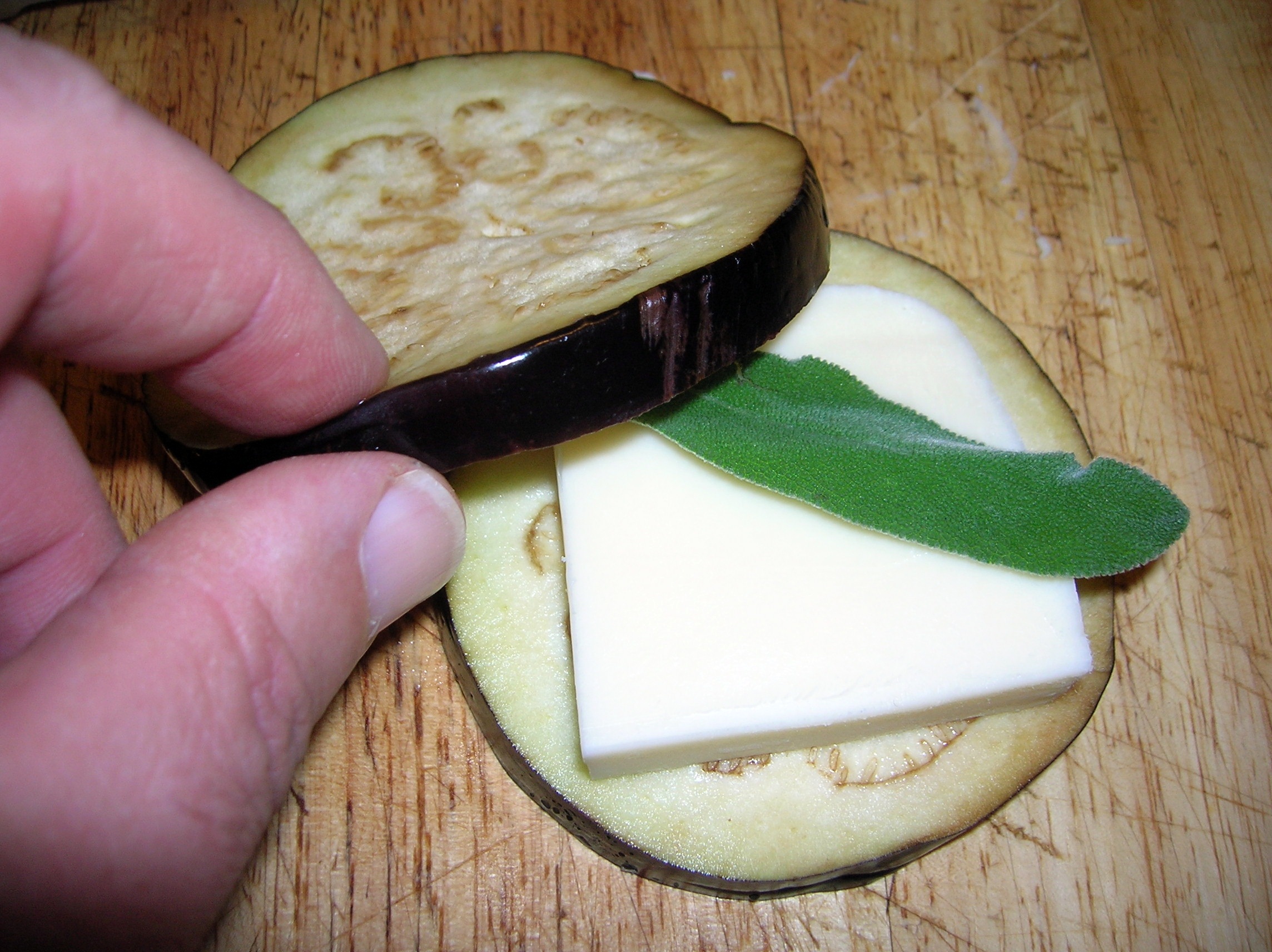
Place a slice of Fontina cheese on top of a slice of eggplant and top with one sage leaf.  Cover the sandwich with the matching eggplant slice and set aside.  Assemble the rest of the sandwiches with the remaining eggplant, sage leaf and cheese.

Dip your assembled eggplant sandwich first in the flour, coat both sides, then dip in the egg wash both sides, and finally coat in the bread crumbs. Place the sandwich in another dish to dry. Continue with the remainder of the eggplant sandwiches.

Allow the sandwiches to dry for about 15 minutes before frying.

Place about an inch high of peanut oil in a large frying pan. Add to that about 1/4 an inch of olive oil, so you have about 3/4 volume of peanut oil to 1/4 volume of olive oil. Eyeball it, it doesn’t have to be exact. The olive oil is to add flavor.

When the oil reaches 300 degrees, fry the sandwiches about 2 1/2 minutes each side or until they turn golden brown.

Drain on paper towels to absorb extra oil. Wait about 20 minutes before serving. These are best eaten warm. You can sprinkle with some grated Pecorino Romano cheese as well.

Posted in Antipasto, vegetable | Tagged , , | 9 Comments

Broccoli Rabe With Sweet Italian Sausage

1950’s Bensonhurst, A Cornucopia Of Diverse, Ethnic Foods… Not really!

It’s almost Saint Patrick’s Day and the Irish soda bread is already flowing like wine. It’s their version of Panettone, I guess. Although we ate Italian food almost exclusively growing up, there was always room for trying other ethnic foods as they came up in the season.

Saint Patrick’s Day was the first ethnic holiday in March. My mother would bring home Irish soda bread with her grocery. We would smear butter over the slices and enjoy it with a cup of hot coffee. In my neighborhood non of the Italian bakeries made Irish soda bread but you could usually pick up a loaf in the supermarkets.

And then the time came when my mother cooked her corned beef and cabbage and boiled potatoes. It was the one time of year we would eat that. It was like having turkey on Thanksgiving, but a lot more bland. Nothing a heaping tablespoon of Gulden’s spicy brown mustard couldn’t fix.  I’m sure our Irish friends loved this meal they grew up eating. I hated boiled potatoes!  I never got it. Why not crisp them up a bit with a little butter or olive oil? Slice and roast them with garlic and herbs. But boiled? Sorry. And then, just boiling the meat and the cabbage? Glad this meal only came once a year. What we did for Saint Patrick. I hope he appreciated it.

During the Passover season my grandfather would bring home boxes of Matzo. Now, I never realized the religious significance of Matzo. I just enjoyed eating the cracker along with my grandfather with a nice helping of butter spread over the top to help it go down. Every once in a while I would add some grape jelly. But most of the time we ate it with just butter. We would eat Matzo sometimes in the morning for a quick breakfast or sometimes as a snack at night. Till this day I buy a box of Matzo around Passover and enjoy it. We had a number of Jewish Delis around the neighborhood. I remember a place on 86th Street under the El. It was called Hy Tulip. Great Kosher Deli in the 70’s and 80’s. I remember a place around 4th Avenue, not sure of the street. The waiters were all old Jewish men with white aprons that were up to their armpits and extended down to their shins. My mother would always order me a Kosher hot dog and knish. I loved the snap of those hot dogs with the deli mustard and sauerkraut. Washed it all down with a Dr Brown’s cream or cherry soda.

Being we were Italian, we never went out to eat in an Italian Restaurant. Why would we? I think I was 17 when I ate in my first Italian Restaurant. Pizzerias not included. Back then they only served pizza and calzones, sometimes zeppoles. If they ever did serve other Italian food, we never bothered with it. I was 40 years old before I ate anything other than Pizza  and spumoni at L&B’s Spumoni Gardens. We just never did. Chinese food was the staple for going out to eat. After all, we had no idea how to prepare that food. Chinese food for us only consisted of Won Ton soup and Chicken Chow Mein, occasionally an egg roll.  That was it. My mother and father never varied from that comfort zone.

Mexican food? Never heard of it. We used to have a candy called Hot Tamales, but we had no idea what Mexican food was. First time I had mexican food was when I was about 11 years old.  We were on a trip to California to visit my Aunt and Uncle and cousins. Senior Pico was the name of the place they took us to in San Fransisco. I remember getting a ceramic parrot on a stick in our drinks. Well, not my drink. I think you had to order the “Potted Parrot” in order to get one.  Might still have one put away  somewhere.  You just don’t get rid of a ceramic parrot on a stick.

Good barbecue growing up in Bensonhurst during the 50’s and 60’s was Italian sausage grilled on the back yard BBQ over the hot coals. Italian marinated chicken on the bone was a close second. Don’t think we ever barbecued ribs back then. My grandfather used to consider that “junk meat” and used the bones in my grandma’s tomato sauce occasionally.

Japanese food? Are you kidding?  Never heard of it.  Chinese was our exotic asian food. Till this day I could not get my family to eat sushi. Me and my boys love the stuff.

French, German, Greek? We had no clue. I remember when my sister was a teenager she had a girlfriend who was Greek. I could remember her telling my parents how wonderful her family was, just like us, enjoying good food and partying.

Indian, Tai food? Sorry, it was non existent when I was growing up. And if it was, it was not in our neighborhood.

I do remember my parents taking us out to eat on a couple of occasions to the Danish Athletic Club on 65th Street and 7th Avenue in the Sunset Park neighborhood. Brooklyn had a large Norwegian population at one time in the Sunset Park area of the borough.

 Nestled among the auto body shops on 65th Street was this social club of sorts that offered dining to outside guests. I don’t ever remember a menu, but I believe we used to get soup or salad, entrée, desert and coffee for one low price. The entrees varied depending on the day. I remember a band playing when we went and it was almost like being at a wedding. It was a large hall with tables set all around and a large dance floor in the middle. That was my exposure to Danish food, drink and music all rolled into one. They are still around today, after over 120 years in existence. They even have a Facebook page! That’s progress.

As an adult I made up for lost time and enjoyed introducing my parents to other cuisines of the world. It was something they would have never ventured to on their own. I remember taking them to a Chinese Restaurant up here in Rockland County and ordering everything on the menu except wonton soup and Chicken Chow Mein.  Some hit but many missed. It’s hard to teach an old dog new tricks. But I give them credit for at least trying. I for one am  glad I have experienced other cultures and their food. But no matter how delicious that other food is, it’s always nice to come home to good old Mama’s and Grandma’s Italian home cooking. Bon Appetite!

Broccoli Rabe With Sweet Italian Sausage

  • 2 pounds broccoli rabe
  • 1/4 cup extra virgin olive oil plus 1 tablespoon
  • 1 1/2 pounds sweet Italian Sausage
  • 1/2 cup water
  • 4 large cloves garlic, peeled and chopped
  • Salt
  • 1/4 teaspoon crushed hot red pepper flakes
  • 1/4 cup Gaeta olives, pitted and cut in half
  • 1 lemon

Cut about 1 inch off the ends of the broccoli rabe. Discard the tough, woody pieces. Wash the broccoli rabe well in cool water.  Allow to drain in a colander, leaving the water that clings to the leaves.

In a large saute pan, heat 1 tablespoon of olive oil and 1/2 cup of water and add the sausage. Poke a few holes in the sausage with your fork or knife and cover. Cook over moderate heat till the water evaporates, about 8 minutes.

Uncover the pan and continue cooking until the sausage is browned on all sides, about another 6 minutes. Remove the sausage to a plate and cover to keep warm. Drain the fat from the pan without cleaning the pan. Pour in 1/4 cup olive oil. Add the chopped garlic and hot pepper flakes. Cook until the garlic is golden, about 2 minutes.

Add the broccoli rabe, season with salt. Pour in 1/2 cup of water, bring to a boil over medium high heat and cover. Steam the broccoli rabe for 6 minutes, until softened. Uncover and add the olives. Cook over medium heat until the liquid evaporates, about 5 more minutes. The broccoli rabe should be soft and tender at this point.

Return the sausages to the skillet and turn them until warmed through.

Serve the sausages on a platter with the broccoli rabe and some lemon wedges. Crusty Italian bread is NOT optional!

Posted in Pork | Tagged , , | 6 Comments